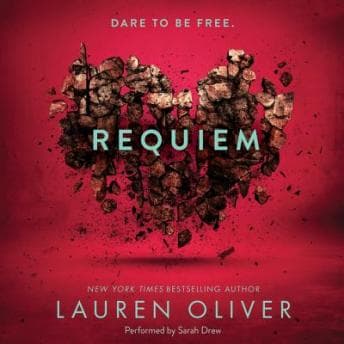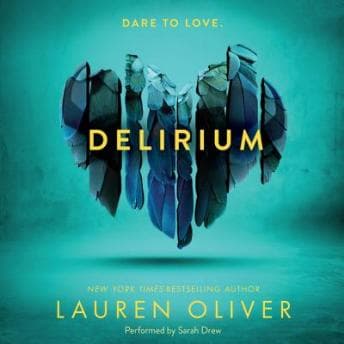

Look, I'll be honest—a YA dystopian romance about love being illegal is pretty far outside my usual wheelhouse. But Jenny picked this one for our "you choose mine, I choose yours" audiobook swap, and here we are. Nearly 12 hours later, I have thoughts.
Bottom line: This is not a business book. Obviously. But there's actually something interesting here about how systems control behavior through fear—and how that control eventually breaks down. My parents' generation in Korea lived under actual authoritarian rule. The "love is a disease" premise feels heavy-handed until you remember governments have literally tried to regulate who people can marry, who they can be with. Suddenly it's less sci-fi, more uncomfortable mirror.
The Premise Has Legs (Even If It Wobbles)
So the government has decided love—they call it "amor deliria nervosa"—is a disease that needs to be cured. Everyone gets a procedure at 18 that basically lobotomizes their emotions. Lena, our protagonist, is counting down the days to her cure because love destroyed her mother. Then she meets a boy. You can write the rest yourself.
Here's what actually works: Lauren Oliver commits to the worldbuilding. The propaganda, the regulated marriages, the way even parent-child affection is muted—it's thorough. I've seen startups build entire cultures around avoiding "toxic" emotions in the workplace. (Spoiler: it never works.) This book takes that impulse to its logical extreme.
What doesn't work as well: the pacing. My 2.0x speed couldn't save this one in the middle sections. There's a lot of Lena thinking about Alex. Then thinking about thinking about Alex. Then describing his eyes again. I get it—she's discovering feelings for the first time. But chapters 8 through 14? I was checking how much time was left.
Sarah Drew Carries the Emotional Weight
Sarah Drew—you might know her from Grey's Anatomy—does solid work here. She gets Lena's initial rigidity, that almost robotic acceptance of the system. Then she layers in the confusion, the awakening. It's not subtle, but it shouldn't be. This is a 17-year-old discovering she has feelings. Subtlety would be wrong.
The character differentiation is decent. Alex sounds different from Lena's aunt, who sounds different from her best friend Hana. Nothing groundbreaking, but competent. Some reviewers complained about Drew's accent being too pronounced—I didn't notice, but I was also half-listening during a particularly tedious client call. (Don't tell my clients.)
One thing I appreciated: Drew doesn't oversell the romance. When the emotional moments hit, she lets Oliver's prose do the work instead of going full melodrama. That restraint pays off in the back third when things get genuinely tense.
The Business Case for Feelings (Stay With Me Here)
Okay, this is where I justify spending 12 hours on a teen romance.
Every consulting engagement I've ever done comes down to one thing: people. Not systems, not processes, not frameworks. People. And people are irrational, emotional creatures who make decisions based on feelings and then justify them with logic. Delirium is basically a thought experiment about what happens when you try to engineer that out of a society. The answer, unsurprisingly, is that it doesn't work. The resistance exists. People find ways around the rules. The system creates its own opposition.
I've watched companies try to "cure" workplace emotion—no politics, no personal talk, pure efficiency. It creates exactly what this book describes: a gray, compliant surface with rebellion brewing underneath. My parents' dry cleaning business ran on love—love for each other, love for their kids' futures, love for their customers even when those customers were difficult. You can't systematize that. You can't cure it.
So yeah. A YA dystopia accidentally made a point about organizational behavior. Jenny would say I'm overthinking it. Jenny is probably right.
Who This Is (and Isn't) For
If you're looking for efficiency, skip this. The key takeaway—that human connection can't be regulated away—doesn't need 12 hours to land. But if you have a teenager in your life, this is worth knowing about. It's the kind of book that gets kids thinking about systems and power and why we accept the rules we accept. That's valuable. Also, there's a bonus epilogue in the audiobook that apparently isn't in the print version, which is a nice touch.
If you loved The Hunger Games or Divergent, you'll probably like this. Same energy, different flavor. The romance is more central here, which might be a feature or a bug depending on your tolerance.
For my fellow business book devotees: this is a palate cleanser. Sometimes you need to remember that not everything is about optimization and ROI. Though if you want something that actually bridges the gap between feelings and frameworks, 5 Love Languages at least tries to systematize emotion in a way that doesn't require lobotomies. Sometimes a story about a girl falling in love in a world that forbids it is exactly the break your brain needs.
Net-Net
Would I listen to the sequels? Honestly... maybe. The ending sets up enough questions that I'm mildly curious. But I'll need to finish my backlog of actual work-related listens first. And probably negotiate another swap with Jenny.
She's already picked out something called "Beach Read" for next month. I'm scared.