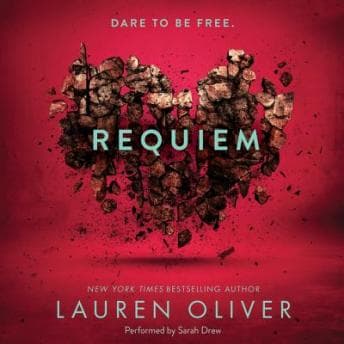

Look, I don't normally do YA. I deal with enough emotional volatility in boardrooms. But I started the Delirium trilogy because my wife insisted it was a "cultural touchstone" (her words, not mine), and I believe in finishing what you start. Sunk cost fallacy and all that.
So here we are at Requiem. The finale. The big exit strategy.
Sarah Drew Earns Her Keep
Let's be real. The only reason I got through 10 hours of teenage angst and dystopian logistics was Sarah Drew. I usually crank books to 2.5x speed to get the data download faster, but I actually slowed this down to 1.5x. That kind of restraint is rare—reminds me of the discipline I found in How to Live on Twenty-Four Hours a Day, where slowing down actually delivers more value. She's good. Really good.
She has to juggle two POVs here—Lena (the rebel in the woods) and Hana (the corporate wife-to-be in the city). Usually, narrators mess this up. They make everyone sound like the same person with a different hat. Drew doesn't. She gives Hana this cold, detached vibe that actually gave me chills, while Lena sounds appropriately desperate. It's a clinic in vocal separation. If she was pitching a startup, I'd fund her based on presentation skills alone.
(And apparently, she's an actress? Grey's Anatomy? I don't watch TV, but the dramatic training shows. She knows how to hold a pause.)
The Pivot That Didn't Quite Land
Here's where the ROI drops. The story splits. We get Hana's perspective now, which is actually way more interesting than Lena's. Lena is running around the "Wilds"—basically a chaotic startup with no burn rate control—while Hana is navigating the politics of the "Cure."
The problem? Pacing is all over the place. Lena's chapters drag. Lots of walking, lots of internal monologue about feelings. (I zoned out twice during the forest scenes—had to rewind, which I hate doing.) Hana's chapters are sharp, political, dangerous. I found myself checking the chapter duration hoping for more Hana, less Lena. That's a bad sign for your main protagonist.
And the ending? I won't spoil it, but let's just say it lacks a clear exit strategy. It just... stops. I checked my app to see if the download failed. It didn't. That was it. Ambiguity is fine in art, I guess, but in business—and apparently in trilogies—I prefer a signed contract.
The Bottom Line Over Espresso
If you've read the first two, you have to listen to this. You're already invested. Just do it for the closure. Sarah Drew makes the medicine go down smooth. But if you're looking for a tight, logical conclusion to a revolution? You might leave the table hungry.
Jenny loved the open ending. She called it "poetic." I called it "incomplete deliverables." We agreed to disagree.
Who should listen: Completionists who've already sunk two books into this trilogy—Drew's performance alone justifies the time investment. Who should skip: Anyone expecting a clean resolution or starting fresh here. This isn't a standalone, and the ending will frustrate you.