
What happens when you take Cold War paranoia, Apache survival skills, and a planet full of alien ruins and smash them together? You get one of Andre Norton's weirdest and most interesting entries in the Time Traders series — and also, unfortunately, an audiobook that fights you every step of the way.
I was up way too late reorganizing my board game shelf (again) and figured I'd throw this on since it's only about seven hours. Norton's been on my "I should really read more classic SF" list forever, and the premise hooked me immediately. Apaches with genetically enhanced racial memories, crash-landing on an alien planet, fighting Soviet operatives? That's basically a D&D one-shot I would absolutely run.
Apache Survival Skills vs. Soviet Tech Is a Campaign I'd Play
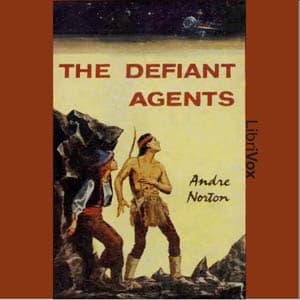
The core concept here is genuinely cool. Travis Fox and his band of Apaches have been run through something called the Redax machine, which cranks their ancestral memories up to eleven. So you've got characters who are simultaneously modern people and channeling deep Apache survival instincts — hunting, tracking, guerrilla warfare — on an alien world. Norton wrote this in 1962, and while some of the cultural depictions feel... dated (we'll say dated), the idea of ancestral knowledge as a literal tactical advantage is Sanderson-level world-building in embryonic form. She was doing soft progression fantasy before that was even a concept. That same DNA — ancestral power systems, escalating stakes, a world that wants to kill you — runs through Fourth Wing, which honestly feels like it owes more to old-school SF like this than people realize.
The planet Topaz itself is interesting too. There are remnants of an ancient galactic empire, strange wildlife, and the constant tension of knowing the Soviets got there first and have their own enhanced operatives — Mongol tribespeople, given the same Redax treatment. Apache vs. Mongol survival tactics on an alien planet. Come on. My D&D group would love this.
But here's the thing — Norton's writing style is dense. Lots of description, lots of internal monologue from Travis about landscape and tracking and alien flora. If you don't like info-dumps, this isn't for you (but you're wrong). It's a slow burn that rewards patience, very much a product of its era where SF novels were shorter but packed tight with ideas rather than action sequences.
The Narration Is a Crash Landing of Its Own
Okay. I have to be honest here because this is where the audiobook falls apart. R. J. Davis's narration has serious clarity issues. And I don't mean "oh, one or two words were mumbled." I mean there were stretches — full paragraphs — where I had to rewind because I genuinely could not parse what was being said. The consonants blur together, the pacing of individual sentences feels off, and when you're dealing with Norton's already dense prose plus Apache and alien terminology, clarity isn't optional. It's everything.
I stuck with it longer than some listeners apparently did — one reviewer mentioned giving up after five chapters, and I get it. I made it through the whole thing, but I was doing that thing where you're concentrating so hard on understanding the words that you stop processing the story. That's the opposite of what audiobooks are supposed to do.
There's no full cast, no sound effects, no production tricks to lean on. It's a single narrator carrying a 6-hour-44-minute book, and when that narrator struggles with clarity, there's nowhere to hide. Steven Pacey walked so other narrators could run, but Davis is still tying his shoes.
Who Gets Stranded on Topaz
If you're a Norton completist or a classic SF fan who specifically wants the Time Traders series in audio form — maybe. But honestly? You're better off reading this one with your eyes. The text itself is worth your time. Norton had ideas that were decades ahead, and this book in particular does something genuinely interesting with cultural identity and survival that I haven't seen many other SF authors attempt, even now.
But if your only option is this specific audio version, set your expectations low on the narration front. Don't try this as background listening while coding or gaming. You'll miss half of it. And not because Norton's prose demands intense focus — because you literally won't be able to understand what's being said.
I Read This Instead of Writing My Thesis (And I Have Mixed Feelings About Both)
The source material here is legitimately interesting. Norton was building interconnected SF universes before that was cool, and the Apache-on-an-alien-planet concept has more going on than it has any right to. But this audiobook production doesn't serve the story well. It's like having a great dungeon master who mumbles — all the right ideas, delivered in a way that makes you lean forward and squint with your ears. The progression is satisfying if you can parse it, but that's a big if.
I'd say grab the ebook or find a different audio edition if one exists. The story deserves better than what it got here.