
"Meetings are boring."
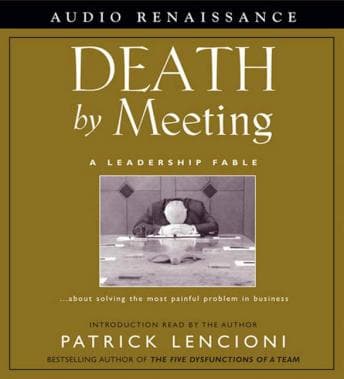
Lencioni says it right at the beginning, and honestly? That's the most relatable thing I've heard in a business audiobook this quarter. My parents never had meetings. They had conversations over the register at 6 AM. Decisions got made. Work got done. Then somewhere along the way, corporate America decided we needed two-hour calendar blocks to accomplish what should take twelve minutes.
So yeah, I was skeptical. Another business fable about fixing meetings? I've sat through enough "meeting about meetings" sessions at client sites to last three lifetimes. But here's the thing - Lencioni actually gets it right. And at 4 hours 32 minutes, he respects your time enough to not pad this thing into oblivion.
The Fable That Actually Works
Look, I'm not usually a fable guy. Most business parables feel like they were written by someone who's never actually worked in an office. Who Moved My Cheese? is the poster child for this problem—cute metaphor, zero nuance. The dialogue is wooden, the "lessons" are telegraphed from chapter one, and you're just waiting for the inevitable transformation moment.
This one's different. Not perfect - some listeners call it "hokey" and they're not wrong. The writing has moments where it feels a little... let's say earnest. But I was captivated anyway. The story follows an executive whose job depends on fixing his disaster meetings, and an irreverent grad student who basically tells him everything he's doing wrong. It's the kind of setup my McKinsey colleagues would've rolled their eyes at, except the advice is actually solid.
The core insight? Meetings fail because we treat them all the same. Lencioni breaks them into types - daily check-ins, weekly tactical, monthly strategic, quarterly off-sites. Each serves a different purpose. Each needs different energy. This is what my parents did instinctively. Now it has a TED talk. (And a book. And probably a LinkedIn course.)
Jack Arthur Won an Audie for This - And I Get Why
Here's where I'll push back on some of the criticism. Some folks say Arthur's narration lacks energy, that it's monotone. I listened at 2.0x - my usual speed - and it worked fine. The man won an Audie Award in 2005 for this performance, and while it's not theatrical, it's clear and engaging. He's not trying to be dramatic. He's telling you a business story. The pacing is solid, the characters are distinguishable, and he doesn't get in the way of the content.
Is it going to keep you awake during a 5 AM workout? Maybe not. But for a commute or focused listening session, it does the job. Clean production, no audio issues, professional delivery. Sometimes that's exactly what you need.
The ROI Calculation
If you run meetings - and let's be honest, if you're in management, you probably run too many of them - this is worth four and a half hours of your time. The framework is practical. I've actually used variations of Lencioni's meeting types with three different clients this year. Two of them saw measurable improvements in decision velocity. (The third was a lost cause, but that's a people problem, not a meeting problem.)
The fable format makes it stick better than a dry how-to manual would. You remember the characters, you remember the situations, and when you're sitting in your next pointless status update, you'll remember why it's pointless.
Who Gets Value Here (And Who Doesn't)
Skip this if you're looking for deep storytelling or theatrical narration. If you hate the business fable format on principle, Lencioni's not going to convert you. And if you're not actually in a position to change how meetings run at your company, this might just frustrate you.
But for managers, team leads, anyone who's ever thought "this could've been an email" - yeah. Finally, a business book that respects your time and gives you something actionable.
Jenny Would Say I'm Being Generous
She's right. But I've seen bad meetings kill good companies. Anything that helps fix that gets a pass from me.