
I have a bone to pick with Jane Jacobs. Not because she's wrong—she's infuriatingly right about almost everything—but because she made me spend an entire week questioning every urban planning decision I've ever passively accepted. My morning jogs through Cambridge became an exercise in obsessive observation. Why does this block feel alive while that one feels dead? Why do I always cross to the other side here? Jacobs had me psychoanalyzing sidewalks like they were patients on my couch.
The woman was doing behavioral psychology before we had the vocabulary for it. She just called it "eyes on the street."
The Sidewalk Ballet as Case Study
What makes this book compelling is that Jacobs treats cities the way I treat fictional characters—as complex systems with motivations, patterns, and pathologies. She doesn't just observe that diverse neighborhoods thrive; she explains the *why* with the precision of a researcher presenting findings. Short blocks create more corner interactions. Mixed-use buildings generate foot traffic across different hours. Old buildings subsidize new businesses because the rent is cheaper.
The research actually shows—and I mean Jacobs's research, decades before mine—that human behavior follows predictable patterns when given the right environmental conditions. She understood that you can't engineer community through grand plans any more than you can engineer authentic personality through self-help platitudes. Both require organic conditions. Both resist top-down control.
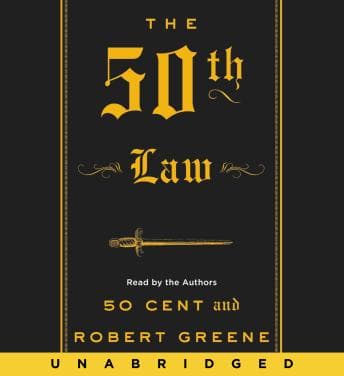
I kept thinking about how 50th Law makes a similar case—that systems imposed from outside, whether on cities or people, tend to collapse under their own rigidity.At eighteen hours, this is a commitment. I found myself returning to it across multiple cooking sessions (my dal makhani has never been more contemplative), and yes, during several insomniac 2 AM sessions when my brain refused to shut off. The density of ideas requires focused listening—this isn't background material. You'll want to pause, rewind, argue with her.
Rawlins Carries the Weight
Donna Rawlins has a rich alto that handles Jacobs's detailed analysis with genuine care. There's this quality in her delivery—she occasionally sounds delighted by a particularly cutting observation, like she's discovering Jacobs's wit in real time. When Jacobs eviscerates Robert Moses or mocks the "Radiant Garden City Beautiful" planners, Rawlins leans into the satire without overdoing it.
That said, I understand why some listeners found it difficult to follow. Jacobs writes in long, dense paragraphs packed with examples. Rawlins maintains steady pacing and impeccable diction, but the material itself is demanding. This isn't a narrator problem; it's a "your brain needs to be fully engaged" problem. If you're folding laundry and half-listening, you'll miss the thread.
Psychologically, this tracks. Complex material requires active processing. Rawlins does her job—she varies pitch and tone to signal transitions, keeps the energy up across eighteen hours—but she can't do your cognitive work for you.
Why This Still Matters (My Therapist Would Have Thoughts)
Here's what struck me: Jacobs's core argument is about trust. Cities work when strangers trust each other enough to share public space. That trust emerges from repeated, low-stakes interactions—the shopkeeper who watches the street, the neighbors who recognize each other's patterns, the "public characters" who serve as informal community connectors.
The protagonist—and yes, I'm treating Jacobs herself as a character here—exhibits classic pattern recognition combined with moral conviction. She saw what the planners couldn't see because she actually lived on Hudson Street. She watched. She asked: why does this really work?
I found myself asking the same question about my own neighborhood. Why do I feel safer on some blocks than others? Why do certain coffee shops become community hubs while others remain transactional? Jacobs gave me the framework. Now I can't unsee it.
Who This Is (and Isn't) For
If you want urban planning theory delivered as accessible, occasionally biting prose—yes. If you're interested in how physical environments shape human behavior—absolutely. If you're a psychology nerd who gets excited about systems thinking applied to real-world problems—this is your book.
But if you want light listening for your commute? Skip this version. The ideas are too dense, the arguments too interconnected. You need dedicated time. Pour yourself a drink, sit down, and actually engage.
Dr. Sharma's Diagnosis
Jane Jacobs wrote a psychology book disguised as urban planning. She just didn't know it yet. Rawlins delivers it with the respect it deserves—energetic but measured, delighted but not fawning. Eighteen hours is a lot, but the ideas have stuck with me in ways that most books don't.
My morning jogs are ruined forever. I can't stop analyzing sidewalk width and storefront frequency. Thanks, Jane.