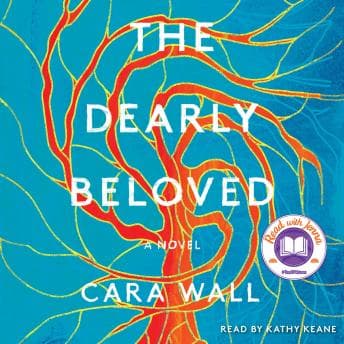

I was up at 2 AM, couldn't sleep because Diego decided my pillow was his new territory and I wasn't in the mood to fight a cat. So I put in my earbuds and just... let this book wash over me in the dark.
That turned out to be exactly right. This is a 2 AM book. A lying-in-the-dark-thinking-about-your-whole-life book.
Four People, Four Faiths, One Church
Here's what got me: this isn't really about religion. I mean, yes, there are ministers and sermons and a Presbyterian church in Greenwich Village. But what Cara Wall actually wrote is a book about what happens when two marriages collide—when you're forced to build a life alongside people who believe fundamentally different things than you do.
Charles believes with his whole heart. Lily—his wife—is an atheist. Not the angry kind, just... certain. She loves Charles anyway. James grew up hard in Chicago, angry at everything, and found his way to faith through sheer survival. Nan is the minister's daughter from Mississippi, faith woven into her like breathing.
Four people. Four completely different relationships with belief. And they have to make a church work together.
The thing that wrecked me? Watching Lily try to be a minister's wife when she doesn't believe any of it. There's this quiet devastation in her storyline—she loves Charles, she supports him, but she's always standing slightly outside. Kathy Keane voices her with this elegant coolness that cracks open in the most unexpected moments. When Lily finally breaks down about feeling like a fraud in her own marriage? I had to pause the book. Sat there in the dark with tears just rolling down my face.
Abuela would have loved this one. She'd have been scandalized by Lily's atheism and completely obsessed with whether she'd come around. (She doesn't, not really. That's what makes it honest.)
Kathy Keane Understands These Women
The narration is warm without being saccharine—Keane has this perfectly measured quality that matches the book's quiet intensity. But where she really shines is differentiating Lily and Nan. Lily gets these clipped, precise inflections. Intellectual. Guarded. Nan is softer, more melodic, with just a hint of Mississippi gentility that never tips into caricature.
When these two women are in scenes together—and they're thrown together constantly because their husbands are co-pastors—you can hear the tension in how differently Keane voices them. Lily's wariness. Nan's earnest attempts to connect. The jealousy that simmers between them for years. The eventual, hard-won understanding.
I ugly-cried at least three times. The spreadsheet has been updated.
A Rainy Sunday Book (With a Caveat)
Look, I need to be honest. If you're allergic to religious themes, this might not be your book. There's a lot of talk about callings and faith and what it means to serve a congregation. One reviewer called it "very heavy on finding God" and... yeah, that's fair.
But here's the thing: the book never preaches AT you. It's more interested in the mess of faith—how it breaks people, how it saves them, how two people who love each other can believe completely opposite things and still make it work. The religious content is the setting, not the sermon.
The pacing is slow. Contemplative. This is not a book you half-listen to while designing logos. I tried that on day two and had to rewind constantly. It demands your attention in a gentle but firm way—like a conversation with someone who won't repeat themselves.
Who Gets to Stay, Who Should Go
This is for you if: you want a book that feels like being wrapped in a heavy blanket. If you love character studies that span decades. If you've ever wondered how people with fundamentally different beliefs build a life together. If Julia Whelan's narration style makes you feel things (Keane has similar energy—that warm, intelligent intimacy).
Skip it if: you need plot. Like, actual things happening. This is a book about internal lives, about the slow accumulation of choices and compromises. Pineapple Street has that same slow-burn character study energy, though it swaps faith for family money as the thing nobody wants to talk about directly. If religious settings make you twitchy regardless of how they're handled, you'll probably be frustrated.
Diego's Still on My Pillow, But I Don't Mind
I finished at 4 AM. Diego had migrated to my feet. Frida was judging me from the dresser.
This book felt like sitting with my abuela in her living room, watching her stories, except the story was about faith and doubt and marriage and the terrifying hope of building something that might last. It's not flashy. It won't make anyone's "most exciting reads" list. But it's real in a way that most books about belief aren't.
The vibes are immaculate. The chemistry between all four characters—romantic, platonic, antagonistic—is chef's kiss. And Kathy Keane's voice is exactly what this quiet, devastating story needed.
I'm going to listen to it again. Maybe at a more reasonable hour. Maybe not.