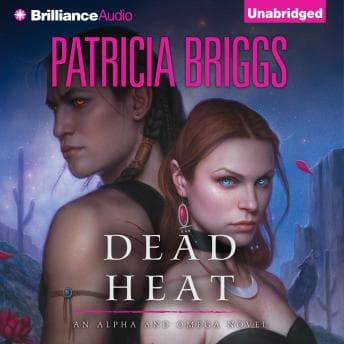
I've been skeptical of Briggs's Alpha and Omega series getting the same love as Mercy Thompson. The internet keeps insisting they're equally good, and I kept waiting to feel it. Four books in, listening at 1 AM with Shirley curled against my feet and the Oregon rain doing its thing against my windows—I finally get it.
Dead Heat isn't horror. Let me be clear about that. But the Fae stuff? The changelings, the simulacrums replacing children, the cold calculation of beings who view humans as playthings? This understands that horror isn't about gore—it's about dread. And Briggs knows how to build dread.
The Fae Are Scarier Than Your Average Monster
Here's what urban fantasy usually gets wrong about the Fae: they make them whimsical. Mysterious but ultimately manageable. Briggs doesn't do that. Her Fae are genuinely alien in their morality—or complete lack of it. The central threat here involves children being stolen and replaced with magical copies, and the book doesn't flinch from how deeply wrong that is. Not just the act itself, but the implications. The parents who don't notice. The simulacrums that might be aware enough to suffer.
I paused the audiobook twice. Not because it was too intense—because I needed to sit with what was happening. That's rare for me. My podcast listeners know I've consumed enough horror to be pretty desensitized. But there's something about the mundane horror of a child that isn't quite right that hits different than any monster could. Revelations played with similar themes of wrongness hiding in plain sight, though it leaned harder into the supernatural dread.
Holter Graham Commits (Mostly)
Graham's voice for Charles is this low, hypnotic thing—soothing in a way that makes the violent moments land harder. When Charles remembers his past, when we get glimpses of werewolf culture and the brutality that shaped him, Graham digs into those emotional beats like he's excavating them.
But—and this is a real but—I had trouble distinguishing between Charles and his father Hosteen. Both older male werewolves, both with that same gravelly authority. There's a scene where they're talking and I genuinely lost track of who was speaking for a solid thirty seconds. In a book this character-driven, that's a problem. Not a dealbreaker, but noticeable enough that I'm mentioning it.
The emotional scenes though? Graham earns every bit of his three-time AudioFile Best Voice award. There's a moment—I won't spoil it—involving Anna and a revelation about what the Fae have done, and Graham's delivery made my chest tight. I listened in the dark. Mistake? Maybe. Worth it? Absolutely.
The Pacing Problem (Or Is It?)
Some people are calling this book slow. I've seen the reviews. And yeah, compared to earlier entries in the series, Dead Heat takes its time. But here's my take: the pacing is deliberate. This isn't a book about werewolves punching their way through problems. It's about Charles and Anna navigating a world that's getting more complicated, more dangerous, more politically fraught. The Fae's cold war with humanity is simmering, and Briggs is building toward something. That slow-burn tension reminds me of Kiss of a Demon King, where the real threat isn't the immediate violence but the larger supernatural politics at play.
Does it drag in places? A little. The horse-buying subplot—yes, there's a horse-buying subplot, this is technically a pleasure trip gone wrong—feels like it could've been trimmed. But the slower pace also means the suspense scenes hit harder. When things go bad, you feel the shift. Graham's narration helps here—his slow, purposeful delivery creates this sense of inevitable doom that faster pacing would've undermined.
Who Needs This in Their Ears (And Who Doesn't)
If you're already invested in the Alpha and Omega series, this is essential. If you're new, maybe start earlier—there's enough backstory woven in that you won't be completely lost, but you'll miss the weight of Charles and Anna's relationship.
If you scare easily, skip. The Fae elements are genuinely unsettling in a way that goes beyond the urban fantasy label—the wrongness lingers. My podcast listeners are going to love this; I'm already planning an episode about how Briggs handles the Fae compared to other urban fantasy authors. Series fans who found the pacing off might want to push through anyway. The emotional payoffs are worth the slower build.
Shirley Jackson Would Approve
Not literally—Jackson wrote literary horror, not urban fantasy. But the way Briggs handles the wrongness of the Fae, the subtle horror of things that look right but aren't? Jackson walked so this author could run. The simulacrums are going to haunt me for a while.
Shirley (my cat) was unimpressed. I was terrified. That's the review, really. Eleven and a half hours of werewolf politics, Fae menace, and a narrator who knows when to whisper and when to let the silence stretch. Finally, horror that respects the genre—even when it's technically shelved in fantasy.