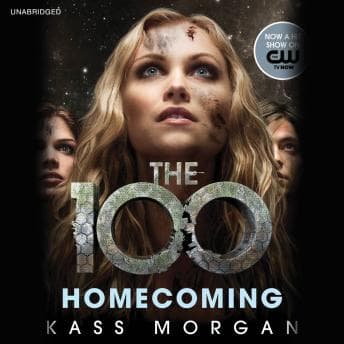

Look, I'm just gonna say it: the pacing in this book had me wanting to yell at my phone. Not in a bad way, exactly, but in that frustrating way where you're like "JUST GO TO MOUNT WEATHER ALREADY" and Clarke is still having feelings about things. (Don't get me wrong, feelings are valid. But also: survival situation. Priorities.)
I listened to this while procrastinating on my thesis—shocker, I know—and honestly? It's the kind of YA sci-fi that scratches a very specific itch. You know the one. Post-apocalyptic teens making questionable decisions while romance subplots simmer in the background. It's comfort food, basically. Not Sanderson-level world-building, but that's not what we're here for.
Two Narrators, One Fractured Colony
Justin Torres and Phoebe Strole split narration duties, and... it mostly works? They handle different POV characters, which helps keep the multiple storylines straight. The book jumps between Earth and the ship, between Clarke and Wells and Bellamy and Glass, and having two distinct voices does help you orient yourself when the scene shifts.
Here's the thing though—and I've seen other people mention this—there's some inconsistency in how they voice the characters. Sometimes a character sounds like themselves, sometimes they sound more like the narrator doing a voice. It's not dealbreaker territory, but if you're coming from something like a Steven Pacey production where every single character is instantly recognizable, you might notice it. Strole handles the emotional beats pretty well, and Torres keeps the action moving. The pacing from the narrators themselves is solid even when the plot drags.
Earth vs. Space Station: A Tale of Two Tones
The premise—humans returning to Earth after centuries in space, discovering they're not alone—that's good stuff. Classic sci-fi setup. The execution in book two is... uneven. The Earth plotlines have more urgency. Bellamy trying to rescue Octavia, Clarke pushing toward Mount Weather, the whole "unknown enemy" threat—that's where the tension lives.
The ship storyline with Glass feels like it's from a different book sometimes. Like someone spliced a space station romance drama into your survival thriller. (I'm not saying I didn't enjoy Glass's chapters. I'm saying they gave me tonal whiplash.)
The character development is pretty surface level, which—okay, it's YA, it's a quick read, I get it. But I kept wanting more depth from Wells especially. He's trying to hold everyone together and the book tells us that more than it shows us. My D&D group would love debating whether Wells is a Lawful Good paladin type or just a control freak, but the text doesn't give us enough to really dig into.
Six Hours of Productive Procrastination
At six and a half hours, this is a quick listen. I knocked it out over two days of coding sessions where I definitely should have been working on my procedural generation algorithms instead. (Dr. Patel, if you're reading this: I was multitasking. Very productively.)
The production quality is clean—no weird audio artifacts or volume issues. Some folks have mentioned sound effects and music adding to the atmosphere, which I honestly didn't notice that much? Maybe I was too focused on debugging. But the audio itself is crisp and professional.
The pacing drags in the middle third. There's a section where it feels like everyone is just... traveling and having feelings about traveling. I bumped it up to 1.25x speed and didn't miss anything important. Would recommend doing the same if you find yourself zoning out.
Roll for Initiative (Or Don't)
If you watched The 100 on CW and wanted more of that vibe, this is your jam. If you're into YA dystopian stuff—The 5th Wave, The Darkest Minds, that whole wave—you'll probably dig it. Skip this if you're looking for hard sci-fi or detailed world-building; the science is pretty hand-wavy and the Earth they land on is more backdrop than fully realized setting. For actual world-building that commits to its mythology, Book of Enoch the Prophet goes deep on the apocalyptic lore—though it's definitely not YA territory.
But sometimes you just want teens making dramatic choices while the world ends around them, you know? I read this instead of writing my thesis, and I regret nothing. Well. I regret a little. But the book was fun.