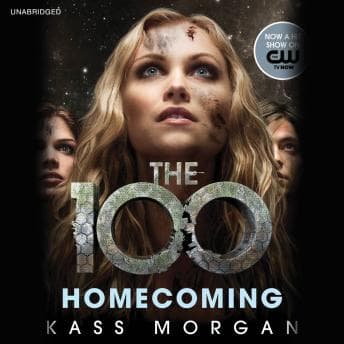

Let me cut to the chase: I started this one during a late-night drive back from a client site in Houston, three hours of empty I-10 stretching ahead of me. Young adult dystopia isn't my usual territory—I'm more likely to reach for something with actual tactical operations—but the premise hooked me. Juvenile delinquents sent to a radioactive Earth as expendable test subjects? That's a mission brief I'd call morally questionable at best, war crime at worst.
Ranger was asleep in the back seat, and by the time I pulled into my driveway, I'd burned through the first four hours without realizing it.
The Tactical Setup (And Where It Falls Short)
Here's what Morgan gets right: the stakes are real from page one. These kids aren't chosen because they're special—they're chosen because they're disposable. The Chancellor's calculus is cold and efficient. Send the prisoners, see if they survive, preserve resources for the "valuable" citizens. I've seen similar logic applied in real-world scenarios, and it never sits well. The book doesn't shy away from that ugliness.
But here's where it lost me a bit. Four POV characters—Clarke, Wells, Bellamy, and Glass—rotating through chapters. In theory, solid tactical approach. In execution? Some of these kids make decisions that would get them killed in any real survival scenario. Wells, the Chancellor's son, essentially commits mutiny to follow a girl who clearly wants nothing to do with him. That's not romantic, that's a liability. And Glass's storyline, stuck on the ship while everyone else is planetside, feels like a completely different book shoehorned in.
The Earth survival stuff works better. Limited supplies, unknown terrain, internal power struggles among teenagers with no leadership training. Bellamy's protectiveness over his sister Octavia—the only sibling pair in existence due to strict population controls—actually rang true. Among the Hidden explores similar population control themes, though with younger protagonists facing even harsher consequences for existing. That's a motivation I can respect.
Torres and Strole Behind the Mic
Two narrators splitting the POVs. Justin Torres handles the male perspectives, Phoebe Strole takes the female characters. The division works well enough—you always know whose head you're in without checking. Strole's an Earphones Award winner, and it shows. Her emotional delivery during Clarke's flashbacks to her parents' fate carries genuine weight. Torres keeps things moving with Bellamy's chapters, though Wells sometimes comes across flatter than intended.
Here's my issue: I couldn't find much evidence of distinct character voices within each narrator's sections. When Bellamy talks to other male characters, everyone sounds roughly the same. Not a dealbreaker, but at 10 hours, you notice. The production is clean—no weird audio artifacts or volume inconsistencies—but it's straightforward narration, nothing fancy.
I bumped it to 1.25x around hour six and never looked back. The pacing in the middle section drags, particularly Glass's ship-bound drama. At increased speed, it flows better.
YA Tropes vs. Survival Realism
Look, I knew going in this was young adult fiction. I adjusted expectations accordingly. But the love triangle—actually more of a love quadrangle—takes up real estate that could've been spent on, I don't know, figuring out how to not die on a planet that's been uninhabitable for centuries?
The romance elements aren't terrible. They're just... constant. Clarke's torn between Wells (who betrayed her) and Bellamy (who's a loose cannon). Wells is obsessed with Clarke to an uncomfortable degree. Bellamy's got his own complications. And Glass, up on the ship, has her own star-crossed situation that honestly interested me more than the Earth-side drama.
What kept me engaged: the mystery elements. What really happened to Clarke's parents? What's the Chancellor hiding? Why were these specific kids chosen? Morgan plants enough breadcrumbs to keep you listening through the slower romantic bits.
Who Should Drop Into This Mission (And Who Should Abort)
If you watched the CW show and want the source material, know going in: they're apparently quite different. The book is more intimate, less action-heavy than I expected from the premise. Younger listeners—teens, early twenties—will probably connect more with the relationship drama. If you're like me, pushing sixty and more interested in survival logistics than who's kissing whom, you'll find yourself fast-forwarding through certain sections. Skip this if you need tight plotting and can't tolerate romantic subplots eating into your survival story.
Parents should know there's some violence, language, and mild sexual content. Nothing graphic, but it's not middle grade either.
Cooper, Signing Off
Worth your time? Conditionally. The premise is strong, the narration is competent, and the mystery elements pull their weight. But this is clearly a setup book—you're not getting resolution here, just the foundation for a series. The pacing issues in the middle third and the heavy romantic focus knocked it down a notch for me.
Ranger slept through the whole thing, which means either he wasn't impressed or the audio was smooth enough not to disturb him. I'm going with the latter.
If you've got a long drive and want something that moves reasonably fast without requiring your full tactical attention, this'll do the job. Just don't expect military precision in the survival elements. These are scared kids making scared-kid decisions. Chosen by Grace has a similar setup—young people thrust into situations they're not prepared for—though the divine intervention angle makes their choices feel less organic. Sometimes that's the point.