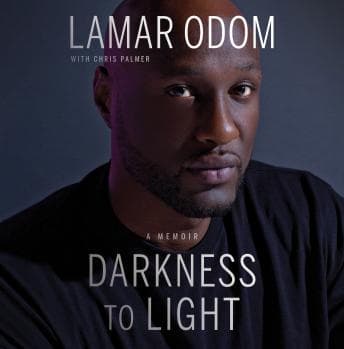

I was sitting in the hospital break room at 4 AM, halfway through a bag of cold lumpia my mom dropped off (she still feeds me like I'm twenty-two and pulling all-nighters in nursing school), when I started this one. The unit was quiet - knock on wood - and I had my earbuds in while charting. Lamar Odom's story felt weirdly appropriate for the setting. Trauma center energy. That feeling of watching someone come back from the edge.
The Kid From Queens Who Almost Didn't Make It
Here's what got me about this book: the basketball stuff is almost secondary. Yeah, there are Lakers championship stories, and Lamar takes you courtside in a way that even someone like me - who watches maybe three games a year because Carlos has it on - can appreciate. But the real weight here is everything else. His mother dying of colon cancer when he was twelve. His father's heroin addiction. Growing up in Jamaica, Queens, where the streets were pulling at him constantly. A grandmother who basically held everything together.
And then the spiral. The cocaine use that started way earlier than most people realize. The death of his infant son, Jayden, to SIDS. When that part came up, I had to pause. As someone who's actually worked codes on pediatric patients - I'm not going to pretend I was fine. Carlos asked why I was crying in the car the next morning. I blamed allergies. He didn't buy it.
The Khloé Kardashian chapters are going to get the most attention, obviously. Lamar is surprisingly honest about how he sabotaged that relationship - the cheating, the lying, using cocaine while cameras were rolling for their reality show. He doesn't ask for sympathy. He just lays it out. And then the near-death experience at that brothel in Nevada in 2015 - twelve strokes, six comas, being read his last rites. The medical details here are... close enough. I'll give it a pass. The description of his recovery, the cognitive struggles after, the slow rebuilding - that part rang true. I've seen patients come back from that kind of thing, and the timeline he describes tracks.
Chris Palmer Behind the Mic - And That's the Problem
Okay, I need to be honest. Chris Palmer co-wrote this book, which makes sense - he's a veteran NBA sportswriter. The writing itself is solid. Raw in places, maybe a little surface-level in others, but honest. The problem is that Palmer also narrates the audiobook, and... look. This is not how you tell a story this emotional. His delivery is flat. Monotone. There are passages about Lamar holding his dying son, about waking up in a hospital bed unable to walk, and Palmer reads them with the same energy as a press conference recap.
I kept thinking - why didn't Lamar read this himself? Or at least get someone who could bring some heat to the emotional moments? At seven hours and eighteen minutes, this is a relatively quick listen, but the monotone narration made certain stretches feel longer than they needed to be. I bumped it to 1.25x speed and honestly, that helped. Gave it a little more urgency.
Compare this to something like Matthew McConaughey reading his own Greenlights, where every sentence has personality dripping off it. Or even Andre Agassi's Open, where the narrator understood when to lean into the pain. Palmer just... reads. Competently. Without much life.
Who This Is For (And Who Should Grab the Print Version Instead)
If you're an NBA fan, especially Lakers era, there's enough insider detail here to keep you engaged - the Kobe dynamics, the Phil Jackson coaching style, how it felt to be on that court during championship runs. If you're coming for the Kardashian angle, you'll get honesty but not gossip. Lamar isn't trying to burn anyone. He's mostly burning himself.
If you're in recovery, or love someone who is, parts of this book will hit hard. Not because Lamar has all the answers - he's pretty clear that he doesn't - but because the honesty about how addiction hijacks everything, every relationship, every achievement, feels real. Not packaged. Not inspirational-poster ready. I kept thinking about the same kind of unvarnished honesty around compulsive patterns in Mindfulness-Based Eating Solution - different subject entirely, but that same refusal to wrap the struggle in a bow.
But here's my honest take: this might be a better print read than audiobook. The narration undercuts the emotional impact of what is genuinely a painful, open story. I was able to push through because the content itself is strong, and because I was invested in Lamar as a person by hour two. But if narration performance matters to you - and it should, you're paying for the audio experience - temper your expectations.
Perfect for that post-shift decompression, honestly. The pacing is steady, it won't spike your adrenaline, and the monotone delivery means you won't miss much if your brain is half-fried from a twelve-hour shift. Silver lining.
Night Shift Rx: Strong Story, Weak Delivery
Lamar Odom's life is wilder than most fiction I've listened to this year. The book does its job - it's honest, it doesn't flinch, and it gives you a human being instead of a headline. But the audiobook version specifically? It needed a narrator who could match that rawness. I didn't yell at my dashboard during this one. I just wished someone had told Chris Palmer it was okay to feel something while reading.









![Steve Jobs [unabridged audiobook] audiobook cover](/_next/image?url=https%3A%2F%2Fcovers.audiobooks.com%2Fimages%2Fcovers%2Ffull%2F9788499923406.jpg&w=1920&q=75)