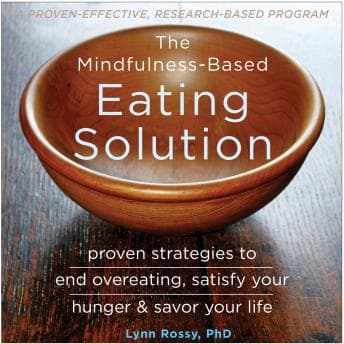

I was making dal makhani at midnight—the kind that needs three hours of simmering—when I started this audiobook. Something about standing over a pot, stirring occasionally, felt appropriate for a book about slowing down with food. My mother would call this irony. I call it research.
Lynn Rossy's program caught my attention because it's grounded in actual clinical work. Her Eat for Life program has published data behind it. Women in her studies showed measurably higher body appreciation and lower problematic eating behaviors compared to control groups. As someone who reads methodology sections for fun (don't judge me), this matters. We're not dealing with wellness influencer vibes here. We're dealing with a licensed clinical psychologist who built something testable.
The Psychology Actually Tracks
Here's what Rossy gets right: she understands that overeating is rarely about food. The research shows that emotional eating functions as a regulatory strategy—it's the brain's attempt to manage distress when other coping mechanisms feel unavailable. Rossy doesn't just acknowledge this; she builds her entire framework around it.
The book walks through what she calls a "whole-body approach," which sounds vaguely yoga-retreat-ish but is actually more practical than that. She's asking you to notice physical hunger cues versus emotional hunger cues. Simple distinction. Harder in practice. I found myself asking: why does someone reach for chips at 10 PM when they're not hungry? Rossy would say the question itself is the intervention. The noticing. The pause before the automatic behavior.
What makes this compelling is her refusal to demonize food. No forbidden lists. No punishment narratives. Just curiosity about what's actually happening in your body and mind. My therapist would have thoughts about this—specifically, she'd probably appreciate that Rossy treats the behavior as information rather than moral failure.
Melinda Wade Does the Job (Nothing More, Nothing Less)
Let me be honest about the narration: it's competent. Melinda Wade delivers the material clearly. Her pacing works for the instructional content. She doesn't get in the way of the concepts, which is exactly what you want for self-help.
But I wouldn't call this a performance that elevates the material. It's functional. The connection between mindfulness and emotional eating comes through—listeners have noted this specifically—but there's no particular warmth or personality that makes you feel guided by someone who genuinely cares about your relationship with food. Wade reads the book well. She doesn't inhabit it.
For a book that includes meditation components, this matters somewhat. The audiobook works even before you do the actual meditations (which is good, because I listened while cooking and wasn't about to close my eyes near a gas stove), but I wonder if a narrator with more tonal variation would have made the meditative sections land differently.
The Limitation Nobody Mentions
Here's my issue: at 7 hours and 48 minutes, this is a significant time investment for concepts that could probably be distilled into three hours. Rossy is thorough. Sometimes too thorough. The repetition serves a purpose—mindfulness is about returning to the same ideas with fresh attention—but in audiobook form, it can feel like you're circling the same territory.
The book also assumes a certain baseline. If you're dealing with clinical eating disorders, this isn't the right resource. Rossy is clear about this in her clinical work, but the audiobook marketing positions it broadly. Know what you're getting: a mindfulness-based approach for emotional overeating, not treatment for anorexia or bulimia.
Who This Is For (And Who Should Keep Scrolling)
This works for anyone who eats when they're stressed, bored, or sad—which is most of us, honestly. If you've tried restrictive diets and they've backfired (the research on this is pretty damning), Rossy's approach offers an alternative framework. For what it's worth, Bulletproof Diet takes the opposite approach—lots of rules, lots of restrictions—and I had mixed feelings about that methodology too.
Skip it if you want quick fixes. Skip it if you're looking for meal plans or calorie counting. Skip it if you need a narrator who brings theatrical energy. This is not that book.
My Clinical Take
I finished the dal around 3 AM. Ate a bowl slowly, actually tasting the cream and spices instead of scrolling through emails. Rossy would probably approve. Or she'd note that staying up until 3 AM cooking is its own form of avoidance behavior. (She wouldn't be wrong.)
The Mindfulness-Based Eating Solution is solid applied psychology in audiobook form. Not revolutionary, but evidence-based and practical. Worth your time if the topic speaks to you. Just maybe wait for a sale—the narration is good enough but not good enough to justify full credit price for what is essentially an extended workshop in audio form.