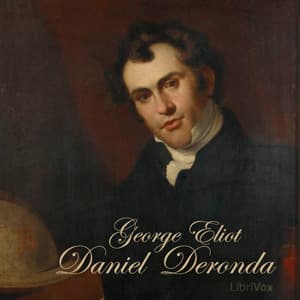

George Eliot's final novel is a commitment. Thirty-two hours of Victorian prose, dual narratives, and the kind of moral philosophy that would make my AP Lit students groan audibly. I started this during a particularly brutal week of midterm grading, and somewhere around hour fifteen—red pen in hand, stack of essays about The Great Gatsby that all said the same thing about the green light—I realized Daniel Deronda had become my escape. The irony of fleeing student papers by listening to a novel about identity, education, and becoming who you're meant to be? Not lost on me.
Gwendolen Harleth Is Why We Still Read the Classics
Let me say this plainly: Gwendolen Harleth is one of the great character studies in English literature. Eliot builds her with such precision—the vanity, the fear, the slow cracking open of a self-centered soul. When she marries Grandcourt knowing exactly what kind of man he is, knowing she's betraying another woman, you want to shake her. But Eliot won't let you hate her. She's too honest about Gwendolen's desperation, about what limited options looked like for women with no money and too much pride.
Becky Miller reads Gwendolen with this subtle shift in tone—not a full character voice, but a kind of brittle brightness that softens as the novel progresses. By the time Gwendolen is confessing to Daniel on that boat, Miller's voice has dropped something. The performance becomes quieter. Less defended. It's the kind of interpretation that rewards patience.
The Daniel Problem (And Why It's Not Really a Problem)
Here's the thing my students would hate: Daniel Deronda himself is kind of... boring? He's too good. Too noble. Too ready to sacrifice everything for abstract ideals. Eliot knew this—she was writing a particular kind of moral exemplar, and she was doing it deliberately. His discovery of Jewish heritage, his growing connection to Mordecai and Mirah, his eventual commitment to Zionism—this was radical stuff in 1876. Still provocative now, honestly.
Miller handles the philosophical passages—and there are many—with clarity rather than drama. Smart choice. When Mordecai launches into his visions of Jewish nationhood, she doesn't try to make it exciting. She lets Eliot's earnestness stand. These sections require focus. I won't pretend I caught every nuance while half-listening during faculty meetings (sorry, Principal Martinez, but the budget presentation couldn't compete with Victorian proto-Zionism).
A LibriVox Production Worth Your Time
Let's be honest about what this is: a volunteer recording, not a professional studio production. No music, no effects, just Miller and the text. The audio is clean, her pacing steady. She doesn't rush the prose—and Eliot's sentences demand that respect. This is an author who understood that pause is punctuation.
At 1.0x speed (yes, I'm that person), the rhythm of Eliot's language comes through. Those long, winding sentences that build clause upon clause, circling toward meaning—they need time. Speed this up and you'll miss the architecture. My students would call this take ancient. They're not wrong.
Who Should Spend Thirty-Two Hours Here
If you loved Middlemarch, this is its spiritual successor—darker in some ways, more politically ambitious in others. For something with that same Victorian moral complexity but more accessible pacing, Oliver Twist might be a gentler entry point. If you're new to Eliot, maybe start there first. Daniel Deronda assumes you're comfortable with Victorian conventions, with characters who speak in paragraphs, with moral philosophy woven into domestic drama.
This is not background listening. Not a commute book unless your commute is very long and very quiet. I finished the last chapters on a Saturday morning walk along the lakefront with Denise, and I had to keep stopping to think. She's patient with me. After twenty years, she knows the signs of a book that's gotten its hooks in.
Skip this if you need plot momentum, if Victorian prose feels like homework, or if you're looking for entertainment rather than education. The content warnings are real—Grandcourt's psychological abuse of Gwendolen is genuinely disturbing, rendered with Eliot's unflinching precision.
Worth Pausing the Faculty Meeting For
Becky Miller delivers a faithful, thoughtful reading of a novel that deserves exactly that. Nothing flashy. Nothing that calls attention to itself. Just clear narration of complex prose, with enough interpretive intelligence to distinguish the dual narratives without overplaying the differences.
Is it a stunning audiobook performance? No. Is it a completely serviceable way to experience one of the great Victorian novels? Absolutely. For a free LibriVox recording, this exceeds expectations. For thirty-two hours of George Eliot, it's exactly what you need: a guide who respects the text and trusts you to meet it halfway.
My mom will definitely fall asleep during this one. But she'd be missing something worth staying awake for.