Okay, I need to rant about something before we get into this. The Dance of Intimacy is abridged. Two hours and fifty-two minutes. I was chopping onions for a dal that takes longer to simmer than this entire audiobook lasts, and by the time I'd added the tadka, Harriet Lerner was wrapping up. For a book about the most complex, layered, painful dynamics in human relationships - the kind of stuff I literally study for a living - under three hours feels like someone handed me a case file with half the pages ripped out. I found myself asking: why does the abridged format exist when the subject matter practically demands the opposite?
Deep breath. Let me be fair.
The Psychologist Who Actually Gets Family Systems
Here's what I respect about Lerner: she doesn't do the self-help thing where you're told to "just communicate better" and somehow that fixes your alcoholic father or your sister who hasn't spoken to you in three years. The Dance of Intimacy operates from a family systems framework - she's tracking multigenerational patterns, triangulation, emotional cutoffs, the whole Bowen theory toolkit - and she does it without making you feel like you need a clinical degree to follow along.
The protagonist of any self-help book is really the reader, and Lerner understands what motivates that protagonist: not some abstract desire for "better relationships" but the very specific, very human terror of either losing yourself inside a relationship or losing the relationship entirely. She names the two poles - too much distance, too much intensity - and then shows you, through case examples, how people oscillate between them. The research actually shows this is one of the most consistent patterns in attachment literature, and Lerner was writing about it before attachment theory became the Instagram psychology darling it is now.
What makes her approach compelling is that she doesn't promise transformation through insight alone. She's explicit that understanding your family patterns is necessary but not sufficient - you have to actually change your behavior in those relationships. Move differently. Stop the anxious pursuit of the distancer. Stop the emotional cutoff you've been performing for a decade. And she acknowledges, bluntly, that this is terrifying work.
The Author-as-Narrator Problem (and Why It Sometimes Works)
Lerner narrates her own book, which is always a gamble. She's not a voice actress. Her delivery is clear and direct - she sounds like what she is: a smart, composed clinician explaining something she's thought about for decades. There's a warmth there, a steadiness, that works for this material. You're essentially sitting in a session with someone who's seen a thousand versions of your particular dysfunction and isn't shocked by any of it.
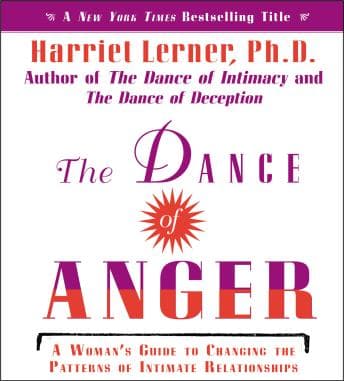
But - and this is the trade-off - the pacing is even. Relentlessly even. There's no vocal shift when she moves from theory to case example, no dramatic modulation when describing a particularly painful family scenario versus laying out a clinical framework. If you're used to performers who give you emotional texture through voice alone, this will feel flat. I was fine with it because I'm basically wired to absorb clinical material, but I can see how someone expecting the emotional punch of The Dance of Anger might find this more... instructional.
And then there's the abridgment issue again. The supplemental PDF exists, presumably to fill gaps, but an audiobook that requires homework feels like a contradiction. (My therapist would have thoughts about a book on intimacy that withholds parts of itself from you.)
Who This Is Actually For
If you've read The Dance of Anger and you're ready for the next step - not just managing your anger in relationships but examining the structural patterns underneath - this picks up that thread. Lerner is building on her earlier work, and she assumes some familiarity with her concepts. Walking in cold, you might feel like you missed orientation.
This is for people who are ready to look at their family of origin with clear eyes and ask hard questions about which patterns they're repeating. Not in a Hallmark-card way. In a "I need to call my mother this weekend and change one thing about how I interact with her" way.
It's NOT for people who want quick emotional catharsis or dramatic stories. Lerner's case studies serve the framework, not the other way around. Psychologically, this tracks - she's a systems thinker, not a storyteller - but it means the listening experience is more like attending a very good lecture than losing yourself in a narrative.
People who want the full, unabridged text should honestly just read the book. I say this as someone who champions audiobooks. The abridged format problem reminds me of what frustrated me about Who Moved My Cheese? — another short listen where I kept thinking the brevity was doing real intellectual disservice to people who actually needed the full argument laid out. At under three hours, abridged, you're getting the highlights reel of something that deserves the director's cut.
My Clinical Assessment
Solid psychological framework, genuinely useful if you're willing to do the work it prescribes, but the abridged format and flat vocal delivery limit what could've been a much richer listening experience. I finished it before my dal was done, and I kept wanting more - more case depth, more examples of how these patterns play out across different relationship configurations. Lerner is one of the smartest voices on relational dynamics we've had, and she deserved more than two hours and fifty-two minutes to make her case.