
What if the thing you've been taught to suppress is actually the signal you most need to hear?
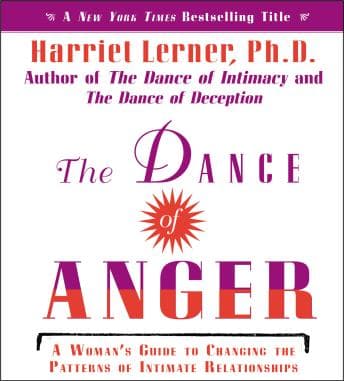
I've been sitting with that question since finishing Harriet Lerner's The Dance of Anger, and honestly, it's the kind of book that makes you want to reexamine every conflict you've ever had. Not in a guilt-spiral way—more like finally getting the instruction manual for a machine you've been operating wrong for decades.
Why This Book Reads Like a Psychology Textbook (In a Good Way)
Look, I'll be upfront: Lerner is an academic. She spent over twenty years at the Menninger Clinic, and you can tell. This isn't a breezy "five steps to manage your emotions" kind of listen. She uses case studies—a lot of them—and some listeners find this frustrating. I get it. But here's the thing: as someone who literally analyzes fictional characters for a living, I found myself treating each case study like a puzzle. Sandra who can't stop fighting with her sister. Maggie whose husband dismisses her concerns. These aren't just examples; they're patterns. And once you see the patterns, you can't unsee them.
The research actually shows that anger in women gets coded as "hysteria" or "overreaction" while men's anger gets coded as "passion" or "conviction." Lerner doesn't just acknowledge this—she builds her entire framework around it. She's asking: what if women's anger is actually a diagnostic tool? What if it's telling you exactly where your boundaries are being crossed?
My therapist would have a field day with this book. (Actually, I might recommend it to her.)
Hearing the Author in Her Own Words
So here's something interesting about this audiobook: Lerner narrates it herself. And I have mixed feelings about this, which I think is fair to share.
On one hand, there's something powerful about hearing a psychologist deliver her own material. Her voice is clear, intelligent, soothing in that way that makes you feel like you're in a very competent therapist's office. She knows exactly where the emphasis should land because she wrote it. When she talks about the difference between "venting" and "changing," you can hear thirty years of clinical experience in how she frames it.
On the other hand—and some listeners have noted this—her intellectual style can be a bit... much. She writes from a place of great intelligence, and she narrates the same way. It's a completely different energy from something like Pretties, which you can absorb while multitasking. If you're looking for something to half-listen to while folding laundry, this might not be it. I found myself pausing during my morning jog more than once to actually process what she was saying. Which is either a feature or a bug depending on what you want from your audiobooks.
At just under three hours, though? It's manageable. You can finish it in a weekend of cooking elaborate dishes you'll eat alone. (Not that I would know anything about that.)
The Framework That Actually Holds Up
What makes this character—and yes, I'm treating Lerner herself as a character in her own book—compelling is that she doesn't just tell you to "express your anger healthily." She gives you a framework for understanding what anger is actually signaling. She talks about "pursuers" and "distancers" in relationships, about how we unconsciously recreate family dynamics, about the difference between changing yourself and trying to change others.
This is a fascinating case study in how self-help can be rigorous without being inaccessible. Lerner doesn't dumb anything down, but she also doesn't hide behind jargon. When she explains triangulation in family systems—how we pull in third parties to avoid direct conflict—she does it through stories that feel uncomfortably familiar.
I found myself asking: why does anger feel so dangerous for so many women? And Lerner's answer is basically: because we've been taught that it threatens connection. But actually, she argues, authentic anger—the kind that leads to clear communication rather than explosions or silent treatment—is what makes real intimacy possible.
Psychologically, this tracks. The research on emotional suppression is pretty clear: it doesn't work. The anger doesn't go away; it just goes underground. That principle of suppression backfiring shows up in unexpected places—even Science of Getting Rich touches on how denying what you want creates resistance rather than progress.
Who This Is (and Isn't) For
If you want practical frameworks and don't mind case studies, this is genuinely useful. I can see why it's been around for decades. The core ideas have held up because they're grounded in actual clinical observation, not trends. But if you found her other work like The Mother Dance more insightful, you might find this one heavy on the examples and lighter on the synthesis. Some books give you the framework upfront and then illustrate it; this one builds the framework through the illustrations, which requires more patience. Skip it if you need something you can half-absorb while multitasking.
Trusting the Signal
For me? I'm keeping it in my library. It's the kind of book I'll probably return to the next time I'm in a conflict and can't figure out why I'm so angry about something that seems small. Because it probably isn't small. And Lerner taught me to trust that signal.