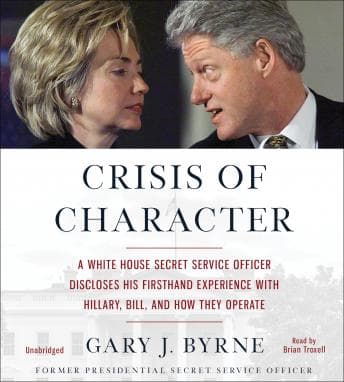
Let me cut to the chase: this book is going to make about half of you furious and the other half nod along saying "I knew it." That's just the nature of political tell-alls, especially ones dropped right in the middle of a presidential campaign. But here's what I can tell you as someone who spent 25 years in uniform, working alongside Secret Service details more times than I can count—Byrne's descriptions of the security culture ring true.
I listened to this during a drive from Austin to Dallas for a client meeting. Ranger was in the back seat, and honestly, he seemed more interested in the passing cattle than the Clinton drama. Smart dog.
What Actually Holds Up from the Inside
Look, I've been the guy standing post. Different context, different principals, but the job has a universal truth: you see things. You hear things. And you keep your mouth shut. So when Byrne breaks that code, you better believe it's going to be controversial.
What struck me most wasn't the political stuff—that's for voters to sort out. It's his descriptions of the daily grind of protection work. The waiting. The hypervigilance. The weird intimacy of being invisible while being everywhere. He gets that right. The way he describes the culture inside the Secret Service, the internal politics, the loyalty conflicts—that tracks with what I observed during my interactions with those guys.
Brian Troxell's narration is solid. Nothing flashy, but that's appropriate here. You don't want some dramatic voice actor turning this into a thriller. Troxell keeps it straightforward, professional—like a debrief, not a performance. His pacing worked well at 1.25x, which is my standard setting.
Where It Gets Murky
Here's where I have to be honest: this book has an agenda. Byrne isn't pretending otherwise, and I respect that he doesn't try to hide it. But if you're looking for a balanced assessment of the Clinton White House, this ain't it. This is one man's perspective, filtered through his experiences and—let's be real—his politics.
The timing of the release (2016 election) tells you everything you need to know about the intent. If you want foundational perspective on how government was designed to work, the Federalist Papers remains the gold standard—though I'll admit it's a tougher listen. That doesn't make his observations false, but it does mean you should read this as a primary source, not a definitive history. I've written after-action reports that were technically accurate but definitely emphasized certain things over others. Human nature.
Some of the character assessments feel like they're painting with a broad brush. I've known plenty of difficult commanders who were also effective leaders. The two aren't mutually exclusive. Byrne presents a pretty one-dimensional view at times, and that's where my skepticism kicks in.
Mission Debrief: Who's This For?
If you're interested in how the Secret Service operates, what the White House environment actually feels like from the inside, and one officer's candid (if clearly partisan) observations—this delivers. The audiobook format works well because Troxell's straightforward delivery matches the material.
If you're looking for objective political analysis or a fair assessment of the Clinton administration, look elsewhere. This is a firsthand account with all the limitations that implies. Skip it if you need balanced reporting; grab it if you want raw insider perspective and can filter for bias yourself.
I found myself most engaged during the sections about Byrne's career trajectory and the institutional culture of the Secret Service. That same institutional perspective on protecting a president—minus the partisan angle—is what made Killing Kennedy: The End of Camelot work so well for me. Less interested in the "gotcha" moments that felt designed for campaign season headlines. Your mileage will vary depending on your political leanings, and I'm not going to pretend otherwise.
Production quality is clean. No issues there. At just under 10 hours, it's a reasonable commitment for a cross-country drive or a week of commutes.
Ranger slept through most of it, which is either a commentary on the pacing or just evidence that he's heard enough political audiobooks for one lifetime. Probably both.






![Steve Jobs [unabridged audiobook] audiobook cover](/_next/image?url=https%3A%2F%2Fcovers.audiobooks.com%2Fimages%2Fcovers%2Ffull%2F9788499923406.jpg&w=1920&q=75)