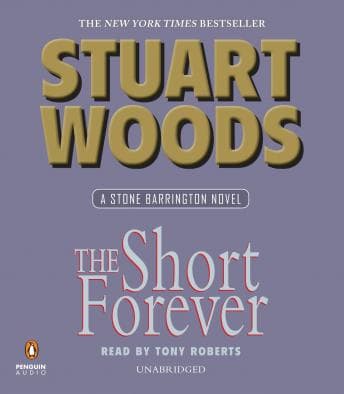

Look, I'll say it: Stuart Woods wrote sixty-three Stone Barrington novels. Sixty-three. I've assigned fewer essays in my entire career. And somewhere around book forty-five, I stopped pretending these were literature and started accepting them for what they are—the literary equivalent of a really good club sandwich. You know exactly what you're getting, it's reliably satisfying, and nobody's winning a James Beard Award for it.
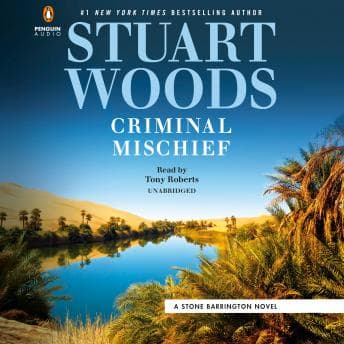
So there I was, grading another stack of papers at 11 PM (Denise had long since gone to bed), and I needed something that wouldn't require me to think. Criminal Mischief delivered exactly that.
The Stone Barrington Formula (And Why It Works at Midnight)
Here's the thing about Stone Barrington that my AP Lit students would never understand: sometimes predictability is the point. Stone is wealthy, connected, impossibly competent, and surrounded by beautiful women who find his silver-fox routine irresistible. The "hinky plot" in this one involves international chasing across locations Stone's never visited before—which, given sixty-three books, must be getting geographically creative at this point.
The mystery itself is... fine. Serviceable. The mastermind is "more evasive than anyone was expecting," which in Woods-speak means Stone actually has to make a few phone calls before solving everything. There's witty repartee with old friends, flirtation with new ones, and the kind of casual wealth that makes you wonder if Stone has ever waited in a TSA line.
But here's what I'll defend to my dying breath: Woods understood pacing. At seven hours, this thing moves. No bloat, no unnecessary subplots about Stone's childhood trauma, no sixty-page digressions about the history of Manhattan real estate. It's lean. That kind of narrative discipline shows up in I Know Why the Caged Bird Sings too—Angelou never wastes a word, though obviously she's aiming for something with actual literary merit. My students would call it "mid." I call it efficient.
Tony Roberts Has Been Doing This Forever (And It Shows)
Tony Roberts has narrated so many Stone Barrington books that he probably dreams in Stone's voice. And look—some listeners complain he sounds like "an old person." To which I say: Stone Barrington IS old at this point. The man's been solving crimes and seducing women since 1991. Roberts' slightly weathered delivery actually fits the character perfectly.
His comedic timing during the witty back-and-forth dialogue is genuinely good. There's a rhythm to Woods' banter that Roberts has internalized completely—he knows when to pause, when to let a dry line land. It's not showy narration. He's not doing twelve distinct accents or theatrical flourishes. He's reading like a professional who's done this specific job hundreds of times and knows exactly what the audience wants.
Is it transcendent? No. Will you remember specific line readings a month later? Probably not. But it's comfortable. Reliable. Like that one colleague who always brings decent coffee to faculty meetings.
Who This Is (And Isn't) For
If you're looking for literary complexity, moral ambiguity, or prose that deserves to be savored—this isn't it. My students would hate this. (I love it.) If you've never read a Stone Barrington novel, starting at book sixty is... a choice. You won't be lost, exactly, but you'll miss some of the accumulated context.
But if you need something for a long drive, a treadmill session, or—like me—the soul-crushing marathon of late-night grading? This is perfect background listening. It demands nothing from you. The plot is just engaging enough to keep you awake, but not so complex that missing a few minutes while you write "Please cite your sources" for the fortieth time will matter.
Content note: there's violence, language, and sexual content, though all of it handled in that breezy, almost genteel way Woods always managed. Nothing graphic enough to make you uncomfortable if someone walks into the room.
The Final Grade (Curved Generously)
Criminal Mischief is exactly what it promises to be—no more, no less. It's the sixty-second Stone Barrington novel (or thereabouts), and it delivers the exact experience fans expect. Tony Roberts' narration is steady and professional, if not particularly memorable. The production is clean, no audio issues, no weird background noise.
Is this great literature? Hemingway would have had thoughts. (Probably about the prose being too soft, the stakes too comfortable.) But sometimes you don't want Hemingway. Sometimes you want seven hours of a competent man solving problems while attractive people find him charming.
I finished it around 1 AM, papers finally graded, and felt exactly satisfied enough. That's the Stuart Woods promise, and he kept it until the very end.