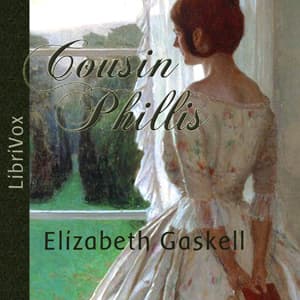

What happens when industrialization meets pastoral innocence? Gaskell knew. She'd been writing about it her whole career. But in Cousin Phillis, she distills that tension into something so small and intimate that it sneaks past your defenses entirely.
I finished this one during a late Sunday morning, coffee going cold, Denise reading the Tribune across the table. Neither of us spoke for a good hour afterward. Not because the book demanded silence—it's barely four hours—but because Gaskell had somehow made me feel like I'd just watched something irreversible happen to someone I knew.
The Quiet Violence of Progress
Paul Manning arrives in the countryside to work on the railway. His cousin Phillis reads Latin with her minister father and helps with the harvest. These two worlds shouldn't collide, but they do—through Paul, through his charming engineer friend Holdsworth, through the literal train tracks cutting across farmland. Gaskell never preaches about what's being lost. She just shows you Phillis learning Italian from a man who will leave, shows you her father's Greek lessons becoming insufficient armor against heartbreak.
This is why we still read the classics. Not for plot twists or shocking reveals, but for the way a skilled writer can make you feel the weight of a single season passing. The narrator understands that pause is punctuation—Elizabeth Klett gives the silences between Phillis and Holdsworth exactly the space they need to become unbearable.
Klett Gets the Restraint Right
I'll be honest: the research didn't give me much on Klett's specific character voices. But after listening, I can tell you what matters more. She reads Gaskell the way Gaskell should be read—at the pace of a long walk, not a commute. Her voice carries that particular quality of someone telling you a story they've been thinking about for years. The audio editing is clean enough that I forgot I was listening to a recording, which is the highest compliment I can give.
If you're expecting dramatic shifts between characters, you won't find them here. But that's appropriate. This isn't a novel of grand declarations. It's a novel of glances, of things left unsaid, of Paul watching his cousin and understanding too late what he's witnessing.
A Word About That Ending
Some listeners found the ending unsatisfactory. I understand why. There's no resolution in the traditional sense—no wedding, no reconciliation, no clear path forward for Phillis. But Gaskell wasn't writing that kind of story. She was writing about the moment before the wound heals, or doesn't. The moment when you realize someone you love has been changed by something you helped cause.
My students would hate this. They want catharsis, closure, the hero's journey completed. I love it precisely because life doesn't work that way. Sometimes you just watch someone you care about walk back into the house, and you know things will never be quite the same, and that's the story. That same ache of watching something irreversible unfold shows up in Husband's Secret, though Moriarty trades Victorian restraint for suburban Australia.
(The prose deserves to be savored. I listened at 1.0x because Gaskell chose those words, and Klett delivers them with the respect they deserve.)
Who This Is For—And Who Should Pass
If you loved Cranford or Wives and Daughters, this is their quieter, more melancholy sister. If you appreciated the pastoral sections of North and South but wished Gaskell had lingered there longer, this is your book. Perfect for a Sunday morning, a long walk, or any moment when you want literature that trusts you to feel without being told what to feel.
If you need action, if you need plot, if you find Victorian prose tedious—skip it. No shame in that. This is a book for a particular mood, a particular patience. At under four hours, it's not asking for much of your time. But it is asking for your attention.
Worth Pausing the Faculty Meeting For
Gaskell called this her crowning achievement in the short novel form. I'm inclined to agree with her. It's slight in the way a perfect sonnet is slight—every word doing exactly what it needs to do, nothing wasted, nothing excessive. Klett's narration honors that precision.
Is it essential listening? For Gaskell fans, absolutely. For anyone teaching Victorian literature, it's a clinic in showing rather than telling. For the casual listener looking for entertainment—probably not. But for those of us who believe great writing is its own reward, who listen to audiobooks not to pass the time but to be changed by the time we spend, this is a small, perfect thing.
Principal Martinez, if you're reading this: I was definitely paying attention in last week's meeting. (I wasn't. I was listening to Phillis learn Italian from a man who would break her heart. It was worth it.)