
"She was no longer Amari. She was nothing."
That line hit me around hour two, and I had to pause the audiobook. I was prepping slides for a client pitch on organizational resilience—the irony wasn't lost on me. Here I am helping tech startups "pivot through adversity" while listening to a fifteen-year-old girl survive the Middle Passage.
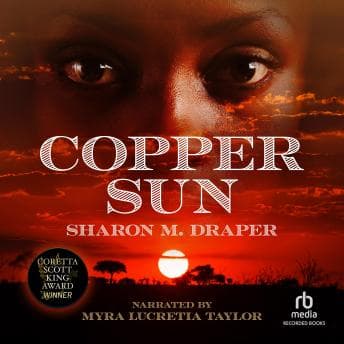
Bottom line: This is not a comfortable listen. It shouldn't be. Sharon Draper wrote a YA novel that doesn't flinch, and Myra Lucretia Taylor's narration ensures you can't look away either.
The ROI on Difficult History
Let me be clear about what this book is and isn't. It's historical fiction aimed at young adults, which means some characters lean archetypal—the cruel plantation owner, the conflicted white servant, the resilient protagonist. Some reviewers call these "caricatures." I call them entry points. This book exists to teach, and sometimes clarity beats nuance.
My parents never talked about the Korean War. Their parents never talked about Japanese occupation. There's a generational cost to historical silence. Draper's approach—direct, unflinching, accessible—feels like the antidote. She's not writing for historians. She's writing for the kid who's never thought about what "sold down the river" actually meant.
The friendship between Amari and Polly is where the book earns its depth. One African, one Irish indentured servant. Both property. Their alliance isn't built on understanding—it's built on survival math. That dynamic rings true. I've watched enough startup teams form under pressure to recognize it.
Taylor Doesn't Let You Detach
Here's what separates a good audiobook from a necessary one: Myra Lucretia Taylor's voice carries weight without melodrama. When she narrates the branding scene—and yes, there's a branding scene—she doesn't oversell the horror. She doesn't need to. The facts are horrific enough.
Her inflection shifts between characters are subtle but effective. Amari's voice carries a particular quality of exhausted determination that's distinct from Polly's more brittle defiance. The plantation owner sounds exactly like every executive I've met who confuses authority with cruelty. (Jenny would say I'm being harsh. Jenny is right. But also, I'm right.)
No audio issues. Clean production. At nine hours, it's a commitment, but Taylor's pacing kept me engaged through a cross-country flight and three hotel gym sessions.
The Escape Sequence Earns Its Length
The back third of this book—the escape attempt, the journey to Fort Mose in Spanish Florida—is where Draper's research pays off. I didn't know Fort Mose existed. Most people don't. A free Black settlement in colonial Florida, offering sanctuary to escaped slaves. Real history, buried in plain sight.
The journey south is brutal. Hurricanes, hunger, bounty hunters. But it never felt padded. Three Day Road operates on the same principle—relentless forward momentum where every hardship strips away pretense. Each obstacle reveals character. Amari's survival instincts. Polly's slowly crumbling assumptions about racial hierarchy. The baby they're carrying—yes, there's a baby, and no, I won't spoil how that happens.
Who Should Queue This Up (And Who Shouldn't)
Parents looking for age-appropriate entry points into slavery's reality—this works. Educators building curriculum—obviously. Adults who want to understand what their kids are reading—yes, and prepare yourself.
Skip if you need escapism right now. This isn't that. Skip if you're looking for complex moral ambiguity—the villains are villains, the heroes are heroes. That's a feature for the target audience, not a bug.
I listened at 1.5x instead of my usual 2.0x. The subject matter demanded more attention. More respect.
Closing the Books
My parents worked fourteen-hour days so their kids could have choices. Amari's parents were murdered so their daughter could become someone else's property. Every business book I've ever reviewed suddenly feels very small.
Draper won the Coretta Scott King Award for this. She earned it. Not because the prose is literary—it's accessible, sometimes blunt. Not because the characters are complex—they're clear. Public Secrets takes a similar approach to difficult subject matter—clarity over complexity when the stakes are this high. She earned it because she told a necessary story in a way that a fourteen-year-old can absorb and a forty-year-old can't dismiss.
Taylor's narration is the delivery mechanism that makes it work. Compassionate without being soft. Present without being performative.
Worth the credit. Worth the discomfort. Worth remembering that "resilience" isn't a corporate buzzword—it's what survival actually costs.