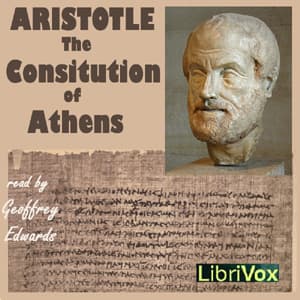

What would happen if someone handed you the operational manual for the world's first democracy? Not the philosophy behind it - Aristotle covered that elsewhere - but the actual nuts and bolts. The committee structures. The election procedures. The constitutional amendments that got Athens from point A to point B over two centuries.
That's exactly what you get here. And honestly? It's more fascinating than it has any right to be.
The Intel Brief You Didn't Know You Needed
Look, I've read plenty of ancient texts that feel like wading through mud. This isn't one of them. The Constitution of Athens reads like a debrief - here's what happened, here's who did what, here's how the system evolved. Aristotle (or whoever actually wrote this - the jury's still out) lays out Athenian political development from the early archons through Solon's reforms, the tyranny period, and into the democratic era.
The sections on Solon's debt reforms hit different when you've seen what happens to societies under economic stress. Abolishing debt slavery wasn't just humanitarian - it was strategic. Stabilize the population, prevent civil unrest, build a sustainable system. Smart commander's move.
What surprised me was the procedural detail. How they selected jurors. How they audited public officials. The mechanisms for ostracism. This isn't abstract political theory - it's a field manual for running a city-state. And some of these problems? We're still wrestling with them. How do you prevent wealthy citizens from buying elections? How do you ensure accountability? Athens had answers. Not perfect ones, but answers.
Geoffrey Edwards: Mission-Appropriate Delivery
Here's the thing about the narration - Edwards reads this exactly the way it should be read. Clear. Steady. No drama. Some reviewers complain it's monotone, and yeah, he's not going to win any performance awards. But this is a constitutional document, not a thriller.
I listened to most of this during a drive to Houston for a client meeting. At 1.25x speed (my standard), Edwards' pacing worked perfectly. His enunciation is precise enough that you don't miss the Greek terms or the technical vocabulary. He's not trying to entertain you - he's trying to inform you. Mission accomplished.
Would I have liked a bit more vocal variation during the historical narrative sections? Maybe. When Aristotle describes the rise and fall of the tyrants, there's genuine drama there. Edwards keeps it pretty level throughout. But I'd rather have consistent clarity than someone trying to act their way through a scholarly text and botching the pronunciation of "Cleisthenes."
The production quality is solid - clean audio, no background noise. This is a LibriVox recording, and it's one of the better ones I've encountered.
Who Should Deploy This (And Who Shouldn't)
Worth your time if: You're a student of political science, ancient history, or constitutional development. If you've ever wondered how democracy actually functioned in practice - not the idealized version, but the messy, procedural reality - this delivers. Also useful if you're into comparative government. Athens tried things we're still debating.
Skip it if: You want narrative storytelling or dramatic performance. This is dense, detailed, and academic. If you zone out during procedural discussions, you'll struggle. Story of My Life has that same documentary precision - no frills, just the facts laid out clearly. It's under three hours, but it feels longer because every paragraph is packed with information.
I've recommended this to a couple of my younger consultants who came up through political science programs. They'd studied democratic theory but never really dug into the operational side of Athens. Changed how they thought about institutional design.
Mission Debrief
At 2 hours and 46 minutes, this is a compact but serious listen. It's not entertainment - it's education. Aristotle (or his student) wrote this as a reference document, and that's how you should approach it. Edwards delivers it cleanly without getting in the way.
Is it going to keep you on the edge of your seat? No. But if you want to understand how the first major democratic experiment actually ran - the successes, the failures, the structural choices that shaped everything after - this is primary source material. The real deal.
Ranger slept through this one, but that's on him. Some of us appreciate a good constitutional analysis.






![Steve Jobs [unabridged audiobook] audiobook cover](/_next/image?url=https%3A%2F%2Fcovers.audiobooks.com%2Fimages%2Fcovers%2Ffull%2F9788499923406.jpg&w=1920&q=75)