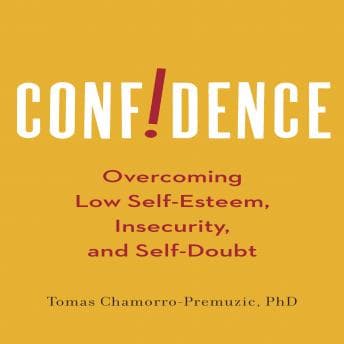

I've sat through probably 200 business and self-help audiobooks that all say the same thing: believe in yourself, fake it till you make it, confidence is key. Then Tomas Chamorro-Premuzic walks in and basically says, "Actually, you're all wrong, and here's the research to prove it."
I was on a flight to Denver when I started this one—consulting gig with a fintech startup that was, predictably, imploding because their founder had too much confidence and not enough competence. The irony wasn't lost on me.
When the Data Actually Backs Up the Contrarian Take
Here's what got me: Chamorro-Premuzic isn't just being provocative for book sales. He's a Professor of Business Psychology at both UCL and Columbia, and he runs Hogan Assessment Systems. This guy has spent his career measuring personality traits and their actual outcomes. Not vibes. Data.
His core argument? High confidence makes people less likeable, less employable, and—here's the kicker—less successful in the long run. I've seen this play out at three different companies I've consulted for. The loudest voice in the room isn't usually attached to the best ideas. I saw the opposite problem in Top 1%—a lot of confidence about success formulas without much substance backing them up. My parents never read a self-help book in their lives, but they understood this instinctively. Keep your head down, do good work, let results speak. Now it has a TED talk.
The book breaks down why low confidence can actually be an asset—it keeps you motivated, makes you more self-aware, pushes you to prepare more thoroughly. I'm not gonna lie, as someone who's been told I'm "aggressively efficient" (Jenny's words), hearing that my constant self-questioning might be a feature rather than a bug was... validating? In a weird way.
Where It Gets Practical (Finally)
Most self-help books give you 45 minutes of insight padded into 8 hours. This one's 7.5 hours, and honestly? Skip to the middle chapters if you want the tactical stuff. The early sections are heavy on establishing the research foundation—important if you're skeptical, but if you're already bought in, you can 1.25x through it.
The practical advice is solid: when to fake confidence (job interviews, presentations), how to build actual competence instead of just projecting assurance, and—this is the part that stuck with me—how to leverage self-doubt as a diagnostic tool rather than letting it paralyze you.
One thing that surprised me: Chamorro-Premuzic doesn't say confidence is bad. He says unearned confidence is bad. There's a difference between knowing you can deliver because you've done the work and believing you're great because you watched a motivational video. My clients who fail usually can't tell the difference.
Sean Pratt at 2.0x? No Problem
Sean Pratt is a seven-time AudioFile Earphones Award winner, and it shows. His delivery is clean, clear, and doesn't get in the way of the content. For a book this research-heavy, that's exactly what you want. He's not trying to be dramatic or inject false energy—he just presents the material and trusts you to engage with it.
I listened at 2.0x as usual, and it held up fine. Pratt's pacing is measured enough that speeding it up doesn't make it incomprehensible. Production quality is solid throughout—no weird audio artifacts, no volume inconsistencies.
The Catch (Because There's Always a Catch)
Here's where I have to be honest: if you're genuinely struggling with low self-esteem, this book might hit different. Not in a good way. Chamorro-Premuzic is writing from an academic perspective, and some of his points about the "benefits" of low confidence could feel dismissive if you're in a dark place.
This is really a book for people who are already functioning but want to understand the psychology better. It's not therapy. It's not going to fix anything on its own. It's a framework for thinking about confidence differently.
Also—and this is a minor gripe—some sections feel repetitive. He'll make a point, support it with research, then circle back to it two chapters later. At 2.0x, I didn't mind. At normal speed, I can see it dragging.
Who Gets ROI Here (And Who Doesn't)
If you're in leadership, management, or any role where you assess people's potential versus their self-presentation, this is essential listening. Skip it if you're looking for a confidence boost or struggling with genuine self-esteem issues—this is analysis, not therapy.
The key takeaway is worth the listen. The other 7 hours? Mostly worth it too, which is more than I can say for most books in this category.
My parents ran a dry cleaning business for 30 years. They never talked about confidence. They talked about showing up, doing the work, treating customers right. Chamorro-Premuzic would probably say they had it figured out all along.
Jenny would say I'm being too generous with this rating. Jenny hasn't sat through 200 mediocre business books. This one actually has something to say. Outliers does too—different angle on success, but same commitment to research over platitudes.