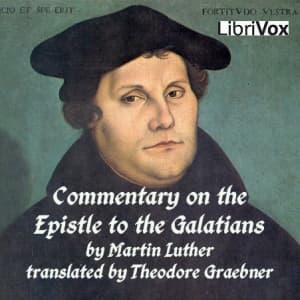

I'll be honest—I came to this expecting something dry. Theological commentary from the 16th century? My students would rather clean chalkboard erasers. But here's the thing: Martin Luther was basically the original podcaster. The man had opinions, and he was not shy about sharing them.
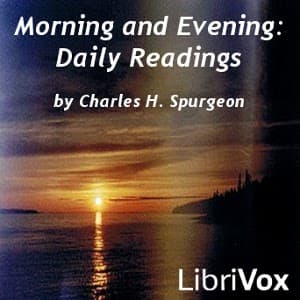
This LibriVox recording of Luther's *Commentary on Galatians* caught me off guard. I started it during a particularly brutal stack of sophomore essays on *The Great Gatsby* (no, Tyler, the green light is not just a traffic signal), and by hour three, I was genuinely engaged. Not in a "this is good for me like vegetables" way. Actually engaged.
Why This Still Matters Five Centuries Later
What struck me most is how *readable* Theodore Graebner's translation makes this. The original Latin work was apparently much longer—Graebner condensed and modernized it for American audiences, and honestly? It works. Luther's verse-by-verse breakdown of Galatians feels less like academic theology and more like sitting with a passionate professor who keeps interrupting himself because he just thought of something else important.
This reminds me of what Hemingway said about good writing—you should be able to cut everything that doesn't serve the story. Graebner seems to have done exactly that with Luther's sprawling original. What remains is the essential argument: grace versus works, faith versus law. Luther hammers these themes with the kind of repetitive intensity that either drives you crazy or finally makes something click. For me, around hour six, it clicked.
(Don't tell my students I spent nearly eleven hours on Reformation theology. They already think I'm ancient.)
The LibriVox Reality Check
Okay, so here's where I have to be real with you. This is LibriVox. Volunteer narrators. Free audiobook. You're not getting a polished Audible production with consistent sound engineering and a single professional voice actor.
The audio quality varies. Some sections are crisp and clear, others sound like they were recorded in someone's garage. The volume levels jump around. If you're the type who notices every production hiccup, this will drive you up a wall. I listened while grading papers at 11PM, so honestly, the occasional rough patch just kept me awake.
The rotating volunteer narrators are a mixed bag. Some read with genuine warmth and understanding of the material. Others are... a bit dry. There's no character differentiation to speak of because this isn't a novel—it's theological commentary. But the best sections feel like someone is actually teaching you something, not just reading words off a page.
Is it the best audio experience? No. Is it free and surprisingly listenable for nearly eleven hours of 16th-century biblical exegesis? Yes. Worth pausing the faculty meeting for.
The Slow Burn That Paid Off
Here's what I kept coming back to: Luther's anger. The man is *furious* at what he sees as a corruption of Paul's message. And that fury translates even through translation, even through volunteer narrators, even through 500 years of history. You feel him wrestling with these verses, turning them over, refusing to let go until he's said everything he needs to say.
Luther wasn't writing for scholars—he was writing for regular people trying to understand their faith. That accessibility comes through. When he breaks down concepts like justification by faith, he's not showing off. He's teaching. And as someone who's spent twenty years trying to get teenagers to care about literature, I recognize good teaching when I hear it.
If you loved Augustine's *Confessions* or found yourself unexpectedly moved by *Mere Christianity*, this hits similar notes. I got that same sense of wrestling with big questions from Falling Upward: A Spirituality for the Two Halves of Life, though Rohr's approach is gentler where Luther is combative. Different era, different style, but the same earnest attempt to explain something that matters deeply.
Who This Is (And Isn't) For
Let me be direct: if you're looking for light listening, keep scrolling. This is dense material. It requires attention. I wouldn't recommend it for the gym or a casual commute—you'll zone out and miss the thread.
But if you're interested in the intellectual foundations of the Reformation, or if you've ever wondered what Luther actually *said* beyond the 95 Theses, this is genuinely valuable. Pair it with some Calvin or Aquinas if you want the full picture. Skip it if inconsistent audio quality is a dealbreaker, or if you need narrative momentum to stay engaged. My students would hate this. I love it.
Class Dismissed
The LibriVox production is what it is—free, imperfect, occasionally rough around the edges. But the content? The content is why we still read the classics. Some ideas are worth the effort.