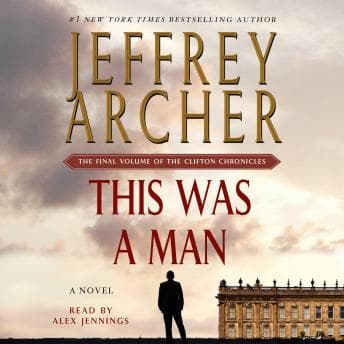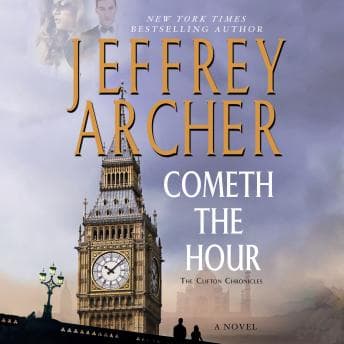

"The reading of a suicide note" — that's the first line of the book description, and honestly, that's about how casually Jeffrey Archer drops grenades into his chapters. I was walking the lakefront with Denise on a Saturday morning, coffee in hand, lake looking like hammered silver, and Archer opens with a dead man's last words. Denise asked why I'd stopped walking. I didn't have a good answer.
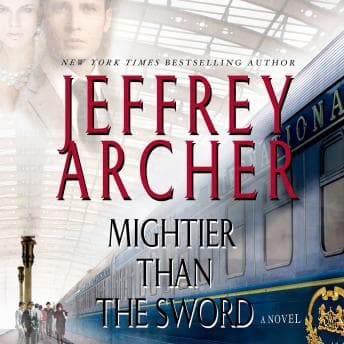
Book six of the Clifton Chronicles. Six. I want you to sit with that number. This is a man who decided one family saga needed seven volumes, and by God, he's going to use every one of them. I came to Archer late — a colleague lent me the first book years ago, said it was "Downton Abbey meets Forsyte Saga meets airport thriller." That's not wrong, but it undersells the machinery. Archer builds plot the way watchmakers build movements: dozens of tiny gears, all clicking, some of them ready to spring a trap you forgot was set three books ago.
The Suicide Note Opens the Door, But Lady Virginia Steals the Room
Let's talk about what Archer is really doing with his villain structure here. Lady Virginia is, by this point in the series, operating at a level of aristocratic grift that would make Becky Sharp blush. Her storyline with Cyrus T. Grant III — the Louisiana mark she meets at Royal Ascot — is Archer at his most gleefully wicked. It's a con artist narrative nested inside a family saga, and it works because Archer never lets Virginia become a cartoon. She's desperate. Desperation makes villains interesting.
Then there's Giles Barrington's Cold War entanglement with Karin. Is she a spy? Is she genuine? Archer plays that ambiguity with the patience of a chess player who's already thinking four moves ahead. But — and this is where some listeners will push back — the storyline feels lighter than it should. The Iron Curtain should be terrifying. Here it sometimes feels like set dressing. My students would say it lacks "stakes." They'd be half right.
Sebastian's forbidden romance with Priya has the bones of something genuinely moving — cross-cultural love against family obligation — but Archer gives it about as much breathing room as a faculty meeting agenda item. You feel the potential, and then you're yanked to the next plotline. That ache of potential left unrealized — love stories compressed by larger narrative machinery — hit me just as hard in Their Eyes Were Watching God, where Hurston somehow makes you feel entire decades of longing in a single paragraph. This is the curse of Book Six in a seven-book series: too many plates spinning, and some of them wobble.
Alex Jennings Carries What the Plot Sometimes Can't
Here's the thing about Alex Jennings. He's been with this series long enough that he doesn't just voice these characters — he owns them. His Lady Virginia has this cut-glass contempt that sits right behind every vowel, and when she's working Cyrus at Ascot, you can practically hear the predatory smile. His Giles is warmer, more uncertain, the voice of a man who keeps choosing love over political sense.
Jennings handles the large cast — and it is genuinely large — with the kind of precision that makes you forget you're listening to one person. The shifts between characters aren't showy. They're architectural. He moves between Sebastian's corporate confidence and Harry Clifton's dogged idealism without ever letting you lose track of who's speaking. The narrator understands that pause is punctuation, and Jennings uses silence the way good actors use it on stage — to let weight settle.
If the story dips in energy, Jennings never does. His emotional delivery during the aftermath of that opening suicide note carries real grief. Not performed grief. Inhabited grief.
The Penultimate Problem
I teach enough novels to know that the second-to-last act is the hardest one to write. You have to advance everything, resolve nothing completely, and leave the audience hungry. Archer mostly succeeds, but there are moments where the machinery shows. The banking subplot with Sloane and Mellor plotting against Farthings feels like it's treading water — villains scheming because the plot needs them to scheme, not because the scheme itself is interesting. And Harry's quest to free Babakov from the gulag, while morally urgent, hits familiar beats. We've been here before with Archer. Noble cause, impossible odds, last-minute twist.
But then — that ending. Archer's trademark twist lands, and suddenly the wobbling plates don't matter as much because you're already reaching for book seven.
This reminds me of what Hemingway said about prose being like an iceberg. Archer's iceberg is upside down — everything is on the surface, all spectacle and momentum. And sometimes that's exactly what you want. Not every audiobook needs to be Middlemarch. (Though Middlemarch is better. Sorry, Jeffrey. It just is.)
Who Gets a Seat and Who Should Wait in the Hall
If you've listened to the first five Clifton books, you're buying this one. You know that. I know that. Jennings alone is worth it. If you haven't started the series, do NOT begin here — you'll be lost inside ten minutes. Go back to Only Time Will Tell and give yourself the full ride.
If you loved the Forsyte Saga or Ken Follett's Century Trilogy, this is its spiritual successor in ambition if not always in depth. Worth pausing the faculty meeting for — though maybe not pausing Middlemarch for.
The Grade I'd Write in the Margin
Archer's storytelling engine is still running strong even when individual pistons misfire. Jennings elevates every scene he touches. The prose deserves to be savored at 1.0x — Archer writes short, punchy chapters that reward patience rather than speed. It's not the best book in the series, but it's the one that makes you desperate for the last one. And in a seven-book saga, that's the job of book six. Job done.