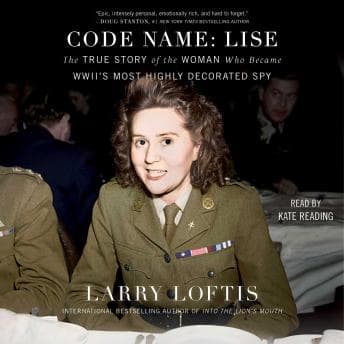

I have a bone to pick with Larry Loftis. Because I was halfway through designing a logo suite for a wellness brand — all soft pastels and gentle curves — and this book had me so wrecked that I accidentally made the entire color palette funeral black. Twice. My client was confused. I was confused. Frida was sitting on my keyboard looking at me like, "Get it together, Elena."
But here's the thing. I couldn't stop.
Five Failed Drops and a Plane Crash Before the Mission Even Starts
Odette Sansom tried to get into occupied France FIVE TIMES before she actually made it. Five. And one of those attempts ended in a literal plane crash. Most people would've taken that as a sign from the universe — maybe stay home, knit something, wait out the war. But no. This woman, a mother of three daughters, kept going. And that detail — the three daughters she left behind — is the one that burrowed into my chest and stayed there for the entire ten hours.
Loftis writes nonfiction like he's daring you to put it down. The pacing is tight for a history book, especially once Odette and Captain Peter Churchill start running operations together in the south of France. There's this cat-and-mouse tension with Hugo Bleicher, the German sergeant hunting them, that genuinely made me hold my breath while I was adjusting kerning on a headline. The romance between Odette and Peter isn't shoved in your face either — it builds slowly under the weight of their shared danger, which made it hit so much harder when things fell apart. It's the kind of book that swallows your whole weekend — except the rain is World War II and the Sunday never ends.
What I kept thinking about was my abuela. She would've been riveted by this story — a woman choosing duty over safety, over her own children, over everything comfortable. Abuela loved her telenovelas but she also loved women who were tougher than the world expected them to be. She would've clutched her rosary during the Fresnes prison chapters and then looked at me with those eyes that said, "Mija, THIS is what courage looks like."
Kate Reading Knows Exactly When to Pull Back
Kate Reading's narration does something I really respect — she doesn't oversell the horror. When Odette is in Ravensbrück concentration camp, starving, kept in darkness, Reading's delivery gets quieter instead of louder. She trusts the material. There's no melodrama where the facts are already devastating enough. Her tone shifts between characters are subtle but effective; you can feel the difference between Odette's steel-spined composure and Peter's more anxious energy without Reading doing full theatrical voices. For a book packed with French names, German ranks, and SOE operational jargon, she handles the technical density with this steady confidence that never made me rewind to figure out who was who.
That said — and this is minor — there were stretches in the middle where Loftis goes deep into SOE organizational structure and logistics, and Reading's even-keeled delivery didn't do much to make those sections more engaging. It's the book's problem more than hers, but around hours five and six I did zone out a couple of times and had to scrub back. At 1.0x speed, those informational dumps feel long.
The Love Story That Broke Me Without a Single Love Scene
I ugly-cried at the section where Odette tells her captors she's Peter's wife — not because she is, but because she knows it might save his life. There's no dramatic kiss. No breathless confession. Just a woman claiming a man as hers in front of people who want to kill them both, and meaning it with everything she has. My heart. MY HEART.
The chemistry between them is never written as romance-novel heat. It's wartime intimacy — coded messages and shared silences and the terrifying knowledge that every mission could be the last one. And somehow that restraint made me feel MORE. When they're separated into different camps and you don't know if either of them will survive, I was sitting at my desk at 2 AM with a cold cup of chamomile tea, just... staring at the wall. Diego jumped on my lap and I held him like a stuffed animal for twenty minutes.
This book felt like holding a photograph of someone impossibly brave and realizing the photograph is all that's left.
Who This Is For (and Who Should Brace Themselves)
If you love WWII nonfiction that centers women who history almost forgot — yes, immediately. If you liked The Alice Network or Code Girls, you'll be right at home. I'd also say that if you've ever sat with Short Life of Abraham Lincoln — another book where the biography format has to carry enormous emotional and historical weight — you'll recognize that same challenge of trusting a real life to hold you without fictional scaffolding. But if you need constant action and can't sit through chapters of operational logistics, the middle section might test you. And if descriptions of concentration camp conditions are hard for you, please take care of yourself — Loftis doesn't shy away from what Odette endured.
Abuela's Rosary Would've Been Working Overtime
Ten hours well spent. Not perfect — those middle chapters drag and I wanted even more of Odette's interiority — but the emotional payoff is real and earned. Odette Sansom deserved this book. And Kate Reading delivered her story with the kind of quiet gravity it needed. Crying sessions this time: three. The spreadsheet has been updated.