
"Take one quart of milk, one ounce of Walter Baker's Premium No. 1 Chocolate, grated..."
I'm standing in my kitchen at 9 PM on a Tuesday, trying to nail my grandmother's gulab jamun recipe for the third time this month, and I've got a Victorian chocolate cookbook playing through my speaker. This is either the most on-brand thing I've ever done or the least. I genuinely can't tell.
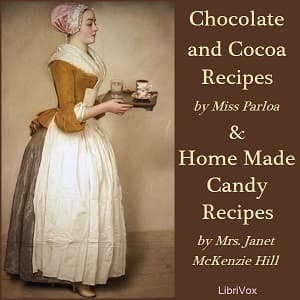
Here's the thing - I picked this up because I was curious about the psychology of branded content disguised as domestic instruction, and Chocolate and Cocoa Recipes delivered exactly that, plus something I didn't expect: a window into how late 19th-century American women were taught to think about competence, precision, and self-worth through the lens of their kitchens.
When a Cookbook Is Really a Character Study
Maria Parloa wasn't just listing ingredients. She was constructing an identity for her reader. Every recipe assumes a woman who has a double boiler, who knows what "a gill" means (I had to look it up - it's about half a cup), and who considers "invalid's chocolate" a normal category of beverage. The specificity of the instructions - "stir constantly for five minutes" rather than "stir until smooth" - tells you something about the anxiety of the era. These women couldn't afford to fail in the kitchen. It wasn't a hobby. It was a performance review. The psychological weight of that dynamic — where domestic performance becomes a proxy for personal worth — is something Mother and Son: The Respect Effect actually circles back to in a different context, tracing how those inherited frameworks around proving yourself to the people whose approval you need get passed down across generations.
I found myself asking: why does Parloa give such meticulous detail for something as simple as hot chocolate? Because for her audience, getting it wrong wasn't just a culinary mistake. It was a moral one. This is a fascinating case study in how domestic literature shaped women's self-perception during the Gilded Age. The recipes aren't really about chocolate. They're about proving you belong in the middle class.
And then there's Section 7 - the advertisements. Walter Baker & Co. paid for this book, and the ads don't even try to hide it. They're read straight, no irony, no winking. Hearing them narrated with the same earnest clarity as the recipes themselves? That blurring of content and commerce felt genuinely unsettling in a way I wasn't prepared for. We think we invented sponsored content. We absolutely did not.
Ashleighjane Knows Exactly What This Needs
The narration is smart in its restraint. Ashleighjane reads this like a patient cooking instructor - clear enunciation, steady rhythm, no attempt to make it dramatic or cute. And that's the right call. When you're listening to someone describe how to temper chocolate in 1909, you don't want vocal theatrics. You want someone who treats the material with the same seriousness Parloa intended.
The multi-narrator approach (this being a LibriVox production with several readers across sections) does create slight tonal shifts - Ashleighjane's warmth versus the more clipped delivery of other contributors. It's not jarring, but you notice. The production is clean, no background hiss or volume drops, which honestly exceeds my expectations for a volunteer-recorded public domain audiobook.
At 2 hours and 42 minutes, this is a short listen. Almost deceptively so. I got through it in one cooking session (the gulab jamun turned out mediocre, thanks for asking).
The Limits of Listening to a Cookbook
Let's be honest about the inherent awkwardness of this format. You cannot follow a recipe by audio alone. "One-third of a cup of sugar" doesn't lodge in your working memory the way it does when you're reading it off a page. So who is this actually for? Not someone who wants to make Victorian fudge tonight. It's for the person - like me, apparently - who wants to understand the world these recipes came from. The language, the assumptions, the fact that "a small piece of butter" was considered sufficient instruction. (Psychologically, this doesn't track with how memory works for procedural tasks. You need visual anchoring. Parloa's original readers had the printed page. We have... vibes.)
But as an artifact? As a piece of American food history wrapped in corporate sponsorship and gender expectations? Pretty fascinating. My therapist would have thoughts about how much I'm reading into a chocolate recipe book, but that's between me and my insurance provider.
Who Gets the Most Out of This
If you're into food history, American Victoriana, or the weird intersection of commerce and domesticity - yes, absolutely. If you want background audio while you're actually cooking something and don't mind the occasional measurement flying past your ears - sure, that works too. If you're looking for entertainment in any conventional sense, this isn't it. It's a product catalog from 1909 that happens to contain genuinely useful recipes for chocolate cake and bonbons.
The Diagnosis
This is comfort listening disguised as instruction disguised as advertising. It's three layers of intent stacked on top of each other, and I kind of love that. The research actually shows that branded content creates stronger consumer loyalty when it provides genuine utility - and Parloa's recipes are genuinely useful, even now. Walter Baker & Co. knew exactly what they were doing. So did Maria Parloa. And somehow, over a century later, a LibriVox volunteer made it all feel worth revisiting.