
"There was once a child, and he strolled about a good deal, and thought of a number of things."
That opening line hit me somewhere around minute two, and I had to pause my walk along the lakefront. Denise asked if I was okay. I told her Dickens just reminded me why I became an English teacher in the first place.
Seven minutes. This entire piece runs seven minutes. I've spent longer waiting for my coffee order at the faculty lounge. And yet—here's what kills me about Dickens—in those seven minutes, he manages to do what some novelists can't accomplish in seven hundred pages.
What Dickens Was Really Saying
This isn't a children's story. I mean, it is. But it isn't. The title tricks you into thinking you're getting something light, something to play for your kid at bedtime. What you're actually getting is a meditation on grief, loss, and the desperate human need to believe our loved ones still exist somewhere.
Two children. Brother and sister. They look at stars together and wonder about the angels who live there. Then the sister dies. And the brother spends his entire life—we watch him grow old, lose more people he loves—and each time, he looks up at that same star. His sister appears to him in visions, surrounded by everyone who's left him.
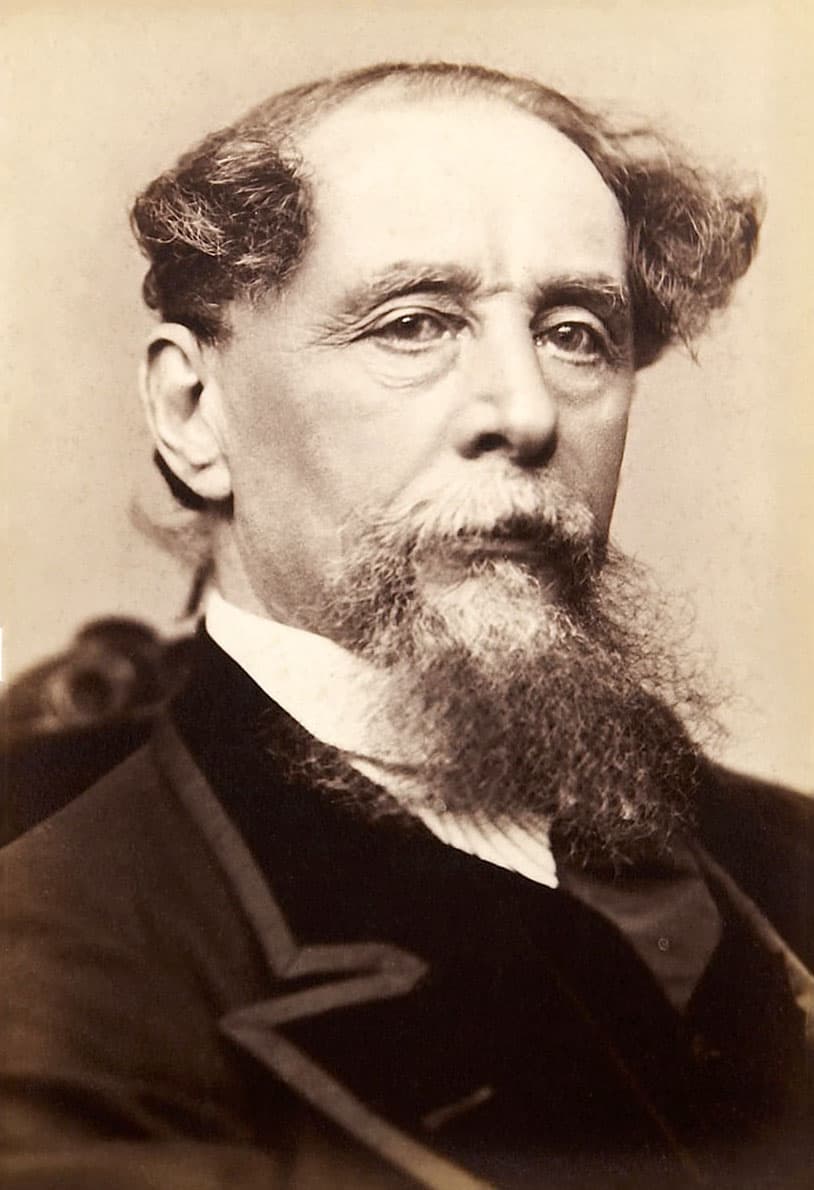
Dickens wrote this in 1850, after losing his own sister-in-law Mary, a woman he was reportedly devoted to. The biographical context makes this piece ache differently. This is a man processing grief through allegory, and you can feel it. Wuthering Heights does something similar—all that Gothic atmosphere is really just Brontë working through her own obsession with death and loss.
The Performance Question
Maria Morabe reads this with a kind of measured restraint that—I'll be honest—I'm still deciding how I feel about. There's no overacting, no dramatic vocal gymnastics. She treats the text like what it is: Victorian prose that already carries its own weight.
But here's where I land. With something this short, the narrator becomes almost invisible. You're not spending twelve hours with this voice. You're spending seven minutes. And in seven minutes, Morabe does what matters most: she doesn't get in Dickens's way. The prose deserves to be savored, and she lets it breathe.
I listened at 1.0x, obviously. (My students think I'm ancient for this take. They're not wrong about the ancient part.) With a piece this brief, speeding it up feels like fast-forwarding through a poem.
The Classroom Test
I'm already planning to use this with my juniors. Seven minutes is perfect—short enough that even the kids who "forgot" their headphones can listen on the classroom speaker without anyone checking out. Long enough to spark actual discussion about Victorian sentimentality, about how death was ever-present in a way our students can barely imagine.
My students would hate this. The language is dense. The sentimentality is, by modern standards, almost unbearable. But that's precisely why we still read the classics—to understand how differently people processed the same universal experiences. Anna Karenina does this too. Tolstoy's characters grieve in ways that feel almost alien to us now, all that formal mourning and social ritual, but the pain underneath is exactly the same.
This reminds me of what Hemingway said about prose being architecture. Dickens builds a cathedral in seven minutes. Every sentence load-bearing.
Who Should Listen (And Who Should Skip)
If you loved "A Christmas Carol" but wished Dickens would drop the ghosts and just punch you directly in the heart—this is your piece. If you're looking for plot, action, anything resembling pacing—skip it. This is a prose poem dressed as a short story.
It's free on Project Gutenberg. The audiobook is essentially a public domain recording. You're not spending a credit here. You're spending seven minutes of your life, and honestly? I've wasted more time on faculty meetings about parking lot procedures.
Worth Pausing Your Grading For
I finished this piece three times in one evening. Once on my walk. Once while Denise was reading in bed. Once more at 11 PM while allegedly grading papers on "The Great Gatsby." (Sorry, third period. Your essays on the green light can wait.)
Is this essential Dickens? No. Read "Bleak House" for that. Listen to "David Copperfield" if you want the full experience. But as a seven-minute reminder of why this man mattered, why Victorian literature still has something to teach us about grief and hope and the desperate need to believe our dead are somewhere, watching?
It's worth your time. Even if that time is shorter than your morning commute.