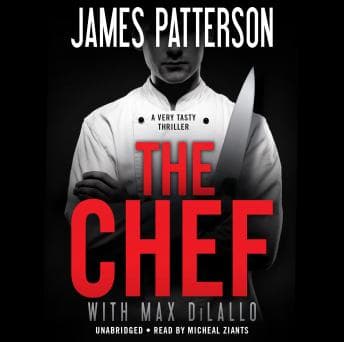

"Has his sideline at the Killer Chef food truck given him a taste for murder?"
I actually laughed out loud at that tagline while stirring my dal at 10 PM. Not because it's clever—because it's exactly the kind of line that tells you what you're getting into. And honestly? The book delivers precisely that level of... let's call it earnestness.
I picked this up expecting a fun procedural with New Orleans flavor (literally), something to keep my brain occupied during my morning jogs through Cambridge. What I got was a fascinating case study in what happens when a book tries to be three things at once and commits fully to none of them.
The Rooney Problem
Caleb Rooney is a detective who runs a food truck. He's accused of murder. His city faces a terrorist threat during Mardi Gras. He has to clear his name while saving New Orleans.
On paper? Compelling. The protagonist exhibits classic hero-under-siege patterns—the wrongly accused man forced to work outside the system. It's a reliable framework. But here's where my researcher brain started asking uncomfortable questions: Why does Rooney feel so... flat?
The research actually shows something interesting about Patterson's collaborative works. When you're churning out books at his pace with co-authors, character depth becomes a luxury. Patterson's collaborative Eruption has a similar problem—the prose moves fast, but you're watching a plot machine operate rather than following a human being through a crisis. Rooney has traits (chef! detective! New Orleans native!) but not psychology. He reacts to plot points like a pinball—bouncing where the story needs him to go. I kept waiting for the moment where his dual identity as cop and chef would create genuine internal conflict. That moment never came.
The food truck scenes are genuinely the most alive parts of the book. They break up the procedural monotony with sensory detail—you can almost smell the gumbo, hear the sizzle of the grill. But they feel grafted on rather than integral. Like someone said "we need a hook" and picked celebrity chef culture because it was trending.
Ziants and the Miscast Mystery
Here's where things get psychologically interesting. Ziants has impeccable diction—crisp, clear, professional. His emotional range during tense moments is solid. But listening to him voice New Orleans characters is like watching someone describe a party they weren't invited to.
The character transitions are awkward. You can hear him shifting between voices rather than inhabiting them. For a book so dependent on New Orleans atmosphere—the Mardi Gras chaos, the local color, the specific rhythm of Louisiana speech—having a narrator who sounds like he's reading about the city rather than from it creates this strange disconnect.
My therapist would have thoughts about this character. Rooney's supposed to be this beloved local figure, this man of the people with his food truck and his badge. But through Ziants' delivery, he sounds like a press release. The emotional depth is there in the dramatic moments, sure. But the casual authenticity that would make you believe this guy actually grew up on crawfish and second lines? Missing.
The Vanilla Conspiracy
Let me be direct: the terrorist plot is corny. Multiple spots made me wince. The "would-be terrorists may be local" reveal plays out exactly how you'd expect if you've consumed any post-9/11 thriller content. The pacing during the Mardi Gras climax should feel urgent—crowds, chaos, ticking clock—but instead it feels like watching someone describe urgency rather than creating it.
I found myself asking: why does Rooney really care about any of this beyond the obvious "it's his job and his city"? The book tells us he's passionate. It doesn't show us why. There's no personal stake that feels earned, no relationship that grounds the stakes in something human.
Psychologically, this doesn't track. People don't risk everything for abstract concepts like "my beloved hometown." They risk everything for specific people, specific memories, specific debts. Rooney has none of these anchoring him.
11/22/63 is the counterexample I kept returning to—King builds Jake Epping's emotional stakes so specifically, so personally, that saving the world feels like a side effect of something much more intimate.Who Gets Something From This (And Who Doesn't)
If you want a no-commitment commute listen that won't require you to remember plot threads between sessions—this works. The 10-hour runtime moves quickly enough. The food truck interludes are genuinely pleasant palette cleansers. Patterson completists will consume this and move on without strong feelings either way.
But if you want a thriller that actually thrills? If you want New Orleans atmosphere that makes you feel the humidity and hear the brass bands? If you want a protagonist whose psychology holds up to any scrutiny? Skip this one.
Case Closed
This is a fascinating case study in diminishing returns. Patterson's factory model produces readable, forgettable content. *Chef* isn't bad—it's just aggressively adequate. Like a food truck that serves technically correct jambalaya with no soul.
I finished it. I don't regret the time. But I also can't tell you a single thing about Caleb Rooney that I'll remember next week. And for a character-driven thriller, that's the real crime.