
Mission Log: The Long Haul
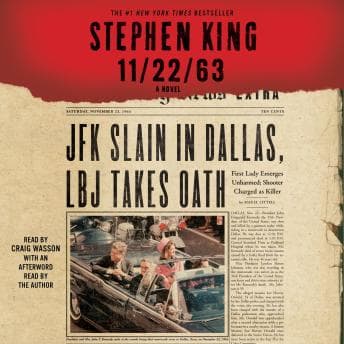
I picked this one up for a drive out to El Paso—about nine hours of pure nothingness on I-10. I needed something substantial. Not a four-hour novella I'd finish before I hit Fort Stockton. I needed a campaign.
At 31 hours, 11/22/63 isn't just an audiobook. It's a deployment.
Here's the sitrep: Jake Epping, a teacher, finds a portal to 1958 in a diner pantry. His mission? Wait five years in the past to stop Lee Harvey Oswald from taking the shot in 1963. Simple objective, impossible execution. Just the way I like it.
The Voice on the Comms
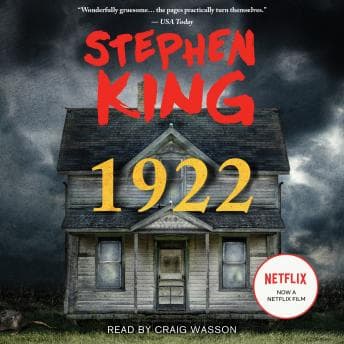
Let's talk about Craig Wasson. I hadn't heard much of his work before, and honestly, the first hour I was skeptical. He's got this slightly nasal tone—kind of like a guy telling you a story over a beer in a smoky VFW hall rather than a polished performer in a booth.
But about three hours in? I was sold.
The man doesn't just read; he inhabits the skin of these people. He does this thing where he captures the rhythm of the late 50s and early 60s. It's not just the accents (though his JFK impression is decent, if a bit caricature-ish); it's the attitude.
(One gripe: He mispronounces "Bangor." I served with a Master Sergeant from Maine who would've had him doing pushups for that. But I let it slide.)
What really impressed me was his emotional range. There are scenes in this book that are... heavy. Not combat heavy, but emotional weight. Wasson's voice cracks at the right moments. He sounds exhausted when the character is exhausted. He nailed the desperation. Ranger (my German Shepherd) usually falls asleep to my audiobooks, but even he perked up during the shouting matches.
The Operation: Waiting for Oswald
Here's the thing about Stephen King. People think "clowns in sewers." But the man knows people. He proved that again in Outsider, where he digs into the psychology of doubt and belief.
As a security consultant, the surveillance aspect of this book fascinated me. A huge chunk of the story is just Jake watching Oswald. Studying his patterns. Assessing the threat level. It's tedious work in real life, but King makes the stakeout feel electric. You're waiting for the other shoe to drop.
But—and this is a big but—the middle section is a detour. Jake spends years living in a small town in Texas called Jodie. He falls in love. He directs high school plays.
Normally? I'd hate this. I'd be yelling at the windshield, "Get back to the mission! Oswald is the target!"
But... I didn't.
(Don't tell Linda, but I actually got invested in the romance.)
It's the classic "warrior finds peace before the storm" trope, and it works. It gives you something to lose. King builds that same sense of inevitable loss throughout Dark Tower II: The Drawing of the Three, where every moment of connection just raises the cost of failure. By the time the timeline starts fighting back—and King writes the past as an adversary that literally throws obstacles in your way—the stakes feel personal.
The Debrief
Is it perfect? No. It wanders. King loves the sound of his own voice sometimes (or in this case, Wasson's). There are scenes that could've been cut to tighten the perimeter.
But the ending? The final approach to the Texas School Book Depository? My knuckles were white on the steering wheel. The tension is absolute.
And that final scene... damn. I'm not gonna spoil it, but it hits you right in the gut.
Who should listen: Road warriors with long hauls ahead, anyone who wants historical fiction that actually feels lived-in, and readers who don't mind earning their payoff. Skip it if you need constant action or can't commit to 31 hours.
Mission accomplished, Mr. King.