
I have a confession. I've been teaching Victorian literature for two decades, and I'd somehow never read G.A. Henty. The man wrote over 120 novels—a hundred and twenty!—and influenced generations of young readers in the late 1800s, and I just... missed him entirely. My graduate advisor would be appalled. (She's probably too busy being appalled at my podcast download numbers to notice.)
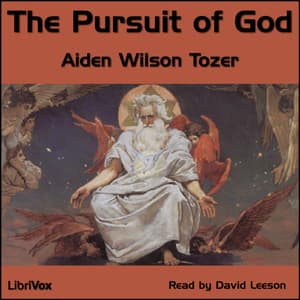
So here I am, grading freshman essays about symbolism in The Great Gatsby at 11 PM, and I've got David Leeson in my ears telling me about a prince who becomes a slave in ancient Egypt. And I'm thinking: why didn't anyone assign me THIS in school?
When Your Protagonist Has Better Problems Than Yours
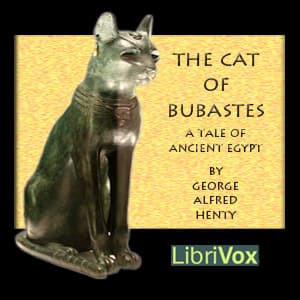
Amuba, prince of the Rebu, watches his father die in battle and gets hauled off to Egypt as a captive. Within the first hour, he's stripped of everything—kingdom, family, identity—and becomes the companion-slash-servant of Chebron, the high priest's son. And here's where Henty does something I genuinely didn't expect: he makes their friendship feel earned.
This isn't some instant brotherhood. Amuba has to navigate being simultaneously a prince in his own right and property in someone else's house. Chebron has to reconcile his education about Egyptian superiority with the reality that this foreign kid is, well, pretty impressive. Leeson handles this dynamic beautifully—there's a subtle shift in his tone as the relationship develops, a growing equality in how he voices their conversations.
The murder conspiracy within the priesthood? That's the plot engine, sure. But the real story is watching these two young men figure out loyalty across cultural lines. This reminds me of what Hemingway said about the iceberg theory—the action is on the surface, but the real weight is underneath.
The Cat That Ruins Everything (As Cats Do)
Let's talk about the central catastrophe. The boys accidentally kill the sacred cat—the one being groomed to succeed the Cat of Bubastes. And when I say "accidentally," I mean it. No malice, no intention, just a terrible moment of wrong-place-wrong-time.
But here's the thing about Henty that my students would absolutely hate: he doesn't let them off easy. There's no convenient loophole, no "well, it was an accident so you're forgiven." The Egyptian religious system doesn't care about intent. The cat is dead. The punishment is death. Full stop.
I actually paused grading for a minute to appreciate how Henty uses this to explore something genuinely interesting about the collision between personal morality and institutional power. These boys did nothing wrong in any ethical sense—and it doesn't matter. The prose deserves to be savored here, even in translation through Leeson's voice. Henty understood that the most terrifying systems are the ones that function exactly as designed.
David Leeson Earns His Keep
I listen at 1.0x because the author chose those words, and Leeson clearly agrees with my philosophy. His pacing is deliberate without being sluggish—he trusts the material. No theatrical flourishes, no attempts to make ancient Egypt sound like a Marvel movie.
What I particularly appreciated: his handling of the Egyptian names and terminology. There's a confidence there that suggests actual research, not just phonetic guessing. When he voices the priests, there's a formality that distinguishes them from the military characters, who get a slightly more clipped delivery. It's not showy differentiation—it's functional, and it works.
The production is clean. No audio artifacts, no jarring edits. Just ten hours and forty-eight minutes of solid, professional narration. Worth pausing the faculty meeting for. (Sorry, Principal Martinez.)
Why We Still Read the Victorians
Henty was writing adventure stories for boys in the 1880s, and yes, you can feel that. There's an earnestness here that modern YA has largely abandoned—a genuine belief that young people can handle moral complexity without everything being spelled out in neon letters.
Is it dated in some ways? Sure. Henty's prose has a certain formality that marks its era. But if you loved Treasure Island or The Count of Monte Cristo, this is their spiritual successor. Same DNA, different setting. Bel Canto operates on similar principles—characters trapped by circumstances beyond their control, finding unexpected grace in the constraints.
My students would hate this. I love it.
Who Gets the Assignment (And Who Gets a Pass)
Homeschool parents looking for historical fiction with actual history—this is your book. Fans of adventure narratives that don't rely on constant action sequences will appreciate the pacing. Anyone who wants to understand why Henty was the J.K. Rowling of his era (in terms of influence, not controversy)—start here.
Skip it if you need modern sensibilities in your historical fiction, or if you're looking for something to half-listen to while doing other things. This one rewards attention.
Class Dismissed
Ten hours with Amuba and Chebron reminded me why I got into teaching literature in the first place. Not because the classics are dusty obligations, but because they're still doing something that matters—exploring what it means to be loyal, to be brave, to be human in systems that don't care about your humanity.
Leeson's narration is the kind of performance I'm always advocating for. Invisible when it needs to be, present when it matters. I'm adding Henty to my personal curriculum, and I'm not even sorry about the 119 other novels I now need to track down.
Denise is going to be so annoyed.