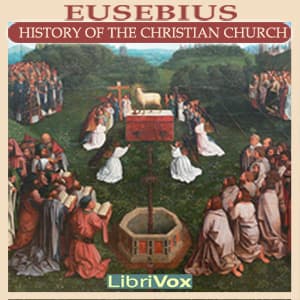

I was grading a stack of sophomore essays on The Crucible at 11:30 PM — the kind where every third paper misspells "theocracy" — when Eusebius of Caesarea started cataloging the episcopal succession of Antioch in my earbuds. And I thought: here's a man who, seventeen centuries ago, was basically doing what I do every semester. Making lists. Keeping receipts. Trying to convince people that history matters. Except Eusebius was tracking bishops and martyrs instead of missing homework assignments, and his stakes were considerably higher.
This is why we still read the classics. Not because they're easy or entertaining in the way we've been trained to expect, but because they're the foundation under everything else. You want to understand why Christianity looks the way it does? Why certain books made it into the New Testament and others didn't? The Psalms — which I spent some time with in Bible (WEB) 19: Psalms - Selections — are exactly the kind of primary source Eusebius treats as living testimony rather than literature, and hearing them in audio first gave me fresh ears for how he quotes scripture throughout. Why the church split and fractured and reformed? It starts here. Eusebius wrote the first comprehensive church history around 325 AD, and for better or worse, every church historian since has been working in his shadow.
The World's First Church Bureaucrat Had Receipts
Let me be honest about what you're getting into. This is not narrative history. Eusebius doesn't build scenes or develop characters the way a modern historian might. What he does is compile. Obsessively. He quotes letters, lists bishops by city and sequence, catalogs which books various authorities considered canonical, and documents persecution with the clinical detail of someone who lived through Diocletian's purges and wanted the record straight. There are stretches — particularly the succession lists in the early books — that feel like reading a phone directory for ancient Mediterranean cities. And then suddenly you're in the middle of a martyrdom account so visceral it stops you cold. The descriptions of Polycarp's execution, the horrors at Lyon and Vienne — Eusebius preserves eyewitness letters about Christians torn apart in amphitheaters, and his matter-of-fact presentation somehow makes it worse than any dramatization could.
The structure follows a rough chronology from Christ to Constantine, but Eusebius keeps six or seven threads running simultaneously: who's bishop where, which heresies are popping up, what the Roman emperors are doing, which Christian writers are producing important works. It's ambitious. It's also the kind of thing that rewards patience. By the later books, when you've absorbed the pattern, you start to see the argument he's building — that the church endured because it was supposed to endure, that every persecution ultimately failed. You don't have to agree with his theology to find the architecture impressive.
My students would hate this. I love it.
David Leeson Reads Like a Man Filing a Report
Here's where I have to be straight with you. David Leeson's narration is clean, clear, and almost aggressively neutral. His enunciation is good — you can follow the text without rewinding, which matters when you're dealing with sentences that run forty words before arriving at a verb. The pacing is consistent. The production is quiet and professional.
But. The narrator understands that pause is punctuation — except Leeson doesn't always seem to. There's a flatness to the delivery that turns already-dry succession lists into genuine endurance tests. When Eusebius shifts from administrative record-keeping to the raw horror of persecution accounts, the vocal register barely changes. Those Lyon martyrdom passages deserve a shift in tone, even a subtle one, and they don't get it. And the mispronunciations — particularly of Greek and Hebrew theological terms — will grate on anyone with seminary training or a classics background. "Origen" shouldn't be a stumble word for someone reading Eusebius. It just shouldn't.
I listened at 1.0x because the author chose those words and I choose to hear them properly, but I'll admit: around hour eight, during the third consecutive chapter of episcopal lists, I understood why some listeners bump to 1.25x. I wouldn't judge you for it.
Who Should Queue This Up (And Who Should Walk Away)
If you're a student of early Christianity, a theology nerd, or someone who's read secondary sources and wants to go to the primary text — this is essential. There's no substitute for Eusebius. He's the source everyone else cites. Having this in audio form means you can absorb it during walks, commutes, or (hypothetically) faculty budget meetings.
But if you're looking for the kind of engaged, interpretive narration that transforms a dense text into a living experience — the way a great narrator of Gibbon or Thucydides can — this isn't it. The narration serves the text without elevating it. For a nearly fifteen-hour commitment, that's a real consideration.
Worth Pausing the Faculty Meeting For — With Caveats
Eusebius matters. Full stop. This is the document that shaped how Western civilization understands its own religious history. The audiobook makes a genuinely difficult text accessible in a way that sitting with a physical copy often doesn't — I found myself absorbing connections between heresies and political contexts that I'd missed when I read excerpts in grad school. But the narration is functional rather than inspired, and at this length, functional can start to feel punishing. Get it if you need it. Just know what you're signing up for.