
Look, I need to talk about a problem I have with Kate Atkinson. The problem is that she writes characters whose psychology is so precisely observed that I - someone who literally studies this for a living - feel professionally called out. I was chopping onions for a chana masala at 9 PM on a Tuesday, tears already flowing (the onions, not the book... mostly), when Jackson Brodie's particular brand of grief-driven stoicism hit me like a research finding I should've seen coming.
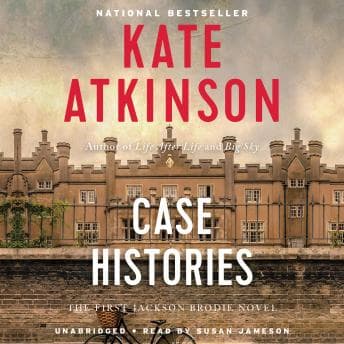
Case Histories presents itself as a mystery. Three cold cases, one private investigator, Edinburgh setting. Fine. But what it actually is? A devastating psychological portrait gallery disguised as genre fiction. And I found myself asking: why does Atkinson really structure it this way - giving us three separate families, three separate traumas, thirty years of aftermath?
Because she understands something that takes most psychology students years to learn: trauma doesn't look the same from the outside as it does from the inside. And people almost never process it the way you'd expect.
Three Case Studies in How Grief Warps Identity
The protagonist exhibits classic avoidant attachment patterns, but here's what makes Jackson Brodie compelling - Atkinson doesn't let him be just the brooding detective archetype. He's a mess in a very specific, very British, very working-class way. His emotional life is this tangle of suppressed childhood trauma and a divorce and genuine tenderness toward his daughter, and none of it resolves neatly. My therapist would have thoughts about this character. Many thoughts.
But the real psychological gold is in the three cases themselves. Theo, the father of a murdered daughter, is consumed by grief that has calcified into his entire identity over decades. Amelia and Julia Land - sisters whose baby sister vanished in 1970 - have built completely different defense mechanisms around the same wound. Amelia went rigid and controlling. Julia went dramatic and performative. This is a fascinating case study in how siblings diverge after shared trauma, and Atkinson nails the specificity of it. She gets that Amelia's primness isn't personality - it's armor. And the young mother trapped with a needy baby and a nightmare husband? That storyline crawls under your skin because the psychological escalation is so methodical, so recognizable.
The structure does something clever that the mystery genre rarely attempts: Atkinson replays the same scenes from different characters' perspectives, and each replay shifts your understanding. Not in a gimmicky unreliable-narrator way. In a "this is literally how memory and perception work" way. People remember what confirms their existing beliefs about themselves. The research actually shows this - it's called confirmation bias in autobiographical memory - and Atkinson dramatizes it without ever feeling like she's teaching a lesson.
Susan Jameson Gets the Humor (Mostly)
Susan Jameson's performance is doing real work here. Her snipped, tight delivery for Amelia - those clipped consonants that sound like someone who's been holding her breath for thirty years - versus the elongated, theatrical vowels she gives Julia? That's not just voice differentiation. That's characterization. She's communicating the sisters' psychological states through rhythm and breath. Theo's anguish comes through in this heavy, careful way, like a man who's learned to function around a wound rather than heal it.
Her northern British delivery catches Atkinson's dark humor perfectly - and there is a LOT of humor here, which nobody warned me about. I actually laughed out loud during a particularly vicious internal monologue about terrible husbands while stirring my masala, which is not a great combination for kitchen safety.
But - and this is worth flagging - Jameson struggles with male voices. Jackson Brodie himself comes through fine because he's filtered through enough emotional interiority that the voice matters less. But some of the secondary male characters sound like they're being performed by someone who's observed men from a slight anthropological distance. It didn't ruin anything for me, but around hour six I started noticing it consistently. Also, there are one or two female characters whose voices tip into an unintentionally vapid register that I don't think Atkinson intended. It's a narration choice that accidentally flattens characters who deserve more dimension.
The Slow Burn Is the Point (But Fair Warning)
This is not a propulsive thriller. If you need bodies dropping every chapter, psychologically this doesn't track as the right book for you. It's 10 hours and 43 minutes, and Atkinson takes her time with digressions, character history, domestic detail. I loved this - it's where the psychological truth lives, in the mundane spaces between dramatic events. But I can see how someone expecting a tighter mystery structure would get restless.
The connections between the three cases emerge gradually, and honestly? Some of them are more satisfying than others. The resolution isn't really the point. The point is watching how people construct and reconstruct their identities around the worst things that have happened to them. Quiet Tenant operates in similar territory - that same forensic attention to how a person quietly reorganizes their entire self around an ongoing trauma, and it hit me with the same "this is psychology, not just plot" force. Stephen King called it the best mystery of the decade and I respect the man, but I'd call it the best character study of the decade that happens to contain a mystery.
Who Should Spend the 10 Hours
This is for listeners who care more about why people do terrible things than how. If you want your mysteries populated by actual human beings instead of plot devices with names, this is your book. If you studied psychology, or even if you just find yourself analyzing why your family members act the way they do at Thanksgiving (same thing, really), Atkinson is speaking your language.
Skip it if you need fast pacing or if unconvincing male voice performances are a dealbreaker. And definitely give it focused attention - this is not a background-listening book. The connections are subtle enough that you'll miss them if you're multitasking.
My Clinical Assessment
Kate Atkinson understands human nature. Not in the vague way that phrase usually gets thrown around, but in the specific, uncomfortable, "oh, that's exactly what a person would do in that situation" way. Case Histories gave me the rare experience of feeling both entertained and professionally validated. I'm recommending it to my dissertation advisor, who will never listen to it, but the gesture matters.