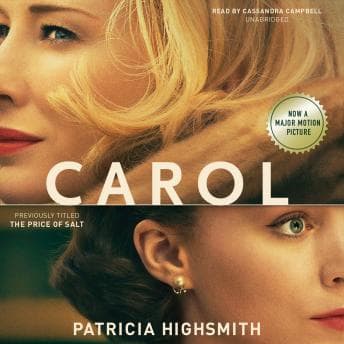

I was reorganizing my design files at 2am - the kind of desperate midnight productivity spiral where you're not actually being productive, just moving folders around - when Therese Belivet walked into Frankenberg's department store and locked eyes with Carol Aird across a counter full of Christmas dolls. I stopped moving files. I stopped doing anything. I just sat there in the blue light of my monitor while Frida judged me from the top of my bookshelf and something ancient and aching crept into my chest.
This book felt like finding a letter someone wrote before they knew you existed, and somehow it's still addressed to you.
The Longing Is the Plot
Here's what nobody tells you about Carol: the tension isn't really about whether these two women end up together. It's about watching Therese - this quiet, uncertain girl who doesn't even know what she wants from her own life - slowly, slowly understand that she is allowed to want things. That specific journey, from numbness to desire to full terrifying aliveness, is what Highsmith is actually writing about. And it is slow. Deliberately, achingly slow in the way that falling in love actually is, not the way movies compress it.
The scenes where Carol and Therese are just... talking. In diners, in the car, in hotel rooms. The dialogue is double-edged in this way that made me rewind constantly - not because I missed anything, but because I needed to sit inside the sentences a little longer. Carol says something that sounds like small talk and Therese (and you) understand it's not small talk at all. That gap between what's said and what's meant? That's where this whole book lives.
Abuela would have understood this book in her bones, I think. She knew what it meant to want something you weren't supposed to name out loud.
Cassandra Campbell and the One Thing I'd Change
Cassandra Campbell is in the Audible Narrator Hall of Fame and honestly, listening to her work here, I get it. Her Therese is perfect - that particular quality of someone who's observing the world from slightly outside it, taking everything in, not quite belonging anywhere yet. Campbell makes even the quieter interior passages feel weighted and present. When Therese is watching Carol from across a room, Campbell's pacing slows just enough that you feel the watching. That restraint is hard to do.
But. BUT. I have to be honest with you the way I'd be honest with my smartest friend: Carol's voice is a problem. The book describes Carol as sultry, low, commanding - she's the kind of woman who fills a room without trying. Campbell's Carol reads as lighter, a little higher, occasionally almost bright? It's not bad narration, it's just a casting mismatch. Every time Carol spoke I had to do a small mental recalibration between the voice I was hearing and the woman I was reading. It didn't break the experience for me, but it created this slight dissonance that never fully resolved across 10.5 hours.
If you've already built Carol as Cate Blanchett in your head (which, same, we all have), just... prepare yourself to let that go.
1952 Called and It Still Hurts
What wrecked me - genuinely, Diego-came-to-check-on-me wrecked me - wasn't the romance. It was the custody hearing. The way Carol is forced to choose between her daughter and her own nature, with the full weight of 1952 American moral panic pressing down on her. Highsmith doesn't melodramatize it. She just shows you the mechanism of how a woman gets crushed, quietly and legally, and somehow that restraint makes it worse.
And then the ending. Some people find it unconvincing - I saw those reviews, I hear you - but I think that's because we're conditioned to expect either tragedy or triumphant resolution from queer stories of this era. Highsmith gave us something stranger and more honest: the tentative, fragile possibility of a life. Not a guarantee. A door slightly open. After 10 hours of watching these women navigate a world that had no language for what they were to each other, that cracked door felt like everything.
I didn't ugly-cry. I did the worse thing - the silent tears that just fall while you sit very still and feel something you don't have words for yet.
Who This Is For (And Who Should Probably Sit This One Out)
If you need plot momentum to stay engaged, this will test you. There are stretches - long road trip passages especially - where Highsmith is painting atmosphere and interiority rather than moving pieces on a board. I had a similar reckoning with Man Who Would Be King, where the atmosphere does so much heavy lifting that plot almost feels beside the point - and I landed on the same side of that argument. That's a feature for me and a bug for some people, and I respect both positions.
But if you're someone who has ever wanted something you didn't have permission to want? If you've ever watched another person across a room and felt the world rearrange itself slightly? This book was written for you specifically, across seventy years, and it will find you exactly where you are.
Stream it first. Then buy it, because you'll want to go back.