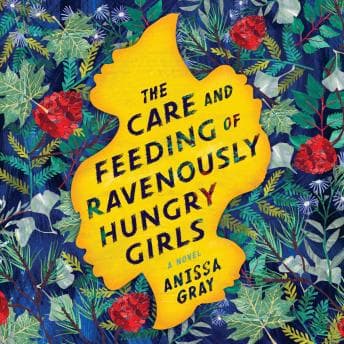
Carlos found me crying in the driveway at 7:45 AM. Engine still running, audiobook still playing, and I couldn't move. I blamed allergies. He didn't believe me for a second.
I'd been listening to this one on my post-shift drives home for about a week, and something about that final hour just broke me open. Maybe it was the exhaustion. Maybe it was how Anissa Gray writes about family dysfunction in a way that feels like she's been reading my group texts with my sisters. Either way, I sat in that car until the chapter ended, mascara situation fully compromised.
When Four Narrators Actually Works
I'm usually skeptical of multi-narrator audiobooks. Too often they feel like a gimmick—like the publisher threw money at a problem instead of finding one narrator who could actually act. But this? This is how you do it.
Dominic Hoffman voices Proctor with this deep, smooth delivery that somehow conveys both love and the weight of terrible choices. You hear affection in his voice even when you know what he's done. January LaVoy brings Viola to life with this casual, almost defensive tone—she sounds like every middle child I've ever known who's still mad about something from 1987. And Bahni Turpin as Lillian? That warm, cautious voice captures someone who's spent her whole life trying not to take up too much space.
The transitions between narrators aren't jarring. Each voice feels like a different member of the same family—distinct but connected. You can hear the shared history in how they all carry a certain tension.
The Medical Stuff (And the Stuff That Matters More)
Look, this isn't a medical thriller. But Gray writes about eating disorders and addiction with the kind of accuracy that made me stop and rewind more than once. Not because she got something wrong—because she got it right. The way she describes the origins of disordered eating, the variations of addiction, how trauma doesn't just visit a family but moves in and starts rearranging the furniture.
As someone who's actually worked with patients in crisis, I appreciated that Gray doesn't sensationalize. She doesn't make the eating disorder the whole character. She shows how it's one symptom of a much larger wound—the kind of wound that gets passed down through generations like a terrible family recipe nobody asked for.
The Butler Sisters Reminded Me of My Own
I'm the eldest of five. Filipina family. My mom still introduces me as "the one who should have been a doctor." So when I tell you I understood Althea on a cellular level—the weight of being the substitute matriarch, the way your younger siblings both need you and resent you for it—I mean it.
Gray captures something true about eldest daughter syndrome. How you become the family's load-bearing wall without anyone asking if you can handle the weight. How your sisters can love you and be furious with you in the same breath. How sometimes the person holding everyone together is the one most likely to shatter.
When Althea's arrest upends everything, watching Lillian and Viola try to step into her role felt painfully familiar. Not the arrest part (my family drama is more of the "who said what at Christmas 2019" variety), but the sudden renegotiation of who does what when the person who always did everything can't anymore.
Who This Is For (And Who Should Maybe Skip)
Perfect for that post-shift decompression if you're okay with crying in your car. This is a focused listen—don't try to do this one while charting or doing housework. You'll miss too much.
If you loved An American Marriage, this hits similar notes but goes deeper into the family dynamics. Apples Never Fall does that same thing—peeling back layers of a family until you're not sure who to root for anymore. If you're looking for something light after a rough week, this ain't it. There's incarceration, eating disorders, family trauma that spans generations. It's heavy. But it's heavy in a way that feels earned, not exploitative.
Skip if you need clear villains and heroes. Everyone in this book is both. Skip if you're in a fragile place about family stuff—this will poke at wounds you forgot you had.
Night Shift Approved (Bring Tissues)
Nine hours and fifty-six minutes. I stretched it over eight drives home, and every single one left me thinking. About my sisters. About my mom. About the things we inherit that we never asked for and the things we pass on without meaning to. Waste Land left me in that same headspace—stuck thinking about generational patterns I can't unsee.
My mom would love this, actually. She's big on family sagas, on stories about women who carry too much and break in complicated ways. I might send her the Audible link. She'll probably call me afterward and we'll talk for two hours about nothing and everything, the way we do.
That's what good books do. They make you call your mother.