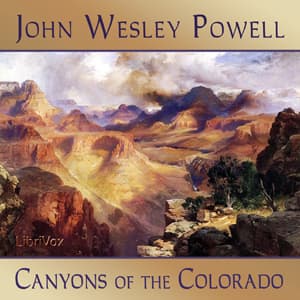

Ranger and I were out back last Saturday, me nursing a bourbon on the porch while he chased something through the cedar brush, when I finished the last stretch of this one. Felt appropriate. Powell's writing has that same quality as a Texas evening - slow, wide open, and occasionally dangerous.
Let me cut to the chase on the premise first: John Wesley Powell lost his right arm at Shiloh. Then, seven years later, he strapped himself into a wooden boat and ran the Colorado River through terrain nobody had mapped. Nine men, four boats, ten months of food, zero idea what was downstream. As someone who's planned operations with incomplete intelligence, I have genuine professional respect for that level of calculated audacity. This wasn't reckless - Powell was a scientist. He was gathering data in real time while the river tried to kill him.
One-Armed Man vs. The Colorado
The writing itself is Powell's actual expedition diary, and that's both the strength and the limitation here. When he's describing Lodore Canyon - where the boats are getting demolished in the rapids and they're losing supplies - the tension is real even in plain 19th-century prose. He writes about the roar of the water around the bend, not knowing if it's a ten-foot drop or a hundred-foot one, and I've seen that scenario play out in real life (different context, same fog-of-war problem). That uncertainty comes through.
What I didn't expect was the geology. Powell is basically narrating a field report while hanging off canyon walls, and his descriptions of the rock strata - the way he reads millions of years of history in the exposed limestone and sandstone - are genuinely gripping. He names Glen Canyon in this book. Glen Canyon. Which is now sitting under Lake Powell, behind a dam named after him. The irony is almost too heavy to carry.
The three men who left at Separation Rapid - Dunn and the Howland brothers - walked out two days before the expedition reached safety. Two days. They were killed afterward, probably by Paiutes, though the exact circumstances were never confirmed. Powell doesn't editorialize much about it. That restraint hits harder than any dramatic reconstruction would.
The LibriVox Problem (And It's a Real One)
Here's where I have to be straight with you. The volunteer narration is... functional. That's the honest word. Clean audio, no background noise, faithful to the text. But dramatic inflection? Emotional variation? Forget it. When Powell is describing the moment his crew thinks they're going to die in a rapid, the narrator delivers it at the same cadence as the geological survey notes. Same pace. Same tone. It's like getting a Medal of Honor citation read by someone processing your DMV paperwork.
I bumped my speed to 1.5x for the more methodical geological passages, which helped. But there are sections where the flat delivery genuinely costs the material. Powell earned drama with his life. The least we could do is give it a little.
The other thing worth knowing: this is a LibriVox production, meaning multiple volunteers across different sessions. The transitions between readers are noticeable. Some are warmer, some are more clipped. It's not jarring enough to quit over, but you'll notice it.
Who's This Mission For
If you've ever stood on the South Rim and looked down and thought "someone had to be first" - this is your book. History buffs, American West obsessives, anyone who wants primary source material from one of the most audacious exploration missions in U.S. history. Amelia Edwards was doing something similar on the Nile around the same era - primary source, boots on the ground, scientist's eye - and my notes on Thousand Miles up the Nile might interest anyone who gravitates toward that kind of firsthand expedition writing. Students of 19th-century science will find Powell's ethnographic observations on the Ute and Paiute tribes genuinely detailed for the era.
Skip it if you need a narrator who can sell the moment. The content deserves better than it gets here, and if you're not already invested in the subject matter, the flat delivery will lose you somewhere in the geological cataloguing.
But here's the thing - this is free. LibriVox. Zero dollars. For 8 hours of a one-armed Civil War veteran running the unmapped Colorado River and writing field notes about it. The value-to-cost ratio is hard to argue with.
Ranger fell asleep during the geology sections. Smart dog. But he perked up every time the rapids hit. Mission mostly accomplished.






![Steve Jobs [unabridged audiobook] audiobook cover](/_next/image?url=https%3A%2F%2Fcovers.audiobooks.com%2Fimages%2Fcovers%2Ffull%2F9788499923406.jpg&w=1920&q=75)