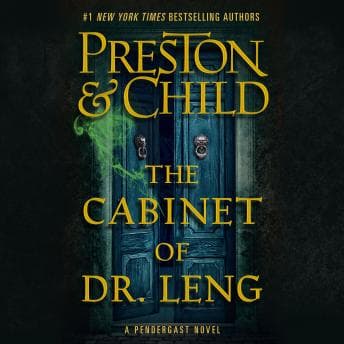

Book 21 in a series, and Preston & Child decided NOW was the time to throw in time travel. Bold move.
I started this one during a particularly brutal Monday commute — 6:12 AM, standing room only, clutching the overhead bar like my life depended on it. By the time I got to Mountain View, I was genuinely confused whether I was in 1880s Manhattan or 2023 Caltrain. That's either a compliment to the atmosphere or a sign I need more coffee. Probably both.
1880s New York Runs on the Same Spaghetti Code as Our Production Systems
Here's the setup: Constance Greene has somehow traveled back to 1880s New York to prevent the murders of her siblings and take down Dr. Enoch Leng — the serial killer from The Cabinet of Curiosities way back in book 3. It's essentially a revenge quest wrapped in historical fiction wrapped in a sci-fi premise. This is basically The Time Traveler's Wife but for people who prefer their protagonists armed and dangerous. The grimy, gaslit atmosphere Preston and Child conjure reminded me of the obsessive period detail in Black Dahlia, Red Rose — that same sense that the author genuinely loves the era and wants you to feel the weight of it, not just use it as backdrop.
The 1880s storyline is genuinely the stronger thread. Preston and Child have always been good at atmosphere, and Victorian-era Manhattan — the gaslit streets, the tenements, the casual brutality of Gilded Age medicine — comes through thick even through earbuds on a crowded train. The historical detail is dense without being homework. You get the sense they actually enjoyed writing this part, like they'd been wanting to do a period piece for years and finally found the excuse.
The present-day Pendergast storyline? That's where things get shaky. He's trying to find a way to get Constance back, and honestly, it feels like a B-plot that exists because the publisher said "you can't just write a Victorian thriller, people bought this for Pendergast." The two storylines barely connect within this book. It's like running two microservices that share a database but never actually call each other. They're both functional, but the lack of integration is frustrating.
Jefferson Mays Is Not René Auberjonois (And That's the Elephant in the Room)
Look, I need to talk about the narrator situation. Jefferson Mays is objectively talented — the man has an Earphones Award and his measured, deliberate delivery fits the 1880s setting surprisingly well. When he's narrating the historical sections, that careful pacing feels intentional, like he's reading from a Victorian-era journal. It works.
But here's where it gets divisive: his Pendergast voice. If you've listened to René Auberjonois in the earlier books (and if you've made it to book 21, you probably have), Mays' interpretation lands differently. Some listeners describe his Pendergast as "droopy dog" — and I can kinda see it? There's a heaviness to his delivery for that character that doesn't match the razor-sharp, slightly theatrical Pendergast I had in my head. And his Constance comes across older and more bitter than I expected from someone who's supposed to be navigating 1880s New York with cold fury, not world-weariness.
That said — and I'm being honest here — after about four hours I stopped comparing. Mays grew on me the way a new IDE grows on you: annoying at first, then you stop noticing, then you realize it's actually doing some things better than the old one. His strength is consistency and atmosphere. He's not doing theatrical character work. He's building mood. Whether that trade-off works for you depends entirely on how attached you are to Auberjonois' versions.
The Ending That Isn't
I need to flag this because it genuinely affected my rating: this book ends mid-sentence. Not literally, but close enough. There's no resolution. The two storylines don't converge. It's a cliffhanger that doesn't feel earned — it feels like someone hit the page limit and went "ship it." I finished the last chapter at 7:45 AM walking from the Caltrain station to the office, and I actually stopped on the sidewalk and said "wait, WHAT" out loud. A fellow commuter gave me a look.
At 14 hours and 24 minutes, this isn't a small time investment. The ROI on this audiobook is... complicated. You're getting maybe 10 hours of genuinely engaging Victorian thriller, 3 hours of adequate present-day plot, and an ending that's basically a 404 error. If you're already deep in the Pendergast series, you're going to listen anyway and you'll probably enjoy the ride even if the destination is "to be continued." If this is your entry point — hard no. Go back to Relic or The Cabinet of Curiosities.
Perfect for: Long commutes where atmosphere matters. Skip for: Anyone who needs closure.
If you love this series, it's worth the listen for the 1880s sections alone. Constance operating in her native time period is genuinely interesting and Preston & Child clearly had fun with the historical setting. But go in knowing you're getting the first half of a story sold as a complete book, with a narrator who's good-not-great for the characters you already know. I'd say borrow this one rather than spend a credit — save the credit for when the conclusion drops and you can binge both.
I finished this in about 5 commutes at 1.5x. Kevin asked me if it was good and I said "the first 80% was." That's the most accurate review I can give.