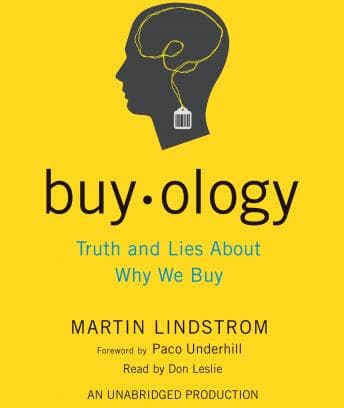

I was debugging a particularly nasty race condition at 11 PM when I realized I'd been staring at the same log file for twenty minutes without actually reading it. Brain fried. So I threw on Buyology figuring some marketing psychology would be easy listening while I waited for my test suite to run.
Turns out Lindstrom's $7 million brain-scanning study is basically A/B testing for your neurons. And honestly? As someone who spends her days optimizing systems, I was way more into this than expected.
Your Brain Is Running Proprietary Code You Can't Debug
The core premise here is that we're all terrible at explaining our own purchasing decisions. Lindstrom hooked people up to fMRI machines and asked them about brands, ads, warning labels—then watched what their brains actually did versus what their mouths said. The gap is... uncomfortable.
The cigarette warning label study genuinely surprised me. Smokers claim the warnings make them want to quit. Their brains? The craving centers light up like Christmas trees. The warnings are basically functioning as nicotine ads. That's the kind of counterintuitive finding that makes this worth your time—not just "marketing is manipulative" (duh) but specifically HOW it's manipulative in ways we can't consciously detect.
The Corona-lime ritual thing is almost funny once you know. Some bored bartender invented it, and now it's become this quasi-religious experience that makes the beer taste "more authentic." Lindstrom draws parallels between brand loyalty and actual religious devotion—same brain regions, same emotional architecture. Apple stores as cathedrals isn't just a metaphor; it's neuroscience.
Could've Been a Blog Post (But a Pretty Good One)
Look, I'm going to be honest here. At 7 hours, this book is padded. Lindstrom loves his anecdotes, and some of them loop back on themselves. The American Idol integration study gets referenced maybe four times across different chapters. The Nokia ringtone example—how it triggers brand recognition in your auditory cortex—is genuinely interesting the first time. Less so the third.
If you've read Thinking Fast and Slow or Predictably Irrational, you'll recognize the territory. Stillness is the Key operates in similar space—examining the gap between what we think drives us and what actually does. Buyology is narrower in scope but more empirically grounded than most business books. Lindstrom actually ran the studies instead of just citing them.
The ROI on this audiobook is solid if you're in product, marketing, or just curious about why you impulse-bought that thing on Amazon at 2 AM. (We've all been there. I definitely didn't need that third mechanical keyboard.)
Don Leslie Does the Job
Don Leslie has that business audiobook voice—congenial, clear, good emphasis on the key points. He's not Ray Porter (nobody is), but he knows when to punch a word and when to let the data speak. For nonfiction material with no character voices to differentiate, he's exactly what you want: unobtrusive competence.
No weird pronunciations that I caught, no audio issues. Just clean, professional delivery. I listened at 1.5x and it held up fine—Leslie's pacing is measured enough that you can speed it up without losing clarity.
Perfect For: Train, Gym. Skip For: Deep Work
This is ideal commute material. The chapters are modular enough that if you zone out for a few minutes (happens to all of us at 6 AM on the Caltrain), you can pick back up without missing critical plot points. Because there is no plot. Just a series of "here's what we thought, here's what the brain scans showed, here's why that matters."
I finished this in about 5 commutes at 1.5x. It's the kind of book that makes you feel smarter without requiring actual effort—which sounds like a backhanded compliment but honestly? QBQ! hits that same sweet spot—practical insights you can absorb while half-asleep on the train. Sometimes that's exactly what you need.
The study is from 2008, so some of the brand examples feel dated (remember when Nokia ringtones were everywhere?). But the underlying neuroscience hasn't changed. Your mirror neurons still fire when you see someone using a product. Your brain still processes logos faster than you can consciously recognize them. The manipulation playbook is evergreen even if the specific examples age.
Who's This For?
Queue it up if: You're in product, marketing, or UX and want to understand the wetware you're designing for. Also great if you just want to feel slightly horrified about your own purchasing decisions.
Skip it if: You're expecting a takedown of capitalism or a guide to becoming immune to advertising. Lindstrom is a marketing consultant—he's teaching you how the sausage is made, but he's still in the sausage business.
Commit and Push
Take it for what it is: a fascinating peek under the hood of your own decision-making, narrated by someone who knows how to keep you awake on public transit. Not revolutionary, but solid documentation on a system you're running whether you like it or not.