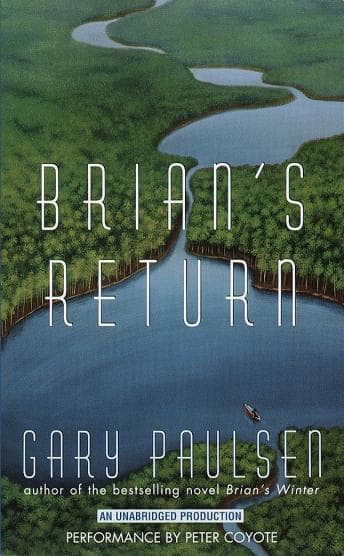

This is a 2-hour-and-26-minute book about a kid who can't sit still in a pizza parlor without going full survival mode on someone. And honestly? It's the most honest depiction of not fitting in that I've listened to in years.
I was on a red-eye back from a client engagement in Austin, couldn't sleep, and figured I'd burn through something short. Brian's Return clocked in at barely over two hours - at 2.0x, I was done before we hit cruising altitude. But here's the thing: I didn't immediately queue up the next book. I just sat there in 14C with my eyes closed, thinking about my dad pressing shirts at 6 AM because he didn't know how to do anything else. Because that's what this book is actually about.
The Pizza Parlor Scene Is Worth the Entire Book
Let me set this up. Brian Robeson - the kid from Hatchet who survived alone in the Canadian wilderness - is back in civilization, and civilization is losing. There's a scene outside a pizza place where some guy gets in Brian's face, and Brian doesn't respond like a suburban teenager. He responds like a person whose nervous system was rewired by months of fighting to not die. He goes into threat-assessment mode. Animal brain takes over.
This is maybe three minutes of audio, and Peter Coyote delivers it with this quiet intensity that made me pull out an earbud to make sure the guy next to me wasn't talking to me. It's not action-movie dramatic. It's clinical. Which makes it scarier.
And that's Paulsen's whole thesis in this book: Brian doesn't belong in the world that's supposed to be "normal" anymore. High school is the wilderness he can't navigate. The actual wilderness? That's where things make sense.
My Parents' Business Book, Written for a 13-Year-Old
Here's where I get personal, and Jenny would say I'm being harsh on the business book genre by comparing it unfavorably to YA fiction. Jenny is right.
But Paulsen does something in 146 pages that most self-help authors can't do in 300: he makes the case that belonging isn't about where other people think you should be. It's about where your skills actually matter. Brian in a classroom is a fish on a bicycle. Brian reading animal tracks during a storm, gauging wind, making decisions with actual consequences - that's where he operates.
This is what my parents did instinctively. Now it has a TED talk. My dad wasn't built for corporate America. He was built for 14-hour days solving problems with his hands. He didn't need a "find your purpose" seminar. He needed a pressing machine and customers who came back.
Paulsen gets this without being preachy about it. Brian doesn't give a speech about authenticity. He just... goes back. Makes the decision. The bear encounter and the storm scene in the wilderness aren't about danger for danger's sake - they're about Brian being competent again, fully present, fully alive. That's a business lesson most LinkedIn influencers couldn't articulate if you gave them a ghostwriter and a month.
Peter Coyote Does the Smart Thing and Gets Out of the Way
Coyote's narration is solid - not flashy, not doing voices like he's auditioning for Pixar. He's got this low, weathered quality that fits Paulsen's spare prose like a glove. The wilderness descriptions come through with real weight because Coyote doesn't oversell them. He trusts the writing. That's rarer than it should be in audiobook narration.
No sound effects, no music, no production gimmicks. Just a guy reading a story well. At 2 hours and change, it doesn't overstay its welcome. Finally, a book that respects your time.
Who This Is Actually For
If you're expecting Hatchet 2.0 with constant survival stakes and near-death sequences, you'll be disappointed. This is the quieter, more internal book in the series. The hazards are less threatening because Brian is more skilled - which is actually the point, even if some readers miss that. That same interior tension - a character out of place in the world they're handed, quietly excellent at something the people around them can't see - is what made Corrections: A Novel stick with me for weeks, even though it's playing in a completely different register.
But if you've ever felt like the world you're supposed to thrive in doesn't fit - if you've ever been excellent at something most people don't value - this two-hour listen will hit harder than you expect. Give it to the kid in your life who's struggling in school but can build anything with their hands. Give it to yourself on a flight when you're tired of pretending the consulting deck you're reviewing is meaningful work.
Bottom Line: ROI Per Minute Is Excellent
Two hours, twenty-six minutes. No filler. A clean argument for knowing yourself well enough to stop apologizing for what you're good at. The key takeaway is worth the listen. And for once, the other hours? There aren't any wasted ones. Paulsen wrote exactly as much book as this story needed, and not a page more. That kind of discipline is worth more than most 400-page business manifestos sitting unfinished in my Audible library.