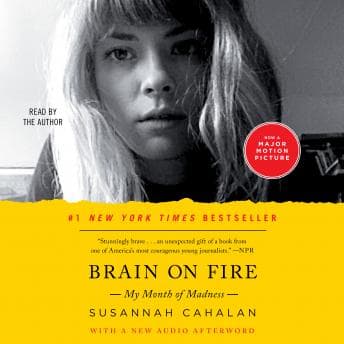

I was sitting in the break room at 4 AM, one earbud in, waiting for labs to come back on a patient in bay six, when Susannah Cahalan started describing her seizure in her editor's office - the way her left arm went first, how her colleagues just stared - and I stopped chewing my granola bar mid-bite. Because I've seen that exact moment. I've been the person running toward it.
This book wrecked me in ways I wasn't ready for.
When the Patient Becomes the Author
Here's the thing about medical memoirs - most of them are written from the outside. The doctor who cracked the case. The journalist who investigated. But Susannah Cahalan is writing about herself, and she's doing it while reconstructing a month she literally cannot remember. She had to piece together her own psychotic break from medical records, her parents' notes, hospital security footage, and the accounts of nurses and doctors who watched her deteriorate. As someone who charts on patients every single night, the idea that my notes could someday be someone's only window into the worst month of their life? That hit different.
Susannah was 24, working at the New York Post, when she started experiencing personality changes, paranoia, seizures, and eventually full psychotic episodes. She was misdiagnosed, labeled, almost lost to a system that couldn't figure out what was wrong. That particular brand of institutional failure - the system grinding a person down before anyone bothers to really look - showed up in a completely different context in Blitzed: Drugs in the Third Reich, where Ohler documents how an entire medical establishment bent its standards around ideology until the truth became almost unspeakable. The diagnosis - anti-NMDA receptor encephalitis, an autoimmune condition where your body's antibodies attack your brain - came down to one doctor, Dr. Souhel Najjar, who ordered a specific brain biopsy when everyone else was ready to punt her to psychiatry.
The medical details are accurate. Finally. When she describes the EEG monitoring, the lumbar punctures, the way the medical team kept chasing psychiatric diagnoses while her brain was literally inflamed - I recognized all of it. The frustration, the way different specialists see the same patient and come to wildly different conclusions, the institutional inertia that almost killed her. I've watched that happen. I've been the nurse paging a doctor at 2 AM saying "something is wrong, I don't care what the last scan showed."
What Separates This From Every Other "My Medical Mystery" Book
I've listened to a lot of these. The genre has a formula: scary symptoms, wrong diagnosis, heroic doctor saves the day, grateful patient writes book. And look, those beats are here. But Susannah is a journalist first, and she doesn't let herself or her savior doctors off the hook. She's honest about the gaps - the things she'll never remember, the violence she exhibited that her family witnessed and she didn't. She talks about biting nurses. (I have been bitten by patients. It is not a minor detail. Thank you, Susannah, for not glossing over it.)
She also narrates it herself, which is a choice that could've gone badly but doesn't. Her voice isn't polished audiobook-narrator smooth. It's a journalist reading her own story, and you can hear the weight of it - especially in the hospital scenes where she's essentially narrating her own absence. There's a rawness when she describes watching the security footage of herself seizing in her hospital bed, seeing this version of herself she has no memory of being. She sounds like someone who still can't fully believe this happened to her. That's not something a hired narrator could replicate.
At 7 hours 23 minutes, it's tight. No padding. She doesn't spend three chapters on her childhood or her journalism career to set the scene. She gets in, she takes you through the madness, she gets out. Perfect length for a couple of post-shift drives home.
Who Needs This and Who Doesn't
If you work in healthcare, listen to this. Not because it'll teach you something clinical you don't already know, but because it'll remind you what it feels like on the other side of the bed rail. Every nurse, every doctor, every tech who's ever had a patient they couldn't figure out should hear this. If you've ever felt dismissed by a medical professional - if you've ever been told "it's anxiety" when you knew it wasn't - this book will validate something deep and angry in you.
If you want a fast-paced thriller, this isn't quite that. It's real life, which means it's messy and slow in places and doesn't have a neat three-act structure. The "villain" is an autoimmune disease and a healthcare system that almost missed it. There's no dramatic confrontation. Just a slow, terrifying unraveling and a diagnosis that came down to one doctor's gut instinct.
Skip it if you're looking for background listening. This demands your attention.
Chart Complete, Signing Off
Carlos asked why I was crying in the car. I blamed allergies. But the truth is, when Susannah describes her father watching her through the ICU glass, unable to do anything - I thought about my own kids. I thought about every family member I've ever updated at 3 AM with news they didn't want to hear. This book is small and quiet and absolutely devastating in the way that only true stories can be. My mom would love this (she still thinks I should've been a doctor). But I think she'd also finally understand why I chose to be the one standing at the bedside instead.








![Steve Jobs [unabridged audiobook] audiobook cover](/_next/image?url=https%3A%2F%2Fcovers.audiobooks.com%2Fimages%2Fcovers%2Ffull%2F9788499923406.jpg&w=1920&q=75)