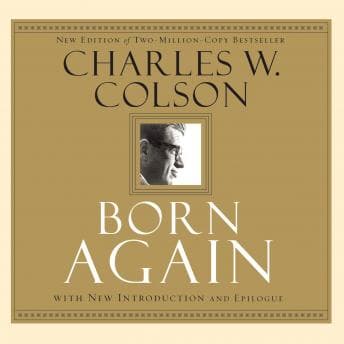

Look, I'll be honest—when I saw a Watergate memoir pop up on my recommended list, I almost scrolled past. Political scandal audiobooks during my 3 AM charting sessions? Pass. But something about the "White House Hatchet Man" subtitle got me curious. And now here I am, three weeks later, having listened to the whole thing twice.
The thing is, I expected a self-serving redemption narrative. You know the type—powerful man does bad things, finds Jesus, writes book to rehabilitate image. I've seen enough patients do the foxhole prayer thing when they're scared. It usually doesn't stick. So yeah, I went in skeptical.
I had that same defensive squint going into American Sniper: The Autobiography of the Most Lethal Sniper in U.S. Military History, where blunt self-accounting either lands or makes me want to throw my earbuds across the nurses' station.When the Mask Comes Off
Colson doesn't sugarcoat who he was. And I mean *really* doesn't sugarcoat it. He was Nixon's guy—the one willing to do whatever it took. The ruthlessness, the ends-justify-means thinking, the complete moral blindness that comes with power. He lays it all out in a way that actually made me uncomfortable. Not because it was graphic, but because it was so... recognizable? I've worked with surgeons who have that same tunnel vision. That same ability to compartmentalize.
What surprised me was how the spiritual transformation didn't feel preachy. Maybe it's because Colson himself seemed genuinely confused by what was happening to him. There's this section where he's sitting in his car, crying, unable to drive—and Jon Gauger reads it with this raw vulnerability that had me gripping my steering wheel at 6 AM on the I-10. Carlos asked why I looked like I'd been crying when I got home. I blamed allergies. Obviously.
Jon Gauger Basically Becomes Chuck Colson
Okay, so the narration. I found myself wondering if Colson himself was actually narrating parts of this book. That's not hyperbole—Gauger captures something essential about how this man must have sounded. The confidence. The lawyer's precision. But also the moments of genuine bewilderment when his worldview starts cracking.
The pacing is perfect for night shift recovery. Not so slow that you drift off (dangerous when you're driving home after 12 hours), but not so fast that you miss the emotional weight. Gauger knows when to let a moment breathe. There's this theatrical quality to his delivery that somehow doesn't feel performative—it feels like a man telling you the most important story of his life.
At 13 and a half hours, it's substantial. But it never dragged for me. Not once. And I'm someone who regularly yells at audiobooks for padding.
The Prison Chapters Hit Different
As someone who's actually worked with incarcerated patients during transfers to our trauma center—the prison sections are accurate. The dehumanization, the small indignities, the way the system strips away your identity. Colson doesn't dramatize it or make himself a martyr. He just... tells you what it was like. A powerful man learning he's not powerful anymore.
My mom would love this, honestly. She's always on me about going to Mass more. But it's not just for the religious crowd. If you're interested in Watergate history, in Nixon-era politics, in how power corrupts—it's all here. The political machinery also made me think about Communist Manifesto, not because they sound alike, but because both show how clean ideas can turn dangerous once humans start using them as scalpels. The spiritual stuff is woven through, not slapped on top.
Who This Is For (And Who Should Skip)
Perfect for that post-shift decompression. Especially if you work in any field where you've seen people at their worst and their best—where you've watched someone's whole world collapse and wondered if they'd rebuild. Skip it if you want something fast-paced; this is a slow burn that earns its payoff. And if you're deeply allergic to any mention of faith or Christianity, you might struggle—though I'd argue Colson's honesty about his own doubts makes it more accessible than most religious memoirs.
The expanded edition's epilogue adds context I appreciated. Knowing what came after—the prison ministry work, the decades of actually living out what he claimed to believe—it makes the conversion feel less like a convenient plot device and more like the beginning of something real.
Clocking Out
Night shift approved. Seriously.







![Steve Jobs [unabridged audiobook] audiobook cover](/_next/image?url=https%3A%2F%2Fcovers.audiobooks.com%2Fimages%2Fcovers%2Ffull%2F9788499923406.jpg&w=1920&q=75)