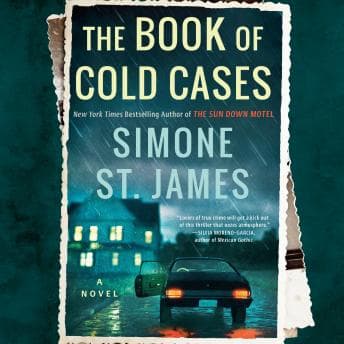

Simone St. James wrote a ghost story wearing a true crime trenchcoat, and I'm here for every creaking floorboard.
I was supposed to be reviewing essay outlines on a Saturday afternoon — Denise was out with her sister, the apartment was quiet, and I had a stack of junior papers on The Great Gatsby that weren't going to grade themselves. But I put on The Book of Cold Cases thinking I'd listen for maybe twenty minutes while I organized my desk. Four hours later, the essays were untouched, my coffee was cold, and I was genuinely unsettled by a scene involving a girl standing outside a window. The desk remained a disaster.
The English Teacher's Dilemma: Genre as Disguise
Here's what St. James does that I wish more of my students understood about craft: she uses genre expectations as misdirection. You walk into this thinking it's a true crime procedural — Shea Collins runs a cold case blog, she's investigating the 1977 Lady Killer Murders, she's sitting across from the woman who was acquitted. Standard stuff. But St. James keeps sliding the floor out from under you. Objects move in Beth Greer's mansion. There's something wrong with the light in certain rooms. The supernatural elements don't announce themselves with a trumpet — they seep in like damp through old wallpaper.
What's above the surface here is a murder mystery. The actual story is about two women circling each other, both carrying trauma they've built entire identities around. Shea survived an attempted abduction as a child and turned it into a true crime obsession. Beth was acquitted and turned her family mansion into a prison she chose. St. James is at her best in the scenes where she lets the two of them just talk, because the dialogue is doing triple duty — building tension, revealing character, and quietly dropping clues you won't notice until later.
Is the ending predictable? Somewhat. I could see the shape of where things were heading by the midpoint. But here's the thing — predictability in a ghost story isn't always a flaw. Sometimes the dread of knowing what's coming is the whole point. My students would call that argument an excuse. I buy it completely.
Three Narrators Walk Into a Haunted Mansion
The three-narrator approach is smart, and it mostly works. Kirsten Potter as Beth Greer is the standout — she shifts between imperious and hushed in a way that makes Beth feel genuinely dangerous even when she's just offering tea. There's a controlled quality to Potter's delivery, like Beth is always performing for an audience, always choosing her words with surgical precision. It's unsettling in exactly the right way.
Brittany Pressley handles Shea's sections with this panicked, rushed energy that fits the character's anxiety but — and I'll be honest — can wear on you over ten-plus hours. There were stretches where I wanted Pressley to just breathe. The urgency is appropriate for certain scenes, but when every chapter feels like Shea is sprinting through her own narration, the tension loses its shape. A pause held a beat longer would have restored it, and I wanted more of them here.
Robert Petkoff reads the trial transcript sections with a dry, straightforward delivery that acts as palate cleanser between the two women's perspectives. It's a small role but essential — those transcripts ground the story in procedural reality right when things start getting genuinely eerie.
I should note: some listeners find Pressley's voice genuinely difficult to sit with. I didn't have that reaction, but I understand it. Worth sampling before you commit.
Where the Haunting Works and Where It Doesn't
St. James is known for supernatural thrillers, and this one apparently deviates from her usual formula. I can feel the experimentation in the structure — the way the paranormal elements and the cold case investigation don't always mesh smoothly. There are moments where the ghost story and the mystery feel like two novels fighting for the same space. The haunted mansion sequences have genuine atmosphere. The investigative journalism angle has real momentum. But they don't always talk to each other as well as they should.
Still — and this matters — the book commits to its weirdness. It doesn't try to explain away the supernatural with a rational twist. I respect that. If you loved Shirley Jackson's sense of houses as living, malevolent spaces, this is its spiritual successor in a modern true crime wrapper. I ran into that same slow-creep dread in Girl in the Plane — shorter format, but the atmosphere does something similar with confined space and a threat that never quite announces itself.
Content note worth mentioning: there are references to suicide, child abuse, and animal abuse. They're handled with restraint but they're present.
Save It for a Free Weekend
If you want a locked-room gothic that happens to involve a podcast-era true crime blogger instead of a Victorian governess, this is your book. If you need your mysteries airtight and your supernatural elements nonexistent, skip it. If you're a Simone St. James reader who loved The Sun Down Motel, this is playing in the same sandbox with slightly different toys — not her best, but far from a miss.
At 10 hours and 45 minutes, it's the right length for a weekend binge. Just don't plan on grading anything.