
What happens to a man who spends his whole life being the runt of an extraordinary litter - and then suddenly becomes the last one standing?
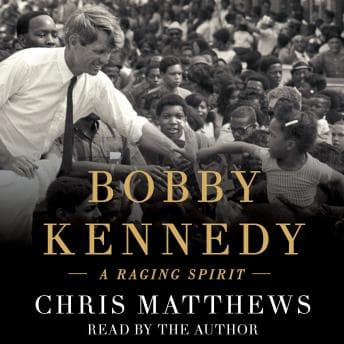
I was deep into a rebrand project at 2 AM, the kind of deadline-fueled design sprint where I stop tasting my coffee and just inhale it, when Chris Matthews started describing young Bobby Kennedy volunteering to be a common sailor instead of an officer. Not because he was humble. Because he had something to prove. And honestly? That detail cracked something open in me I wasn't expecting from a political biography.
The Underdog Who Became the Conscience
Here's the thing about Bobby Kennedy that Matthews gets so right: this wasn't a golden boy. He was the seventh of nine kids, overlooked by his own father, smaller and scrappier than Jack, and he carried that chip on his shoulder like armor. Matthews traces how that outsider energy - that perpetual need to fight harder because nobody expected him to win - became the very thing that connected him to working-class voters, Black communities, migrant farmworkers. People who also knew what it felt like to be underestimated.
The evolution Matthews maps is genuinely moving. Bobby starts as this ruthless political operative for Joe McCarthy (yes, THAT McCarthy), and you're kind of like... okay, so he was a pit bull. But then his brother gets assassinated, and Matthews captures how grief didn't just break Bobby - it rebuilt him into someone almost unrecognizable. The man who once wiretapped Martin Luther King Jr. became the politician who walked into Indianapolis on the night of King's assassination and spoke from his gut to a crowd that didn't riot when nearly every other city burned. Matthews doesn't let Bobby off the hook for the early stuff, but he makes you understand the arc.
Abuela would have loved this one. She had a thing for men who suffered beautifully and then did something about it. Very telenovela energy, honestly - the transformation through tragedy, the redemption arc cut short.
Chris Matthews: Your Passionate Uncle at Thanksgiving Dinner
Okay. Let's talk about the narration, because this is where it gets complicated. Chris Matthews narrates his own book, and if you've ever watched even thirty seconds of Hardball, you know exactly what you're getting: fast, punchy, slightly hoarse, with the energy of someone who physically cannot contain their enthusiasm for this subject. He talks about Bobby Kennedy the way I talk about Julia Whelan's narration - with borderline obsessive love.
The pace is FAST. Like, notably fast. There were moments during detailed political strategy sections where I had to rewind because Matthews barreled through names and dates like he was racing the clock. His pauses land in weird places sometimes - mid-sentence, where you don't expect them - and it creates this unusual rhythm that takes a solid hour to adjust to. His voice is rough, gravelly, and there's zero vocal range for different "characters." When he quotes Bobby or Jack or LBJ, it all sounds like Chris Matthews.
But here's my honest take: the man's genuine emotion carries it. When he describes Bobby's final moments at the Ambassador Hotel, Matthews's voice does this thing where it gets quieter, almost reverent, and you can hear that this isn't just research to him. He lived through this era. He worked in politics. Bobby Kennedy meant something specific to him, and that comes through in a way a professional narrator might not have captured. It's imperfect and sometimes messy, but it's real.
I listened at my usual 1.0x and honestly? This might be the rare book where slowing down isn't the move - Matthews's natural speed actually keeps the political machinery sections from dragging. But if you're the type who speeds up audiobooks, do NOT touch that 1.5x button. You will understand nothing.
Who This Is For (And Who Should Run)
If you need polished, smooth narration to enjoy an audiobook - the kind where every sentence lands like poetry - this isn't your listen. Full stop. Matthews sounds like a political journalist because he IS one, and that rawness will either work for you or drive you up the wall.
But if you're someone who cares about American history, who wants to understand why people still get choked up about a presidential campaign that lasted only 85 days, who wants to feel the weight of what-could-have-been - this is worth your time. I didn't ugly-cry (this isn't really a crying book for me), but I did get that heavy chest feeling during the final chapters. That ache of potential lost. Frida was asleep on my keyboard and I just sat there in the dark for a minute after it ended, thinking about how history pivots on single moments. Report from Ground Zero gave me a similar paralysis - that same sitting-in-the-dark feeling after witnessing something too human and too enormous to just close out of.
At nine hours, it's a manageable commitment, but it demands your attention. This is not a background-while-you-do-dishes listen.
The Design Brief on Bobby Kennedy
This book felt like finding an old photograph of someone mid-laugh - not posed, not polished, but so alive it hurts knowing they're gone. Matthews gives you Bobby Kennedy as a flawed, complicated, deeply human person rather than a saint or a symbol. The narration is rough around the edges in a way that somehow fits the subject: a scrappy, imperfect man who made people believe anyway. Not my usual listen, not my usual genre, but I'm glad I gave it the nine hours. Some books expand your range. This one did that for me.








![Steve Jobs [unabridged audiobook] audiobook cover](/_next/image?url=https%3A%2F%2Fcovers.audiobooks.com%2Fimages%2Fcovers%2Ffull%2F9788499923406.jpg&w=1920&q=75)