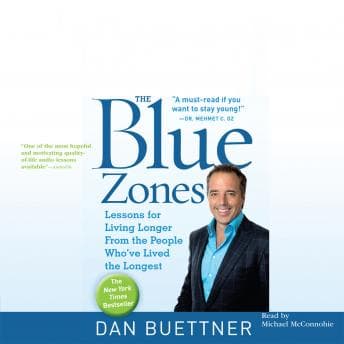

Look, I need to rant about something before we get into this: every single longevity book acts like it's dropping some earth-shattering revelation when it tells you to eat more vegetables and hang out with your friends. The self-help genre has a serious overpromising problem - What a Time to be Alone does the same thing with the whole "radical self-love" angle, and I had the exact same defensive reaction going in. And Blue Zones is basically the OG of this genre - the one that launched a thousand "eat like a centenarian" blog posts and smoothie brands. So I went in already a little defensive, ready to 1.75x my way through another book that could've been a blog post.
But here's the thing. It's... actually not that? Or at least, not entirely.
The Blog Post Problem (And Why This Escapes It - Mostly)
I was prepping for my Monday 6AM Caltrain when I started this, fully expecting to zone out by hour two. The nine longevity lessons themselves? Yeah, those you could tweet. Move naturally. Have purpose. Eat mostly plants. Stop eating before you're full. Drink wine with friends. You've seen the listicle.
But Buettner does something that actually earns the 7.5-hour runtime: he takes you INTO these communities. Sardinia, Okinawa, the Adventist community in Loma Linda, Costa Rica's Nicoya Peninsula. The profiles of actual centenarians - a 104-year-old Sardinian woman still doing housework, an Okinawan karate master in his late 90s - that's the stuff that sticks. It's ethnographic journalism more than self-help, and honestly, that's where the ROI on this audiobook lives. You're not just getting a framework; you're getting stories about real humans who've been doing this for decades without ever reading a longevity book.
The weakness is structural. Buettner visits each Blue Zone, profiles a few people, then extracts lessons, and the pattern repeats. By zone three, I could predict the beats. Meet elderly person. Marvel at their vitality. Describe their diet. Talk to a researcher. Extract principle. I caught myself mentally diff-ing the zones like code reviews - okay, Sardinia is wine and walking, Okinawa is ikigai and sweet potatoes, Loma Linda is Sabbath and community. The formula works but it's visible.
McConnohie's Accents and the Audiobook Tax
Michael McConnohie isn't Ray Porter (need I say more about my narrator standards), but he's solid for nonfiction. He throws in accents when voicing the centenarians and local researchers - a hint of Italian inflection for the Sardinian sections, a softer cadence for the Okinawan profiles - and it actually works as geographic signposting. You know which Blue Zone you're in partly by how he's pitching his voice. It's subtle enough to not feel like a voice acting demo reel.
That said, this is still a single narrator reading a nonfiction book with a lot of statistics and dietary breakdowns. There are stretches - especially the researcher interviews and the more clinical sections about caloric restriction and antioxidants - where the energy dips. I bumped to 1.5x during those parts and it was fine. The science holds up reasonably well for a pop-science book, though some of the dietary claims feel dated now (this was originally published in 2008, and nutrition science has moved).
No sound effects, no music, clean production. Totally fine.
Who Gets the Most Out of This
Perfect for: train, gym. Skip for: deep work (you'll zone out during the stats sections).
If you've already read every Michael Pollan book and listened to Peter Attia's podcast, you'll find the specific recommendations pretty familiar - Blue Zones is basically where a lot of that downstream content originated. The value-add is the storytelling and the cross-cultural comparisons, not the prescriptions themselves.
If you're newer to the longevity space, this is genuinely a great starting point. It's the primary source that all those Instagram infographics are cribbing from.
Kevin asked me what I was listening to and I gave him the 30-second summary and he said "so... eat beans and have friends?" And yeah, reductively, that's it. But the 100-year-old Costa Rican farmer who still rides his horse every morning and credits his longevity to having a plan for each day - that story hit different at 7AM on a Tuesday when I was dragging myself to work after a weekend deploy gone wrong. Sometimes you need the story, not just the bullet points.
Ship It, But Don't Overprovision
TL;DR: Worth your commute, but manage expectations. This is a solid B-tier nonfiction listen - good ethnographic journalism wrapped in a self-help package that occasionally remembers it's supposed to be a self-help book. I finished this in 3 commutes at 1.5x. Not life-changing, but I did start eating more beans. Kevin is thrilled about the bean situation. He is lying.