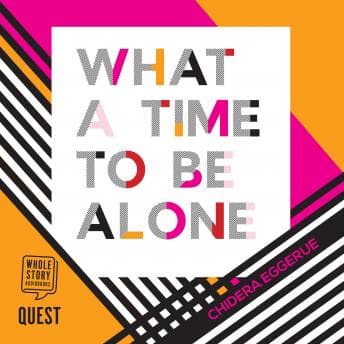

Look, I have a confession. I'm a psychology researcher who spends her days analyzing why people do what they do, and I still catch myself scrolling Instagram at 2 AM feeling inadequate because some influencer has better eyebrows than me. So when I downloaded a self-help audiobook from someone called 'The Slumflower' who started a movement called #SAGGYBOOBSMATTER, I was... skeptical. (My therapist would call this 'intellectualizing as a defense mechanism.' She's probably right.)
But here's the thing. Chidera Eggerue got me. In 82 minutes. While I was chopping onions for a dal that I'd eat alone on a Tuesday night.
The Psychology Actually Tracks
What makes this audiobook work - and I say this as someone who has read approximately 47 books on self-worth for research purposes - is that Eggerue understands something fundamental about how we form identity. She breaks her approach into three parts: YOU, THEM, and US. And honestly? This maps surprisingly well onto attachment theory and self-determination research. She's not just throwing affirmations at you. She's actually addressing the relational context of self-worth.
The listener here - and yes, I'm treating you as a protagonist, because that's what Eggerue does - exhibits classic patterns of external validation-seeking. And instead of just saying 'love yourself!' (the most useless advice in the self-help canon), she walks you through WHY you don't. The demons other people project onto you. The toxicity you've normalized in friendships. The research actually shows that self-worth isn't built in isolation - it's constructed through relationships. Eggerue gets this intuitively. Though if you're looking for something more mystical about unlocking self-worth, Golden Key: Modern Alchemy to Unlock Infinite Abundance takes a completely different approach—one I found less grounded in actual human psychology.
What makes this author compelling is her use of Igbo proverbs from her Nigerian mother. As a daughter of immigrants myself, I found myself nodding along. There's wisdom in the phrases your mother repeats that you dismiss at 16 and suddenly understand at 30. (Don't tell my maa I said that.)
When the Author IS the Voice
Author-narrated audiobooks are a gamble. Some writers should stick to writing. But Eggerue narrating her own work? It works. Her voice is warm, clear, and has this quality of - I don't know how else to describe it - a really smart older sister who's figured some things out and wants to save you the trouble.
She's not performing. She's just... talking to you. The delivery is intimate in a way that a professional narrator probably couldn't replicate. When she says 'You're bad as hell and you were made with intention,' you believe she believes it. And that matters. Psychologically, we're more likely to internalize messages from sources we perceive as authentic. Eggerue is authentic.
The pacing is quick - this is under an hour and a half - which means it doesn't drag. I finished it in one cooking session plus a morning jog. No time to zone out or overthink. That focused brevity reminded me of Power of Concentration, though that one requires more active mental work than passive absorption. Just absorb.
Who Should Listen (And Who Should Skip)
I found myself asking: why does this work for some people and not others? And I think the answer is age and stage. If you're a young woman in your twenties still figuring out which relationships serve you and which ones drain you, this is essential. If you're someone who's already done years of therapy and read all the attachment theory literature... you might find it a bit basic. (But honestly, sometimes basic is what we need. A reminder of things we already know but keep forgetting.)
This isn't for people who want extensive research citations or nuanced psychological frameworks. It's not that kind of book. It's more like - comfort food for your brain. A hug in audio form. If you're looking for dramatized storytelling or multiple voices, skip this. It's one woman talking to you directly. That's it. That's the whole thing. And for what it's trying to do? It's spot on.
Would I Listen Again?
Probably not cover to cover. But I might revisit sections when I'm having one of those days where my brain decides I'm terrible at everything. (We all have those days. Even psychology researchers. Especially psychology researchers, honestly.)
The audiobook is short enough that it doesn't feel like a commitment. And Eggerue's energy is genuinely uplifting without being saccharine. She has sass. She has wisdom. She doesn't talk down to you.
Is it going to revolutionize the field of self-help? No. But it might make you feel a little less alone on a Tuesday night while you're eating dal by yourself. And sometimes that's exactly what you need.