
Book twelve in a series should not feel like you're parachuting into hostile territory without a map. But here we are.
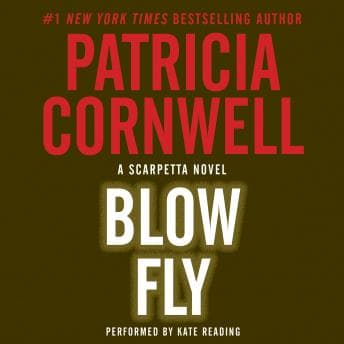
I picked up Blow Fly on a late-night drive back from a client site in Houston — two and a half hours of I-10 darkness, Ranger snoring in the back seat, and Patricia Cornwell promising me an international conspiracy involving my old friend Kay Scarpetta. By the time I hit the Buc-ee's in Luling, I was more confused than a private on his first land nav exercise.
Cornwell Went Third Person and It Shows
Let me cut to the chase: Cornwell made a structural decision here that nearly sinks the whole operation. After eleven books of Scarpetta's first-person voice — that clinical, precise, forensic-pathologist perspective that made the series what it is — she switched to third person and started hopping between a half-dozen POVs. It's like swapping your rifle mid-firefight. Scarpetta, Marino, Lucy, the serial killer Jean-Baptiste Chandonne, prison guards, various law enforcement — everybody gets a turn behind the wheel, and the vehicle swerves accordingly.
The plot bounces from Florida to Louisiana to Texas, touching on organized crime, corrupt officials, and Chandonne pulling strings from behind bars. There's a conspiracy that's supposed to feel sprawling and sinister, but the constant POV shifts left me feeling like I was reading an intelligence briefing that had been shuffled and stapled out of order. Key connections between scenes felt omitted, like somebody redacted the transition paragraphs. I've read complex operational plans with better through-lines. The POV chaos here reminded me of a similar structural gamble in Poet — though Connelly's multi-thread approach actually stuck the landing.
Kate Reading Carries the Load
Now here's where things get interesting, because Kate Reading is doing serious work with this narration. Her Creole accent for the Louisiana characters is genuinely impressive — not the cartoonish stuff you usually get from narrators who watched one episode of True Blood and called it research. And her brutish baritone for Chandonne? Unsettling. Made the hair on the back of my neck stand up somewhere around Flatonia. She shifts from a gravelly prison guard to Scarpetta's measured professionalism without missing a beat, and her emotional range — hope to despair, sometimes within the same chapter — keeps you locked in even when the plot is losing you.
Reading's low, comfortable voice is built for twelve-hour listens. She doesn't rush, doesn't oversell. An AudioFile Golden Voice for good reason, and honestly she earned her Audie nomination on this one. The narration is doing more heavy lifting than the source material deserves.
When the Mission Objective Gets Fuzzy
Here's where it lost me: the ending. After twelve hours of threading together this sprawling conspiracy — Florida murders, international intrigue, Scarpetta confronting supposed shocks — the resolution feels like somebody called "time" on a training exercise before the objective was secured. Rushed. Anticlimactic. I've seen more satisfying conclusions in after-action reports.
And the logic. Look, I'm not a forensic pathologist, but I've spent enough time around investigations and intelligence work to know when a plot is asking me to suspend too much disbelief. Characters make decisions that serve the plot rather than common sense. Scarpetta — who's supposed to be brilliant — walks into situations that any half-competent operator would flag as compromised. The author clearly knows her forensic science (Cornwell's research reputation is well-earned), but the connective tissue between those accurate details is held together with duct tape and wishful thinking.
Compared to earlier Scarpetta novels — Postmortem, The Body Farm — this feels like a franchise that's outgrown its chassis. I ran into a version of that same franchise fatigue with Cat & Mouse — Patterson stretched Cross thin too, chasing scale at the cost of the tight, personal stakes that built the series in the first place. The intimate, forensic-driven procedural has been replaced by something trying to be a geopolitical thriller, and it doesn't quite have the engine for it.
Who Should Saddle Up (and Who Should Stand Down)
If you're deep into the Scarpetta series and need the continuity, Kate Reading makes this worth the twelve hours. Seriously, her performance elevates material that would've had me hitting "skip" in print. If you're new to Cornwell, start at the beginning — dropping into book twelve with this structure is a recipe for frustration.
Those of you who need tight plotting and clear operational logic in your thrillers? This'll drive you up a wall. If you can ride with strong narration through a muddy storyline and you're invested in these characters' arcs, there's enough here to keep you engaged.
Mission Debrief
Kate Reading deserves a commendation. The book itself gets a mixed performance review. Worth your time? If you're already committed to the Scarpetta campaign, push through — Reading makes it better than it has any right to be. If you're browsing for your next great thriller, there are tighter operations out there. Ranger slept through the last two hours, and honestly, I don't blame him.