
I'll admit something. I've been teaching the Wars of the Roses to disinterested sophomores for so long that I'd almost forgotten what it feels like to be genuinely swept up in medieval English history. Then Marston York started talking in my earbuds, and suddenly I was late to third period because I was sitting in my car in the school parking lot, completely absorbed in the Black Prince's Gascon campaigns.
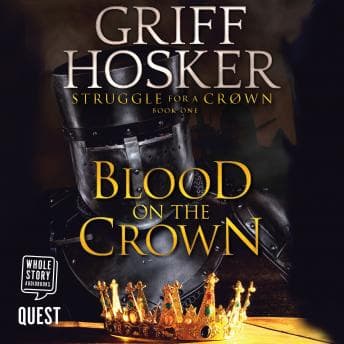
That's the thing about Blood on the Crown. It shouldn't work as well as it does. We're talking about a fictional bodyguard navigating the very real chaos of 1367-1382 England—the kind of historical fiction that can easily collapse into either dry textbook recitation or fantasy nonsense dressed in period costume. Griff Hosker walks that line with surprising grace.
Will, Son of Harry, and Why I Actually Cared
Here's what Hosker gets right: Will isn't a noble hero or a tortured antihero. He's a soldier of fortune who happens to be competent enough to catch Prince Edward's attention. That's it. No prophecy, no secret lineage, no dramatic reveal about his true parentage. Just a capable man in an impossible situation—protecting first the Black Prince's sons, then watching young Richard of Bordeaux become king at ten years old.
The historical framework is solid. I found myself double-checking dates against my own lecture notes (occupational hazard, don't judge me), and Hosker's done his homework. The Peasants' Revolt of 1381 gets proper treatment, not just as a backdrop for action sequences but as the genuinely terrifying social upheaval it was. When Will and Richard are in mortal danger from the Essex and Kent rebels, there's real tension because you understand what's actually at stake for the crown.
My students would probably zone out during the political maneuvering sections. I loved them. The intrigue around Richard's court, the attempted murders, the constant jockeying for position—this is the stuff that makes medieval history fascinating, and Hosker doesn't dumb it down.
Though I'll admit, sometimes I crave stories where the emotional stakes hit harder than the political ones—It Ends With Us wrecked me in ways no medieval intrigue ever could.
Marston York Nails the Battlefield
I couldn't find much about Marston York's background online, but based on this performance? The man understands that historical fiction lives or dies by its battle scenes. And these battle scenes live.
York's pacing during combat is exceptional. He knows when to speed up, when to let a moment of violence land with proper weight, when to pull back and let you breathe. The fighting scenes in Gascony and Spain feel chaotic and brutal without becoming exhausting. That's harder than it sounds. I've listened to plenty of historical fiction where battles become numbing after the third or fourth engagement.
His character voices are distinct without being cartoonish. Will sounds different from the nobles he serves, and York conveys class distinctions through vocal choices without hitting you over the head with it. The accents aren't always perfectly accurate—some listeners have noted this, and yeah, I caught a few moments where the regional specificity wobbled—but honestly? I'll take a narrator who commits fully over one who plays it safe and sounds flat.
The production includes background music, which normally makes me twitch (I'm a purist about letting the prose breathe), but here it's well-balanced. Enhances the atmosphere without drowning out the narration. Someone made smart choices in the mixing booth.
From Mercenary to Guardian
The book's structure follows Will's career arc, which means the first third feels quite different from the last. Early chapters are mercenary adventure—fight for pay, loot what you can, survive to spend it. Classic freebooter stuff. Then responsibility arrives in the form of two young princes, and suddenly Will's stakes are personal.
This transition works because Hosker doesn't rush it. Will's attachment to Edward and Richard develops gradually, through small moments of duty becoming genuine loyalty. By the time Richard is crowned, you're as invested as Will is in keeping this kid alive.
The Peasants' Revolt section is the book's strongest sequence. Hosker captures the genuine terror of a social order threatening to collapse, and York's delivery during these chapters had me white-knuckling my coffee mug during a faculty meeting. (Sorry, Principal Martinez. I was definitely not paying attention to the curriculum review.)
Who's Going to Love This (And Who Won't)
If you want strictly factual history, this isn't it. Hosker blends legend with documented events, and some historians might quibble with his interpretations. But as historical fiction? As a way to experience the chaos and violence and political intrigue of late medieval England through the eyes of someone who was there in the trenches? It delivers.
Skip this if you need romance or fast pacing—my students would hate it for exactly those reasons. But if you're the type who gets excited about Plantagenet succession crises and wants battle scenes that actually feel dangerous? You're in the right place.
The prose deserves to be savored. I listened at 1.0x, and I'd recommend you do the same. York's pacing is deliberate for a reason, and speeding it up would undercut the atmosphere Hosker's building.
Class Dismissed
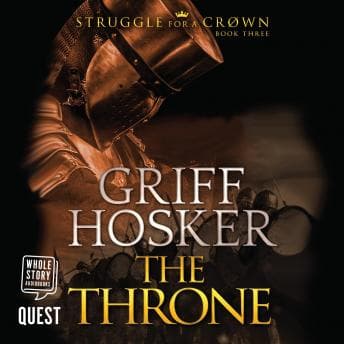
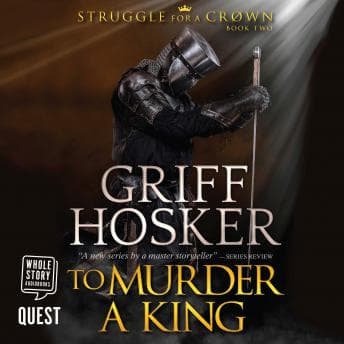
This is the first book in a series, and I'm already eyeing the next installment. That's not something I say lightly—I have a podcast to produce and papers to grade and a wife who's starting to wonder why I keep muttering about the Plantagenets during dinner.
My students would hate this. Too slow, too much politics, not enough romance. I loved it. Sometimes that's exactly the endorsement a book needs.