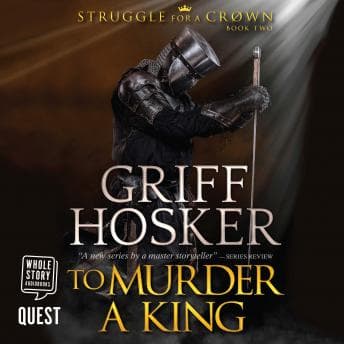

Look, I teach high school English. I spend my days convincing teenagers that Shakespeare matters and that no, they cannot just watch the movie. So when I say I genuinely enjoyed a book about medieval hired swords and 14th-century political intrigue, understand that my bar for historical fiction is unreasonably high. And honestly? This one cleared it.
I picked up To Murder a King because I'd been on a Plantagenet kick after re-reading Froissart's chronicles for a lesson plan. (My students would absolutely hate this book. I love it.) Will Strongstaff is the kind of protagonist who reminds me why we still read the classics - he's not a nobleman playing at war, he's a commoner who clawed his way up through skill and loyalty. There's something almost Shakespearean about his position: a gentleman now, with land and family, but still bound by oaths made when he was nothing.
The Voice in My Head
Marston York narrates this one, and here's the thing - he gets the assignment. His tone is smooth without being theatrical, which matters when you're dealing with medieval politics. You don't want someone chewing the scenery when characters are discussing John of Gaunt's Galician campaign. York keeps it grounded.
The character differentiation is solid. Will sounds different from Henry Bolingbroke, who sounds different from the various soldiers and conspirators. It's not flashy voice acting - no one's doing accents that make you cringe - but it's competent in a way that serves the story. The narrator understands that pause is punctuation, and York uses silence well during the tenser assassination plot moments.
That said, I did notice the pacing drags in spots. There are stretches in the middle where the political maneuvering slows down, and York's measured delivery doesn't always help. I was grading papers during one of these sections (don't tell Principal Martinez) and realized I'd zoned out for a good ten minutes. Not ideal. But when the action picks up - and it does pick up - York handles the battle sequences with real energy.
When the Sword Meets the Court
Griff Hosker does something interesting here that I think gets overlooked. This isn't just a hack-and-slash medieval romp. Will Strongstaff is navigating two worlds: the battlefield where his skills make him valuable, and the court where those same skills make him dangerous. The Earl of Oxford, Robert de Vere - who history remembers as one of Richard II's more disastrous favorites - lurks in the background as this corrupting influence on the young king.
If you loved Bernard Cornwell's The Last Kingdom series, this is its spiritual successor in some ways. I got that same sense of historical weight from Testaments: The Sequel to The Handmaid's Tale - different era entirely, but Atwood understands how power corrupts across centuries. Less polished, maybe. Hosker doesn't have Cornwell's literary flourishes. But there's an authenticity to the military details that scratches the same itch. Will thinks like a soldier because Hosker clearly understands how soldiers think.
The assassination subplot - the "murderers closer to hand" trying to end Henry Bolingbroke - gives the book its thriller edge. It's not just about battlefield glory. It's about the knife in the dark, the poison in the cup, the loyalty that might be a mask. This is why we still read the classics, honestly. These themes don't age.
Worth Pausing the Faculty Meeting For
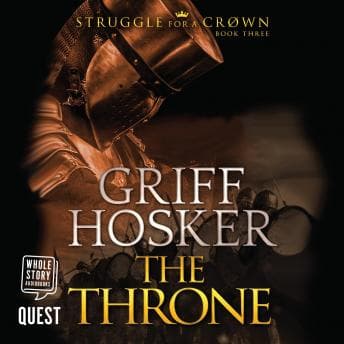
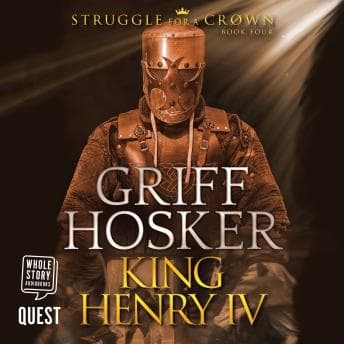
I finished this on a Saturday morning walk along the lakefront with Denise. She asked what I was listening to and I tried to explain the whole Struggle for the Crown series and she gave me that look she gives when I start talking about Faulkner. Fair enough.
Here's my honest assessment: if you're already invested in the series, this is a strong continuation. The character development could be deeper - some reviewers aren't wrong about that - but Will Strongstaff carries the narrative through sheer competence and moral weight. If you're new to Hosker, maybe start with book one? This works as a standalone, but you'll miss some of the emotional stakes.
The production quality is clean. No weird audio artifacts, no jarring transitions. At ten hours, it's a solid commitment but not overwhelming. I listened at 1.0x because the prose deserves to be savored, and also because I'm ancient and my students have told me so.
My students would absolutely hate this. Too much history, not enough dragons. But for those of us who find the real 14th century more fascinating than any fantasy kingdom - who want to understand how power actually worked when swords still settled arguments - this delivers. It's not a masterpiece. It's something better: a reliable, well-researched historical adventure that respects your intelligence.
Now if you'll excuse me, I have papers to grade. And another Hosker book to add to my queue.