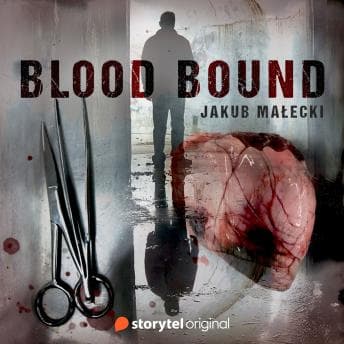

This book grabbed me by the throat and didn't let go.
I was driving back from a client meeting in Houston - three hours of Texas highway stretching ahead of me - when Blood Bound started playing. By the time I hit the Austin city limits, I'd blown past my exit twice because I couldn't stop listening. Haven't done that since my first Vince Flynn novel.
The Premise That Actually Works
Let me cut to the chase: the setup sounds like B-movie schlock. Heart transplant patient starts acting weird, women go missing, family suspects the worst. I've seen this scenario play out in bad thrillers a hundred times. But Jakub Malecki - a Polish author I'd never heard of before - actually earns it. He doesn't rush to the obvious conclusion. Instead, he lets Adam's investigation of his own father simmer with genuine dread.
The father's nighttime disappearances are handled with restraint. Coming home with torn clothes, dirt under his fingernails, no memory of where he's been. Could be sleepwalking. Could be early dementia. Could be something the family doesn't want to name out loud. That ambiguity is where the book lives, and it's effective as hell.
Two Narrators, One Uncomfortable Family
Chase Brown and Eric Meyers split duties here, and I'll be honest - the research I did beforehand gave me nothing specific about their performance. So I went in blind. What I got was serviceable work that didn't get in the way of the story. Brown handles the bulk of the narrative with a steady, measured delivery that matches Adam's growing paranoia. Meyers picks up what I assume are secondary perspectives or flashback material.
Neither narrator blew me away, but neither did they commit any cardinal sins. No weird accent choices, no mispronounced medical terminology (and there's plenty of transplant procedure talk that could've gone sideways). At 1.25x speed, the pacing felt right - urgent without being breathless.
Where It Gets Under Your Skin
The book's real strength is how it handles family loyalty versus moral obligation. Adam loves his father. Full stop. But he's also watching local news reports about missing women and noticing that his dad's "episodes" line up with the disappearances. The internal conflict isn't overwrought - it's quiet and devastating. Made me think about what I'd do in that situation. (Ranger looked at me weird when I was muttering about it during our evening walk.)
Malecki also does something smart with the transplant mythology. He never fully commits to whether this is supernatural or psychological. Is there really something in the donor's heart that's influencing behavior? Or is the father using the transplant as cover for something he's been hiding all along? The book keeps you guessing without feeling like it's cheating.
The Weak Points
At nine hours, there are stretches in the middle that drag. Some investigative scenes feel padded - Adam interviewing neighbors, checking hospital records, the procedural stuff that thrillers sometimes lean on when they're not sure where to go next. I found myself checking how much time was left around the six-hour mark. But the final two hours pick back up with enough momentum to make you forget the lull.
Also, and this is minor, but the content warnings for violence are accurate. Some of the descriptions of what happens to the missing women are graphic enough that I wouldn't recommend this for anyone who's squeamish. Not gratuitous, but definitely not sanitized.
Who This Is For (And Who Should Skip It)
If you liked the moral complexity of something like Sharp Objects or the slow-burn family horror of We Need to Talk About Kevin, this is in your wheelhouse. Sycamore Row operates in that same space—legal thriller on the surface, but really about family secrets and what people will do to protect them. Thriller readers who want more than just a body count will appreciate the psychological depth. Skip it if you need constant action or if ambiguous endings frustrate you.
Mission Debrief
Blood Bound surprised me. A Polish author I'd never heard of, a premise that sounded gimmicky, and narrators I had zero intel on - not exactly a confidence-inspiring package. But the execution is tight, the central question is genuinely disturbing, and I found myself thinking about it days later. Worth your time? Affirmative. Just maybe not right before bed.