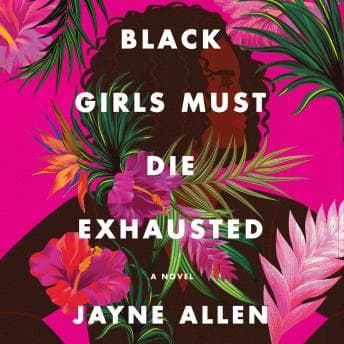

I wasn't expecting to find myself thinking about this book during a faculty meeting about standardized testing protocols. But there I was, nodding along to Principal Martinez's PowerPoint while my mind kept drifting back to Tabitha Walker and her grandmother's voice saying those words—the ones that became the title. Black girls must die exhausted. It's the kind of phrase that sounds like resignation until you realize it's actually a battle cry.
Here's the thing about this novel that surprised me: I went in expecting a straightforward contemporary drama about a woman facing infertility. What I got was something closer to what James Baldwin did with social observation—wrapping profound cultural commentary inside what looks like a personal story. That same technique of using personal narrative to expose larger systems shows up in Fake It Till You Make It, though with a lighter touch. Jayne Allen, with her Harvard Law background, writes with the precision of someone who understands systems. The way Tabitha's life is structured around checklists and timelines isn't just personality—it's survival strategy. Education? Check. Good job? Check. Down payment? Check. The checklist is armor.
When the Armor Cracks
Marcella Cox's narration does something I don't hear often enough in audiobook performances—she understands that Tabitha's composure is itself a character trait. When the diagnosis comes, when Tabby learns her fertility timeline just got compressed into something almost impossible, Cox doesn't go for the obvious emotional explosion. She lets you hear the control. The measured breathing. The professional broadcast voice that Tabitha uses at work bleeding into how she processes personal devastation.
And then there's Granny Tab.
Cox shifts into something warmer, slower, more deliberate for the grandmother scenes. It's not caricature—it's generational. The way older Black women in my students' families speak when they're about to drop wisdom they've been holding for decades. "Black girls must die exhausted" isn't pessimism when Granny Tab says it. It's acknowledgment. It's permission to be tired while still fighting.
The Friendship Architecture
I teach my students that great literature shows us relationships as structural elements, not decoration. The friendship between Tabitha, Laila, and Alexis functions like load-bearing walls in this narrative. Laila is headstrong and irreverent—Cox gives her a sharper edge, more staccato rhythms. Alexis (the former "Sexy Lexi" now in mom jeans) gets softer delivery, someone who's already made peace with certain trade-offs.
These aren't the kind of fictional friends who exist just to have brunch scenes. They challenge each other. They disappoint each other. When Tabitha's crisis forces everyone to examine their own choices about career, motherhood, partnership—the cracks show. Some listeners found the pacing slow here, the backstory meandering. I'd argue that's the point. Real friendships don't move at thriller pace. They accumulate.
What Allen Is Really Saying
This is why we still read—or in this case, listen to—novels that seem to be about one woman's fertility journey. Because they're never just about that. Allen is writing about the impossible math that society hands to Black women specifically. Career advancement that requires total dedication. Biological clocks that don't pause for promotions. Partners who have their own expectations. A healthcare system with its own biases.
The title keeps echoing because it's not just about Tabitha. It's about the cumulative exhaustion of excellence as survival strategy.
I will say—and this is important—the book deals with some heavy territory. Infertility, yes, but also police profiling, interracial relationship dynamics, divorce. Allen doesn't sensationalize any of it, but she doesn't soften it either. Worth knowing before you dive in.
A Note on Listening Speed
I listened at 1.0x. (My students think I'm ancient. They're not wrong.) But this is a book that rewards that pace. Cox's performance has pauses that function as punctuation—the silence after Granny Tab finishes a piece of wisdom, the beat before Tabitha responds to bad news. Speed it up and you lose the rhythm.
Who This Is For (And Who It Isn't)
Press play if you loved Tayari Jones or Brit Bennett and want something in that vein. Book club readers who want actual discussion material, not just plot summary. Women—particularly Black women—who will recognize pieces of themselves in Tabitha's exhausting excellence. And honestly? Anyone who teaches or works with young Black women and wants to understand the pressures they're navigating.
Skip it if you need fast plot momentum. This is character-driven, introspective, sometimes circular in its processing of trauma. Some listeners compared it to reading a journal—that's not a criticism if you appreciate interiority, but it's fair warning if you don't.
This is the first book of a trilogy, and I'm genuinely glad. Tabitha's story isn't finished, and neither is what Allen has to say. The TV adaptation is coming, but do yourself a favor and hear it first. Cox's performance—that intimacy, like a close friend sharing her story—is the kind of thing that gets lost in translation to screen.
Class Dismissed
My students would probably find this too slow. I loved it anyway. That's becoming my brand.