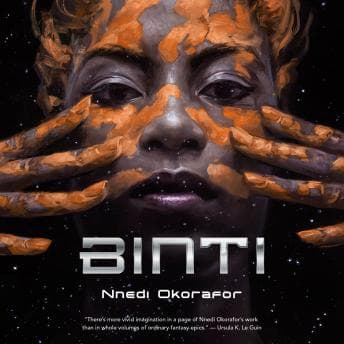

Look, I grabbed Binti at 2 AM because my Python script was throwing errors I couldn't diagnose and I needed something short enough to finish before I either fixed the bug or gave up and passed out at my desk. Two and a half hours. That's basically a long D&D combat encounter. And somehow Nnedi Okofor managed to pack more world-building into that runtime than some authors manage in 40-hour epics.
Here's where I have to be honest though - this isn't Sanderson-level world-building in the sense of detailed magic system taxonomies and appendices. It's something different. Okofor drops you into Binti's Himba culture with zero hand-holding. The otjize - this red clay mixture Binti covers herself in - isn't just a cosmetic detail. It's identity, it's heritage, it's literally a plot device that becomes critical during first contact with the Meduse. That kind of economy in world-building? In 2.5 hours? I respect the craft.
When Your Thesis Is About Procedural Generation But This Book Is About Cultural Math
What genuinely hooked me is that Binti is a mathematical harmonizer whose ability is tied to her cultural practice of "treeing" - she reads currents, both mathematical and organic, as part of her Himba heritage. As a CS guy who spends his days thinking about algorithmic generation, the idea that math could be this deeply personal, cultural thing rather than cold computation? That hit different. My D&D group would love this as character inspiration - a harmonizer class that channels mathematical currents as a form of magic. I'm already sketching the homebrew.
The Meduse are genuinely alien too. Not humans-with-tentacles alien. Their motivations, their form of communication, the way their grievance against Oomza University drives the entire conflict - it feels like a first contact scenario run through the lens of someone who actually thinks about what "alien" means. The scene where Binti has to negotiate between species using both her mathematical gifts AND her cultural understanding of mediation? That's the moment I stopped debugging and just listened. Eyes closed, error logs forgotten.
Robin Miles Isn't Steven Pacey (But She's Running Her Own Race)
Steven Pacey walked so other narrators could run, and Robin Miles is running something entirely different here. Her strength isn't giving every character a wildly distinct voice - this is a tight first-person novella, she doesn't need to. What she does is modulate Binti's emotional state through these tiny breath adjustments. When Binti is terrified during the Meduse attack on the ship, Miles doesn't go big and dramatic. She gets quieter. Tighter. The fear lives in the restraint, and it's more unsettling than screaming would be.
Her African accent work grounds the Himba culture in a way that genuinely matters. You feel Binti's otherness when she's among the Khoush passengers - Miles shifts her delivery just enough to signal that Binti is the outsider before anyone says it directly. There IS a slight sense of detachment that creeps in during some middle sections, like Miles is narrating AT you rather than pulling you inside Binti's head. But honestly? It might be intentional. Binti herself is processing trauma and going emotionally numb in those moments. I'll give it the benefit of the doubt.
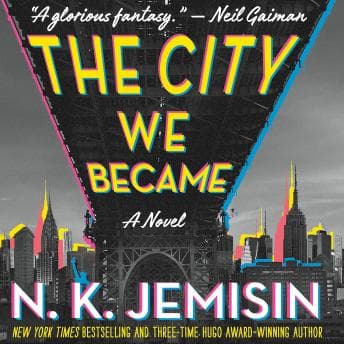
That restrained, interior style is a sharp contrast to the full cast energy Miles brings to City We Became: A Novel, where she voices an entire city's worth of characters with relentless kinetic force—it's a testament to her range.The DM Who Built an Incredible Dungeon But Rushed the Boss Fight
Here's my real gripe. Okofor builds incredible tension - cultural displacement, survival horror on a spaceship, genuine alien threat - and then the resolution comes fast. Like, "wait, that's it?" fast. It's the novella problem. You get enough world-building to make you desperate for more, but not enough room for the final act to breathe. The progression is satisfying right up until the climax, which just... lands. Softly. When I wanted a thunderclap.
It's like a DM who spends three sessions on world-building and atmosphere and then the barbarian crits the boss in round one. Technically successful. Emotionally underwhelming.
The magic system is chef's kiss in concept - Binti's mathematical treeing, the edan artifact she carries, the way Himba cultural knowledge intersects with galactic science - but at 2.5 hours there's just not enough space to explore it fully. I wanted the 12-hour version of this story. I wanted the sourcebook.
Nnedi Okorafor's Akata Witch fills that gap with a longer, more fleshed-out journey through Nigerian magical traditions, and it scratches a similar itch for deeply cultural magic systems.Roll for Persuasion: Who Should Listen
If you care about Afrofuturism, representation in SFF that doesn't feel like a checkbox exercise, or world-building that does more in a coffee-break listen than most books do in a trilogy - yes. Absolutely. If you need hard magic systems with rules and stat blocks, this isn't that. (But try it anyway.) If you're calculating cost-per-hour on an Audible credit... maybe grab this through Libby or wait for a sale. Hugo and Nebula winner or not, a full credit for 2.5 hours is a tough sell when your stipend is what it is.
I read this instead of writing my thesis. But at 2.5 hours, even Dr. Patel can't be that mad about it. Probably.