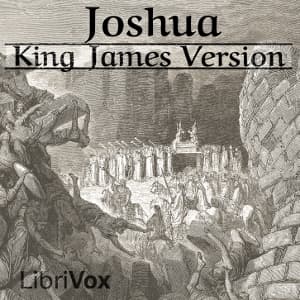

Look, I have a complaint. Twenty years of teaching English and somehow I've never actually sat down - or walked along, or graded through - the Book of Joshua as a standalone literary experience. I've taught excerpts. I've referenced the walls of Jericho in lessons about narrative structure. I've used "Be strong and of a good courage" as a pep talk for kids facing the AP exam. But listening to Joshua straight through, all one hour and fifty-four minutes of it? That's new. And honestly, it messed with my head a little.
I put this on during a Saturday morning walk along the lakefront, Denise doing her own thing with a friend, just me and the cold off Lake Michigan and Joy Chan reading about the conquest of Canaan. Strange pairing. The joggers and cyclists going by while Chan is calmly narrating the utter destruction of Jericho, the execution of the king of Ai, the sun standing still over Gibeon. There's something almost surreal about hearing ancient military campaigns described in that formal KJV cadence while you're watching someone's golden retriever chase a tennis ball.
The KJV as Audio Literature - Why It Actually Works
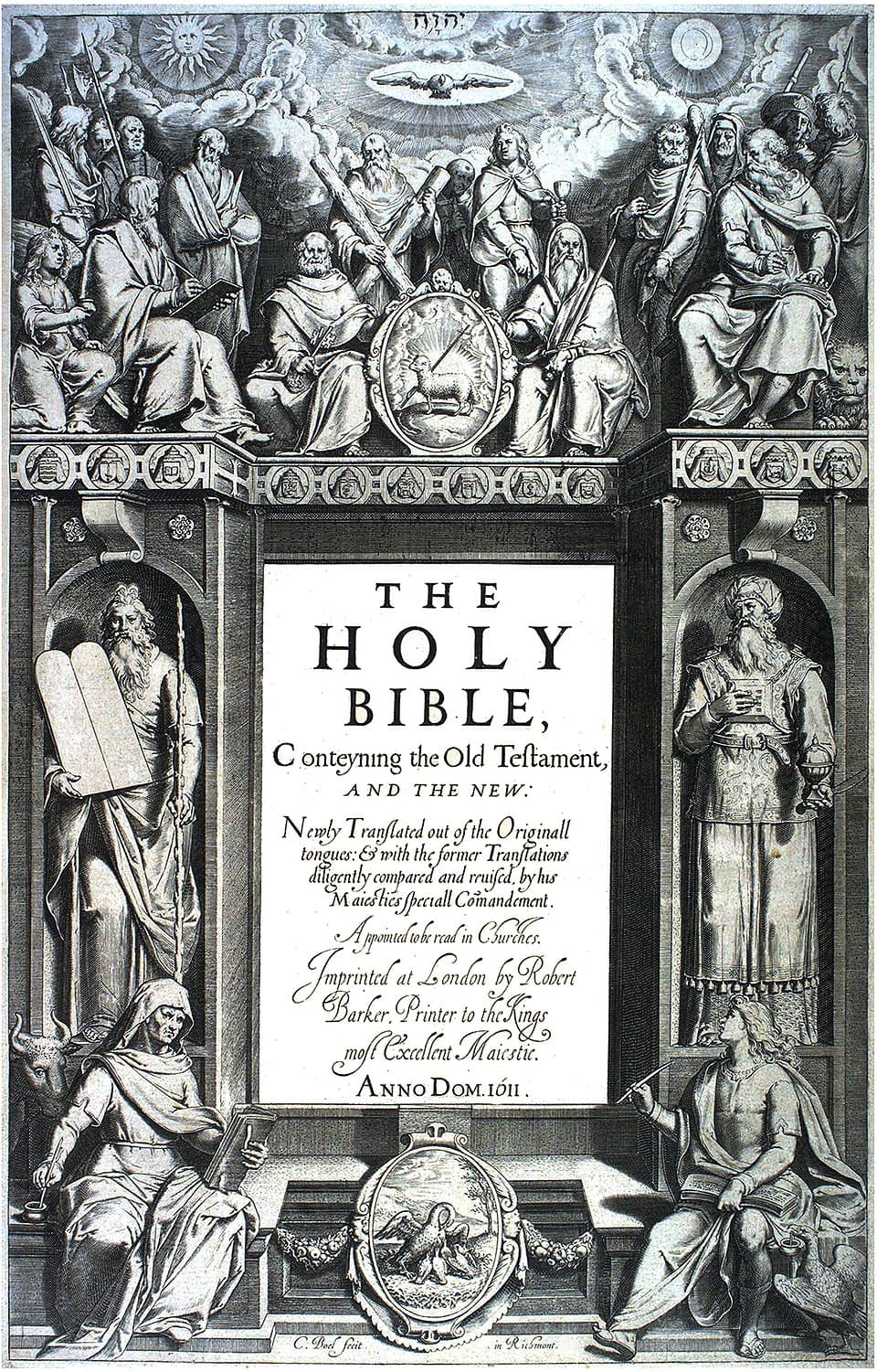
Here's what I tell my students about the King James Version that they never believe: it was written to be heard. The 1611 translators were crafting something for church services, for public reading, for the ear. So when you strip away the page and just listen, you're actually closer to the original intent than most Bible readers have been in centuries. The prose deserves to be savored, and in audio form, you finally can.
And Joshua is a fascinating test case for this. It's not like Psalms, where the poetry carries itself. Joshua is lists. So many lists. Tribal allotments, border descriptions, cities of refuge - chapters 13 through 21 are basically a real estate ledger for the Promised Land. "And their border was toward Jezreel, and Chesulloth, and Shunem..." On and on. My students would hate this. I love it. Not because the content is thrilling, but because it forces you to reckon with what this text actually was to its original audience: a legal document, a deed of ownership, a people saying this land is ours and here's the paperwork.
But then you get the narrative sections - the spies and Rahab in chapter 2, the Jordan crossing, the Jericho sequence - and suddenly you're in genuinely gripping storytelling. The shift between conquest narrative and bureaucratic land division is jarring, and that's the point. This book is doing two things at once: telling a war story and filing the paperwork afterward.
Joy Chan and the Problem of Reading God's Voice
Joy Chan's narration is clear. Steady. Respectful. She handles the pronunciation challenges of dozens of Hebrew names and places with the kind of quiet competence that you don't appreciate until you imagine doing it yourself. (Try saying "Kirjatharba" three times fast. Or once, slowly.) Her pacing is measured - she doesn't rush through the genealogies or the land divisions, which I respect even when my attention drifted during the border of Manasseh.
But here's where I land on the narration, and this is less a critique of Chan than a genuine question about how you should read Joshua: the book contains direct speech from God. Commands to destroy entire cities. Promises and threats. Chan reads these passages in roughly the same register as everything else - calm, clear, even. And I kept wondering what a more interpretive approach would do. When God tells Joshua in chapter 1, "Every place that the sole of your foot shall tread upon, that have I given unto you" - that's a moment. The narrator understands that pause is punctuation, mostly, but there's a restraint here that sometimes flattens the emotional landscape.
For a LibriVox recording - which this is, let's be clear, this is a free volunteer production - it's solid work. Chan isn't trying to be a theatrical performer. She's being a faithful reader. And for study purposes, for devotional listening, that's exactly right. But if you're coming to this wanting the drama of the conquest brought to full dramatic life, you might find it a bit flat in places.
Who This Is Actually For (And Who Should Look Elsewhere)
If you're working through the Bible systematically - and at under two hours, Joshua is a very manageable commitment - this is a clean, reliable way to do it. If you're a student of ancient literature or military history, there's fascinating material here about how conquest narratives function. If you want to understand the KJV's rhythm and why it shaped English prose for four centuries, listening beats reading every time.
If you want production value, music, multiple voices - this isn't that. It's one woman, one microphone, one of the oldest texts in human civilization. There's an honesty to that simplicity.
I will say this: the content warnings are real. Joshua is violent. Whole cities put to the sword, men and women and children, and the text presents this as divinely sanctioned. If you're coming to this cold, without theological or historical context, it's going to hit different than the Sunday school version. Let's talk about what the author is really saying - or rather, let's acknowledge that people have been arguing about what Joshua is really saying for about three thousand years, and a two-hour audiobook isn't going to settle it. I had a similar reckoning with unresolved theological weight when I worked through Summa Theologica - 01 Pars Prima, Initial Questions — Aquinas spends hundreds of pages building careful arguments about divine nature, and I kept thinking: the questions Joshua raises about God's commands are exactly the ones medieval theologians were still wrestling with.
The Lesson Plan I Didn't Expect
I finished Joshua just as I got back to the apartment, and I sat on the couch for a minute before taking my shoes off. Not because I was emotionally wrecked. But because I was thinking about structure. About how a book can be both a story and a spreadsheet. About how the KJV translators turned ancient Hebrew bureaucracy into something that still has rhythm and weight. About how Joy Chan just read me an entire book of the Bible on a Saturday morning and I didn't skip a single chapter.
That's worth something. Even at 1.0x.