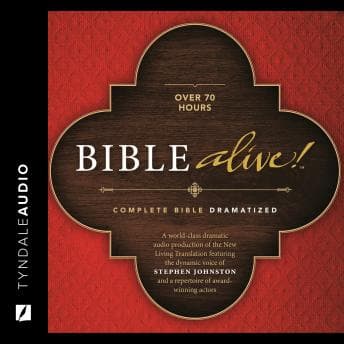

How do you make a text that's been read for millennia feel fresh? I've been wrestling with that question for twenty years in my classroom, watching students' eyes glaze over the moment I crack open anything older than their phones. So when I decided to tackle the full Bible Alive! production during my summer break - all 72 hours of it - I wasn't just curious about the audiobook. I was curious about whether dramatization could do what I've been trying to do with Shakespeare and Dickens: make the ancient feel urgent.
Short answer? Yeah. Pretty much.
When Scripture Becomes Performance Art
Look, I teach literature. I believe great narration is interpretation, not just recitation. Stephen Johnston gets this. The man's been doing Bible audio for decades, and you can hear it - there's a confidence in his delivery that comes from genuinely understanding the material, not just reading words off a page. His voice has this warm, contemporary quality that somehow doesn't feel like it's trying too hard to be "relatable." It just... is.
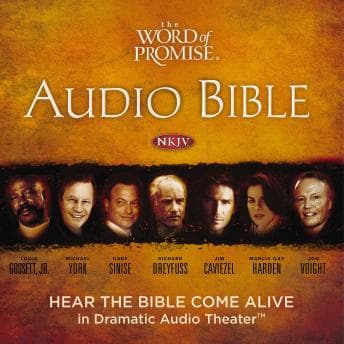
The production values here are frankly ridiculous. Emmy winners. Tony winners. Golden Globe winners. Sound effects. Musical scoring. It's the audio equivalent of those illustrated Bibles I grew up with, except instead of paintings, you get performance. And honestly? The cast work pays off. When you've got actual actors inhabiting David and Moses and Paul, the narrative threads that sometimes feel disconnected on the page suddenly click into place as human drama.
(Don't tell my students I said this, but I actually paused grading final essays to keep listening. Multiple times.)
The New Living Translation was a smart choice for this format. It's clear without being dumbed down - the kind of accessible that lets you actually follow the genealogies and legal codes without your brain checking out. I've tried listening to more traditional translations and found myself rewinding constantly. Not here.
The Pacing Problem (And Why It Might Not Be One)
Here's where I have to be honest. Some listeners complain Johnston reads too fast. And yeah, I can see it. The man moves. If you're trying to do deep study, pausing to reflect on each verse, you might find yourself reaching for that rewind button more than you'd like.
But here's my take - and this is coming from someone who listens at 1.0x because the author chose those words and I choose to hear them properly. The pacing works for narrative flow. When you're moving through Kings or Acts, you want momentum. You want the story to carry you. Johnston delivers that. The faster pace keeps the drama building where it should build.
For devotional listening? Meditation? You might want to slow it down in your app settings. Or just accept you'll be hitting pause. Either way, it's not a dealbreaker - it's a stylistic choice that serves the production's goal of making this feel alive rather than reverent-to-the-point-of-sleepy.
72 Hours With My Thoughts
I listened to this everywhere. Lakefront walks with Denise. Late nights grading papers. (Sorry, seniors, your essays on The Great Gatsby competed with Ecclesiastes for my attention. Ecclesiastes won.) Faculty meetings where Principal Martinez definitely thought I was paying attention to budget projections. I wasn't. I was in Corinth.
What surprised me was how the dramatization helped me see connections I'd missed in decades of reading. The recurring themes, the callbacks between Old and New Testament, the way certain phrases echo across books - when you're hearing it performed, those patterns become audible in a way that silent reading doesn't always capture. This reminds me of what Hemingway said about the iceberg theory - so much of scripture's power is beneath the surface, and good narration brings it up.
The production quality is genuinely excellent. Clean audio, well-mastered, the music and effects enhance rather than distract. It feels like a prestige production because it is one.
Who Should Listen (And Who Should Skip)
If you're looking for a study Bible experience with verse-by-verse analysis, this isn't that - skip it and find a dedicated study audio instead. But if you want to experience the Bible as the narrative it actually is - the sweeping epic of human history and divine intervention - Bible Alive! delivers. That same narrative approach to faith-based material shows up in Love and Respect, though with a narrower focus on marriage dynamics. Commuters, this is your new best friend. Bible study groups looking for something to discuss together, same deal. Even skeptics who've never read the whole thing might find this the most accessible entry point.
My students would probably still zone out. But that's on them, not the production.
Worth pausing the faculty meeting for. Worth 72 hours of your summer. The prose deserves to be savored, and Johnston and company make sure you can.